Sembeh Ma Fa Fe, translated from Susu, the language of the Soso people of Guinea, West Africa, is ‘strong sound coming,’ and that’s exactly what is found on the new album by Stronghold Sound.
Sembeh Ma Fa Fe: Roots Volume is the follow-up to their earlier Guinean compilation, Sembeh Ma Fa Fe: the Revisits Volume. The Roots Volume is a lively selection of home-grown soul, folk, salsa and traditional djembe percussion from this musically rich West-African country.
I am loving this album!!
It features tunes that share some of the roots of the musical traditions of the region. (Listen to Captain Planet’s remix of Saran’s Tounkan below. On fire!!!)
From the powerful polyrhythms of the djembe, to the soothing cyclical melodies of the balafon, to the longing cries of the grio, each instrument is rich with history and significance; even the Mandeng kings prized them as near to possessing supernatural powers.
Amongst the featured elder artists Mybaby (Kadiatou Sylla) stands out, performing her own blend of salsa infused Guinean folk. Also, Aicha Sidibe sings a classic form of traditional folk called Mamaya, Geizu accompanies the percussive group Balandougou Kan bringing you a taste of village life, and Blondi (Alseny Camara), a modest man whose voice startles you with its depth of emotion and power sings alongside the traditional gunguma.
Then there are the newer generation artists: Saran Diabate who teams up with her talented brother, Lanciney Diabate, on bass to create a kind of traditional Guinean soul with a funk foundation, Cissoko Aboubacar, a talented singer in a family of vocalists who offers something akin to Guinean blues also in the Mamaya style, and Alessane (Alassane Bangoura), a young and talented percussionist with a voice both innocent and passionate, who sings alongside the balafon in a number that reminds one of Conakry island living. Lastly, Sekou Keita and Bondo Sidibe lead the percussion ensemble, Balandougou Kan, in arrangements that show the interlocking beauty and raw energy of tam tam Mandeng, or djembe music.
In addition, Stronghold Sounds adds 4 dancefloor remixes (released earlier this fall exclusively on 7’’ vinyl as Guinea Folk Remixed) by Captain Planet (Bastard Jazz), J-Boogie (OM), Chief Boima (Ghetto Bassquake, Dutty Artz) and Giku, and Stronghold Sound’s own Dub Snakkr.
Closed to much of the world since independence, Guinea is home to many masters of Mandeng traditional music and culture. In parallel with these masters of tradition is a new generation of artists who have embraced reggae, hip hop and r&b as their own and worked on their individual expressions within these genres. After years of dictatorial rule, the nation has recently experienced its first democratic election and emerges anew to share its rich musical culture.
Me and spoken word don’t have much of a relationship. When it first appeared on my radar in 2002 via HBO’s Def Poetry Jam, I couldn’t watch it (I was working nights then) and somehow [wrongly] figured it wouldn’t be my thing.
A few years later, while working at a radio station in New Jersey, my boss gave me a a pair of tickets to Def Poetry Jam on Broadway. I figured, why not? I was instantly blown away. It was like rap, which I was a fan of, but at a varied tempo and performance style, and subjects ranged from life in the city to feminism.
Still, I didn’t keep up with it much. Though it was at its height then, venues hosting spoken word were few and far between when I lived in New Jersey (outside of college campuses, that is) and as a journalist working crazy hours in the middle of the Garden State, I wasn’t able to frequent New York City’s Nuyorican Poet’s Cafe. As they say, life gets in the way.
Silly me. I shouldn’t be surprised at all that the Internet is rife with spoken word videos. And it gives me great pleasure to share the latest by one of my frat brothers (yes, I was in a sorority in college), Goya Robles.
If you’re a fan of CBS’s The Mentalist, you’ll be familiar with Robles as he starred in an episode two weeks ago. He’s an actor (watch his reel here) and spoken word artist (and lots, lots more) and “Heart Music” is his latest.
My first trip ever to Europe came in late November, 2013. Destination? Spain. I loved it. Here are ten reasons why:
1) The Metro: Living in New York has made me a little bolder when it comes to doing things on my own. Trust me, just 10 years ago, I would’ve never had the guts to march into the Madrid Metro right after landing in the airport to get to my first hotel. But I did it, and it was quick, clean, safe, and easy to navigate (hint, hint, NYC). Barcelona’s Metro system was just as pleasant. Trains every three minutes, you can set your watch by it!
2) Rioja: Light, not too dry, definitely not sweet, and silky. This made from tempranillo grape wine is simply delicious, even when the bottle cost 3 euros at the supermarket. Rioja is made from grapes grown in the Autonomous Community of La Rioja, and in parts of Navarre and the Basque province of Álava. Read more here.
3) Cava: What woman doesn’t love a bubbly drink? Cava is a Spanish sparkling wine of Denominación de Origen (DO) status, most of which is produced in Catalonia. It may be white (blanco) or rosé (rosado). No more champagne for me on New Year’s Eve. I’m going cava!
4) Salvador Dalí Museum in Figueres: This museum in Dali’s hometown of Figueres in Catalonia is trippy! The heart of the museum was the building that housed the town’s theatre when Dalí was a child, and where one of the first public exhibitions of young Dalí’s art was shown. The old theater was bombed the Spanish Civil War and remained in a state of ruin for decades until Dalí and the mayor of Figueres decided to rebuild it as a museum dedicated to the town’s most famous son in 1960. My favorite piece was the “Mae West Cum Apartment.” Yes, it’s the real name of the artwork!
Mae West’s Cum Apartment by Salvador Dali.
5) Montserrat: This multi-peaked mountain located near Barcelona is one of the most breathtaking things I’ve ever seen. (Keep in mind I’ve not been to countries on the Asian or African continents). The main peaks are Sant Jeroni (1,236 m), Montgrós (1,120 m) and Miranda de les Agulles (903 m). The mountain is the namesake for the Caribbean island of Montserrat. It is well known as the site of the Benedictine abbey, Santa Maria de Montserrat, which hosts the Virgin of Montserrat (the black virgin, or la moreneta) sanctuary. “Montserrat” literally means “saw (serrated, like the common handsaw) mountain” in Catalan.
While there, I rode a funicular rack railway car up to the very top of the mountain. While it looks scary from afar, the ride couldn’t be more secure. It has six independent brake systems. If I ever go back, I’ll stay overnight for part of my stay. They have quite a few hiking trails I’d like to try.
View of Montserrat from the funicular.
6) Spanish style: My friend Doris put it best: Spanish people wear clothes that fits them. She’s right. There’s no oversized, baggy, clothes, or ill-fitting too-tight, or bummy outfits. (No sweatpants as daily wear!) The clothes they, and even their little children, wear is wear-tailored, clean, and sophisticated. Women’s hair is worn mostly long, and scarfs and sleek jackets are a mainstay. Older men dress with style. Sophisticated jackets, hats, and even glasses frames set them apart. Think Zara, perhaps the best-known Spanish retailer around the world.
7) Gaudí: Before I got to Spain, everyone told me I was going to love his work. So who was he? Antoni Gaudí i Cornet (25 June 1852 – 10 June 1926) was an architect from Reus, who was the figurehead of Catalan Modernism. Gaudí’s works reflect his highly individual and distinctive style and are largely concentrated in Barcelona, notably his magnum opus, the Sagrada Família.
The church of la Sagrada Familia is a big tourist draw and rightfully so. I’m a big fan of old churches and stained glass windows. The way the windows create an erethreal rainbow inside the church, from sacristy to nave, is a must-see. Pictures don’t do it justice, and I don’t say that often.
La Sagrada Familia by Gaudi.
8) Manchego cheese and olives: Spanish cuisine in general is great, as it feels like you’re eating “bad” (not really bad, but high in fat, though some would say it’s good fat) food all the time. They eat rich manchego cheese, sinfully delicious stuffed olives, loads of olive oil, hams, eggs, potatos (called patatas), and wine, of course! Yum. Take me back!
Suggestion: DosTrece restaurant in Barcelona is owned by an American expat. It’s got a hip, coffeehouse vibe during the day and a chic, yet casual-cool, ambience at night. (There’s also a bunch of cool images of Frida Kahlo as part of the restaurant’s decor.) The staff come from different parts of the globe and they are not only friendly, but fun, and suggest the best nightlife spots for those looking to go dancing.
DosTrece Restaurant
9) bicing in Barcelona: New York City just got a bike share program this year. It’s highly used, but not without its kinks. Also, there’s a big Citibank logo on every bike, which appears like a heavy, clunky thing to ride. In Barcelona, the bikes in the bicing bikeshare program look light, yet sturdy. They are used plentifully, day and night, as this 2009 piece in the Huffington Post explains, it has transformed the city.
But that’s not all. Spaniards in Madrid and Barcelona use scooters, motorcycles, and the tiny cars I love, such as the Toyota Yaris, the Fiat, and the Smartcar. Driving also seemed much less aggressive than New York City and many of the Latin American countries I’ve visited.
OK, so this is an older model, but tiny modes of transportation were all over this city.
10) The language: My parents hail from Barranquilla, Colombia, so I speak Spanish. But I don’t use that vosotros/vosotras “tense that your Spanish teacher told you to ignore,” as one of my travel partners put it. Well, Spaniards do. It’s Castilian Spanish, and it’s beautiful. Also, they say vale a lot. I’ll let Wikipedia explain more, but let’s just say It was hard not to fall in love with everyone who spoke it. They all sounded like Javier Bardem. Swoon.

 Sembeh Ma Fa Fe, translated from Susu, the language of the Soso people of Guinea, West Africa, is ‘strong sound coming,’ and that’s exactly what is found on the new album by Stronghold Sound.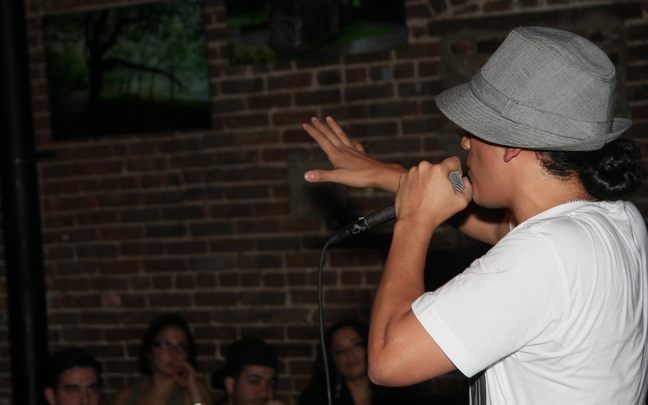


 periMENTAL