
See more here via Buzzfeed.
http://www.buzzfeed.com/krystieyandoli/maya-angelou-quotes-that-will-inspire-you-to-be-a-better


I am NOT the type to post inspirational quotes on social media by the Dalai Lama, Joel Osteen, or even Bill Gates. (Ha.) But I will share this cool news (the part about 250 underprivileged kids) coming out of the Osteen camp because this is what it’s all about, in my opinion — spreading love by helping out! That, in itself, is inspiring; no quotes needed. Thanks to the Wildlife Conservation Society’s Press Office for sharing this bit of news.
❤ –Gina
BRONX, N.Y. — On Thursday June 5, Victoria Osteen along with volunteers from The Generation Hope Project®, will take 250 underprivileged children to the Wildlife Conservation Society’s Bronx Zoo as a part of the activities surrounding this year’s “America’s Night of Hope,” at Yankee Stadium.
The third annual Generation Hope Project® will focus on mentoring—developing one-to-one relationships with young people who need strong role models. Volunteers will have an opportunity to share time with middle school children who might not normally get the chance to join in on the full zoo experience.
Generation Hope Project® will also work with organizations around the Bronx community on service projects including.
Generation Hope Project® is an outreach of Joel Osteen Ministries that engages young adults from around the country and around the world in service to communities in need. Through partnerships with local leaders, organizations, and other churches, GenHope has provided close to 3,000 hours of volunteer service, reaching thousands through its social media messages and bringing supplies and support to those in need. Learn more at www.generationhopeproject.com.
America’s Night of Hope will be held at Yankee Stadium on June 7, 2014 at 7pm. The event, which coincides with the volunteer projects, will draw more than 55,000 from across the nation for an evening of hope and celebration. This year marks the 6th annual event. The first was held at Yankee Stadium in 2009, then Dodger Stadium, US Cellular Field, Nationals Park, and Marlins Stadium in 2013. For more information, go to www.joelosteen.com.
Joel and Victoria Osteen are the pastors of Lakewood Church in Houston, Texas-America’s largest church with more than 52,000 weekly attendees and one of the nation’s most racially and socioeconomically diverse. Joel’s weekly television program reaches more than 10 million households each week in the US and is seen by millions more in over 100 nations across the globe.

Paola Escobar is a graphic artist who lives and works at an advertising agency in Bogotá, Colombia.
My friends over at Colombian art and culture site, Bacánika, turned me onto Escobar and conducted a Q & A with the young artist. When asked about her style, she gave a non-answer that made perfect sense:
“I do not know, I could not describe it, I can hardly do it because in general those who are dedicated to this we are in a constant struggle to find the style, and you will probably never find it. But I always try to leave my essence in all illustrations, through details, as both my childhood and my life were always marked by them. I like to communicate a story and always try to fill my artwork with them. My style has no name.”
See more of Escobar’s work over at Bacánika and at Behance.


Don’t worry, the country isn’t officially paying homage to the likes of Alf. It’s a guerilla (but not viral, considering he’s not using technology) art campaign by Argentine artist, El Fafero.
Other bills feature Diego Maradona, Robocop, and Marlon Brando. Check out El Fafero’s Twitter page here, and the full story (in Spanish) via Mundo Fox.
Important work. Congrats to the new fellows.
The Fordham HIV Prevention Research Ethics Training Institute is delighted to announce that the following individuals have been selected as the 2014 fellows:
 Dr. Erin Bonar, University of Michigan
View original post 326 more words

A friend of mine wrote the following on Facebook today and I nodded along while reading, thinking he was dead on: this CAN’T become another #StopKony2012. (Remember that hashtag?)
#bringbackourgirls cannot turn into:
1) a call for or an acceptance of US military intervention. Beware of calling for US military intervention! That has not led to anyone’s peace and sovereignty. Beware of what you are being fed and what is propagated through the media. Let’s not have Kony part 2. How much do you really know about Nigeria and what is happening there?
2) It also cannot turn into people wearing head wraps at rallies that aren’t actually making political demands or willing to do anything beyond wearing head wraps together.
Activism is about strategy + action—not just taking actions
What can you do:
Think before you act
Do your homework
Evaluate the interest of the parties involved
Organize others
Mobilize interventions that apply pressure politically, economically or socially. (hint: wearing a head wrap does not count)
— Jef Tate
Motherlode‘s (the New York Times‘ motherhood blog) writer KJ Dell Antonia wrote an excellent piece about real ways we can help #BringOurGirlsBack:
“In the long run, the best way to fight extremism is education, especially education for girls,” he said. “More broadly, female empowerment isn’t a magic bullet, but it does help create opportunities and bring women out of the margins and give them a voice. One great program is the Village Savings and Loan, which encourages female savings and entrepreneurship around the world and has a great track record.”
Because no number of educated women are a match for men with AK-47s, we also need to support programs that involve men in promoting gender equality, including women’s education and reproductive rights, like the many members of the MenEngage Alliance, and to talk about gender equality in a way that includes men as well as women.
If the missing Nigerian schoolgirls come home, their problems won’t be over. Even assuming (with ridiculous and probably unwarranted optimism) that they have been untouched during their captivity, their communities and even their male family members may regard them as damaged goods. It’s that attitude, writ large, that led to their kidnapping; on the smaller scale, it may mean they can never regain what they have lost.
“Real action” to bring about change for the schoolgirls of Nigeria, and for the schoolgirls and boys yet to come, can come from our laptops, our raised voices and our wallets if we let the passion that this story ignited burn on. #BringBackOurGirls will end, but it won’t be the end of the story. #GenderEquality isn’t a very exciting hashtag. But it’s the only message that could, eventually, mean #NeverAgain.
Read the whole piece here.

“I was just talking to somebody yesterday who said the worst thing for a parent is to have a child who’s a writer.” — New Yorker cartoonist, Roz Chast.
I would like to write about my parents.
I wrote a couple of columns about my father’s Parkinson’s when I was a newspaper reporter for the Home News Tribune, and I’ve blogged about his illness on this blog once or twice. But I would like to someday write stories about them, their childhoods, and especially, how my dad was pre-Parkinson’s.
And as for my mother, that’s more complicated.
I’ve never been the super close daughter (the type to talk about every single detail with her mom) that she was with her mother. (My grandmother is still alive, but she has Alzheimer’s, which means my mother has lost, in essence, her best friend.) Add in the fact that she is stressed because she’s my father’s full-time caregiver, and it’s even more complicated.
Thankfully, our relationship is a bit better (much less bickering) since I’ve lived on my own (after a separation and subsequent divorce that she didn’t agree with at first) but, like all things, it could be better.
I have some things to work out, or talk about (?), in order to make that happen. And then I hope to write about them more, especially my mother, since she’s not very open about her feelings (hey, maybe we are alike, after all!) because as the most hardworking immigrants I know, my parents have some interesting stories that deserve some pixels on the Internet.
Now back to cartoonist Roz Chast. I learned about her latest work via a wonderful interview on “All Things Considered” on WNYC:
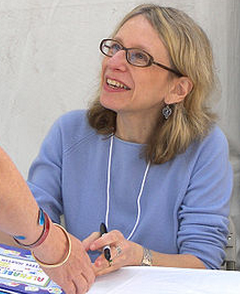
“The longtime New Yorker cartoonist is an only child and became the sole caretaker for her parents, George and Elizabeth Chast, when they reached old age. In her new, illustrated memoir — Can’t We Talk About Something More Pleasant? (Bloomsbury USA, 2014) — Chast mixes the humor with the heartache. It’s about the last years of her parents’ lives and her relationship with them as their child and conflicted caretaker.
“They never had what’s known these days as ‘The Talk’ — an acknowledgement that their deaths were inevitable. As a result, Chast says, everyone was in denial and actively avoided the subject, even as it was staring them squarely in the face.”
“Chast’s parents — who were both born in 1912 — lived independently in Brooklyn up until their early 90s. Things started to go downhill in 2005 when her mother fell off a step stool at age 93. ‘She was in bed for a few days, and it was clear that what was going on was more than the fall off the ladder,’ Chast recalls. ‘That was the beginning of their sort of slide into the next part of old age — you know, the last chapters.'”
My parents are in their late 60s, early 70s. I can’t imagine it getting to this point Chast describes, but I guess my brothers and I should prepare ourselves sooner rather than later. And today, after reading this story in The New York Times, about a man who is 111 years old, I agree wholeheartedly with Chast:
“When people talk about extending the human lifespan to 120 it bothers Roz Chast. ‘That upsets me for a lot of reasons,’ she tells NPR’s Melissa Block. ‘I feel like these are people who don’t really know anybody over 95.’ The reality of old age, she says, is that ‘people are not in good shape, and everything is falling apart.'”
Though my parents aren’t in their 90s, my father has a chronic disease that renders him pretty immobile, and so, I too, can’t imagine wanting to live to 111. (God bless this man who has, though!)
Listen to the entire interview with Roz Chast here, and read an excerpt from her illustrated memoir via The New Yorker.

With all the 24-hour cable news channels and news blogs reporting on the seemingly never-ending immigration debate with a side of bitter polarity, you would think the United States is chock full of folks who don’t want to learn the language, and another group demanding they learn it somehow– and fast!
Well, that’s just not true.
Take the “English Café” at the Lee County Library in Fort Myers, in Southwest Florida. This is a program where non-natives with little (very basic) command of English spend 90-minutes chatting with English as a Second Language volunteers. They also read English-language newspapers. Best part? The service is free, participants may start at any time, and advance registration is not required.
My parents immigrated to the United States in the 1970s. Back then, my dad was able to get a job at a factory, and it was survival of the fittest. If he didn’t know English, he wouldn’t be able to fully understand his boss or communicate with his coworkers. He muddled along picking up scraps by watching television shows and movies. (Lots of westerns, ‘pilgrim.’) But it was rudimentary at best.
Fast forward to the 1980s, and he was able to get a much better job as a machinist at the General Electric plant in Paterson, N.J., a very urban area where most of the workers at this General Electric plant he was working at were working class white or African American. His English had to improve because this was a job he wanted to keep.
So how did he learn? By speaking with us (he often asked us to respond to him in English so he’d get it), and talking with his (mostly) African American coworkers as they worked side-by-side with him. As a result, his English was hip! He would actually get home and say, “What it is?” Ha!
In today’s Internet-addicted world, my father’s scenario would be much tougher. And that’s why programs like English Café are a treasure.
There are many programs like it across the country. But unless one is very involved in local news and services, they may not know such opportunities exist. This is why I’m glad Univision Southwest Florida program, D’Latinos Al Día, reported on English Café. Watch the report below.
(Bonus fact: my aunt is a participant. A recent widow, she’s learning to do more on her own, and as she says at minute 1:33, she feels more equipped to speak English thanks to this “marvelous program.”)
For more information on Lee County’s English Café, visit the library’s website.

Don’t freak out, it’s NOT an upcoming episode of The Simpsons featuring two of the most infamous drug kingpins in history; it’s art.
Italian artist Alexsandro Palombo debuted new work which features Simpsons’ patriarch, Homer Simpson, as notorious Colombian drug lord, Pablo Escobar, and recently arrested Sinaloa, Mexico, cartel boss, Joaquín ‘El Chapo’ Guzman.
“Stop Drug War,” is Palombo’s effort to draw attention to both the drug war that has caused more than 60,000 deaths in Mexico alone, as well as the legalization of drugs, which has has become a popular topic after Uruguay became the first country in the world to legalize the production and sale of marijuana and two American states also decriminalized the drug.
One of the images depicts Homer, as Pablo Escobar, kneeling in front of the photographs of journalist and politician Luis Carlos Galán, journalist Guillermo Cano, lawyer and politician Rodrigo Lara Bonilla, and lawyer Carlos Mauro Hoyos– all victims of drug cartel hits in Colombia.

“Pablo Escobar was a ruthless drug dealer responsible for the massacres of his fellow civilians and officers, but he was also a drug trafficker that was in favor of drug legalization, and his idea was prophetic,” Palombo said in a press release. “If, 30 years ago, the institutions of various countries would have taken the path of the drug legalization, would have there been all that blood shed and a drug dealer as powerful as ‘El Chapo’ today?”
To learn more about Palombo, visit his website.
This blog post contains info gleaned from Deborondo.com and the Huffington Post.

Bronx, NY – May 1, 2014 – The lion cubs are out and about at the Bronx Zoo!
They debuted last fall and were announced by Bronx Zoo Director Jim Breheny via Twitter (@jimbreheny).
Born on Aug. 16, the litter is comprised of three males, Thulani, Ime, and Bahati, and one female, Amara. Their mother is Sukari (9 years old) and father is M’wasi (11 years old). This is Sukari and M’wasi’s third litter.
Lions live in grasslands and open woodlands across much of sub-Saharan Africa, and the Bronx Zoo’s African Plains exhibit is a representation of the East African savannah. One of the most popular exhibits at the zoo, the African Plains opened in 1941 to record crowds and was the first zoo exhibit in North America to showcase African wildlife in a predator/prey setting, with the lions separated from their prey by a moat.
The Bronx Zoo breeds lions as part of the Species Survival Plan, a cooperative propagation program designed to enhance the genetic viability of animal populations in zoos accredited by the Association of Zoos and Aquariums.
In nature, lion populations are drastically declining and African lions are designated as Threatened by the International Union for Conservation of Nature (IUCN).
Info via Wildlife Conservation Society.

 periMENTAL