To speak to events in Ferguson, MO, and the many counts of racialized violence in America, Stay Woke: Write Yourself will gather together artists from the greater community and Fordham students and faculty to create meaningful action through art. It is also a story space for testimonials of racial harmony and violence online. More info here.
For this event, panelists will ask the audience to reframe and re-envision black feminism(s) to include creativity, abundance, and collective liberation in the twenty-first century. Panelists include Fordham University professor, Aimee Meredith Cox, from the department of African and African American Studies. Cox is the author of Shapeshifters: Black Girls and the Choreography of Citizenship, to be published by Duke University Press next year.
It will also include my friend, community food and environment activist, Tanya Fields.
Others include: Florence Noel, Northeast Director of Girls Who Code; Jamilah Lemieux, Journalist and Editor of Ebony.com; and Aiesha Turman, Executive Director of Black Girl Project.
I’ll never forget how my parents forced me to have a special dinner for my 15th birthday. It involved months of big-time arm-twisting. I’ve never been big on birthdays, or, more accurately, the attention that is gushed upon one on that day. I may be a loud, outgoing person, but my thing is to be the person to make people laugh, talk about fun times or things going in the world; not ‘anyway, back to me.’
Secondly, my parents often worked two jobs to make ends meet; I didn’t want them spending money on this big dinner. Also, I was very into wearing black that year. I didn’t want to wear a dress (which turned out to be mint green!)
Although “Sixteen Candles” is one of my favorite John Hughes’ movie, if someone forgot my birthday, trust me, I didn’t sulk; I was happy!
Years later, I still that way about birthdays. This is not to say I’m criticizing close friends who choose to celebrate with bigger to-dos. I enjoy celebrating others’ birthdays. But, I will admit that the whole, “So… what are you doing for your birthday?” pressure gives me anxiety, so I removed by actual birthdate from Facebook last year, which helped. And I love my very close friends (and family) for respecting my wishes on big workups for my “born-day.” Much like New Year’s Eve, I’m the type to agree to have a special drink, but it’s “just another day.” I’m ok with that.
I am NOT the type to post inspirational quotes on social media by the Dalai Lama, Joel Osteen, or even Bill Gates. (Ha.) But I will share this cool news (the part about 250 underprivileged kids) coming out of the Osteen camp because this is what it’s all about, in my opinion — spreading love by helping out! That, in itself, is inspiring; no quotes needed. Thanks to the Wildlife Conservation Society’s Press Office for sharing this bit of news.
The third annual Generation Hope Project® will focus on mentoring—developing one-to-one relationships with young people who need strong role models. Volunteers will have an opportunity to share time with middle school children who might not normally get the chance to join in on the full zoo experience.
Generation Hope Project® will also work with organizations around the Bronx community on service projects including.
WCS’s Bronx Zoo – Volunteers will mentor and take 250 underserved middle-school age children to the zoo.
NYC Food Bank in Hunts Point – Packing food boxes to distribute in the community.
Community Kitchen & Food Pantry in Harlem – Stocking pantry shelves and food prep.
Green Pastures Baptist Church – Major cleanup of Hurricane Sandy damage, organization and rehabilitation of facility.
Bronx Christian Fellowship Church – Major cleanup and organization of warehouse, sorting donations, cleaning outside bays and church repair.
Latino Pastoral Action Center – Major cleanup of classrooms, painting, donation sorting, participating in children’s school activities.
Yankee Stadium Mentoring Baseball Game – Volunteers will accompany mentees and mentors to the game to highlight them and the programs in pre-game activities.
Generation Hope Project® is an outreach of Joel Osteen Ministries that engages young adults from around the country and around the world in service to communities in need. Through partnerships with local leaders, organizations, and other churches, GenHope has provided close to 3,000 hours of volunteer service, reaching thousands through its social media messages and bringing supplies and support to those in need. Learn more at www.generationhopeproject.com.
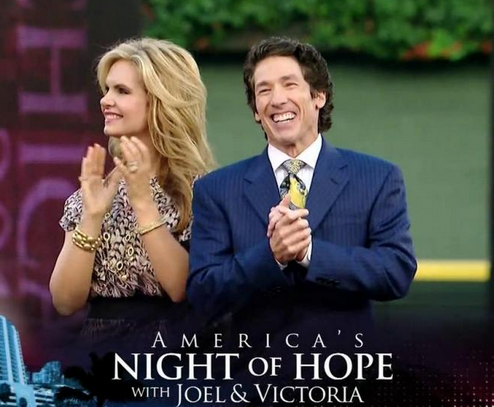
America’s Night of Hope will be held at Yankee Stadium on June 7, 2014 at 7pm. The event, which coincides with the volunteer projects, will draw more than 55,000 from across the nation for an evening of hope and celebration. This year marks the 6th annual event. The first was held at Yankee Stadium in 2009, then Dodger Stadium, US Cellular Field, Nationals Park, and Marlins Stadium in 2013. For more information, go to www.joelosteen.com.
Joel and Victoria Osteen are the pastors of Lakewood Church in Houston, Texas-America’s largest church with more than 52,000 weekly attendees and one of the nation’s most racially and socioeconomically diverse. Joel’s weekly television program reaches more than 10 million households each week in the US and is seen by millions more in over 100 nations across the globe.
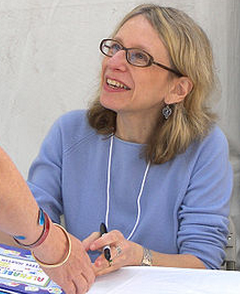
Excerpt from “Can’t We Talk About Something More Pleasant?” by Roz Chast of the New Yorker.
“I was just talking to somebody yesterday who said the worst thing for a parent is to have a child who’s a writer.” — New Yorker cartoonist, Roz Chast.
I would like to write about my parents.
I wrote a couple of columns about my father’s Parkinson’s when I was a newspaper reporter for the Home News Tribune,and I’ve blogged about his illness on this blog once or twice. But I would like to someday write stories about them, their childhoods, and especially, how my dad was pre-Parkinson’s.
And as for my mother, that’s more complicated.
I’ve never been the super close daughter (the type to talk about every single detail with her mom) that she was with her mother. (My grandmother is still alive, but she has Alzheimer’s, which means my mother has lost, in essence, her best friend.) Add in the fact that she is stressed because she’s my father’s full-time caregiver, and it’s even more complicated.
Thankfully, our relationship is a bit better (much less bickering) since I’ve lived on my own (after a separation and subsequent divorce that she didn’t agree with at first) but, like all things, it could be better.
I have some things to work out, or talk about (?), in order to make that happen. And then I hope to write about them more, especially my mother, since she’s not very open about her feelings (hey, maybe we are alike, after all!) because as the most hardworking immigrants I know, my parents have some interesting stories that deserve some pixels on the Internet.
“The longtime New Yorker cartoonist is an only child and became the sole caretaker for her parents, George and Elizabeth Chast, when they reached old age. In her new, illustrated memoir — Can’t We Talk About Something More Pleasant?(Bloomsbury USA, 2014) — Chast mixes the humor with the heartache. It’s about the last years of her parents’ lives and her relationship with them as their child and conflicted caretaker.
“They never had what’s known these days as ‘The Talk’ — an acknowledgement that their deaths were inevitable. As a result, Chast says, everyone was in denial and actively avoided the subject, even as it was staring them squarely in the face.”
“Chast’s parents — who were both born in 1912 — lived independently in Brooklyn up until their early 90s. Things started to go downhill in 2005 when her mother fell off a step stool at age 93. ‘She was in bed for a few days, and it was clear that what was going on was more than the fall off the ladder,’ Chast recalls. ‘That was the beginning of their sort of slide into the next part of old age — you know, the last chapters.'”
My parents are in their late 60s, early 70s. I can’t imagine it getting to this point Chast describes, but I guess my brothers and I should prepare ourselves sooner rather than later. And today, after reading this story in The New York Times, about a man who is 111 years old, I agree wholeheartedly with Chast:
“When people talk about extending the human lifespan to 120 it bothers Roz Chast. ‘That upsets me for a lot of reasons,’ she tells NPR’s Melissa Block. ‘I feel like these are people who don’t really know anybody over 95.’ The reality of old age, she says, is that ‘people are not in good shape, and everything is falling apart.'”
Though my parents aren’t in their 90s, my father has a chronic disease that renders him pretty immobile, and so, I too, can’t imagine wanting to live to 111. (God bless this man who has, though!)
Listen to the entire interview with Roz Chast here, and read an excerpt from her illustrated memoir via The New Yorker.
Conversation. The best way to learn a language. Making mistakes is part of the process.
With all the 24-hour cable news channels and news blogs reporting on the seemingly never-ending immigration debate with a side of bitter polarity, you would think the United States is chock full of folks who don’t want to learn the language, and another group demanding they learn it somehow– and fast!
Well, that’s just not true.
Take the “English Café” at the Lee County Library in Fort Myers, in Southwest Florida. This is a program where non-natives with little (very basic) command of English spend 90-minutes chatting with English as a Second Language volunteers. They also read English-language newspapers. Best part? The service is free, participants may start at any time, and advance registration is not required.
My parents immigrated to the United States in the 1970s. Back then, my dad was able to get a job at a factory, and it was survival of the fittest. If he didn’t know English, he wouldn’t be able to fully understand his boss or communicate with his coworkers. He muddled along picking up scraps by watching television shows and movies. (Lots of westerns, ‘pilgrim.’) But it was rudimentary at best.
Fast forward to the 1980s, and he was able to get a much better job as a machinist at the General Electric plant in Paterson, N.J., a very urban area where most of the workers at this General Electric plant he was working at were working class white or African American. His English had to improve because this was a job he wanted to keep.
So how did he learn? By speaking with us (he often asked us to respond to him in English so he’d get it), and talking with his (mostly) African American coworkers as they worked side-by-side with him. As a result, his English was hip! He would actually get home and say, “What it is?” Ha!
In today’s Internet-addicted world, my father’s scenario would be much tougher. And that’s why programs like English Café are a treasure.
There are many programs like it across the country. But unless one is very involved in local news and services, they may not know such opportunities exist. This is why I’m glad Univision Southwest Florida program, D’Latinos Al Día, reported on English Café. Watch the report below.
(Bonus fact: my aunt is a participant. A recent widow, she’s learning to do more on her own, and as she says at minute 1:33, she feels more equipped to speak English thanks to this “marvelous program.”)
For more information on Lee County’s English Café, visit the library’s website.
Dontadrian Bruce (pictured above), age 15, is a student at Olive Branch High School in Olive Branch, Miss.
On Feb. 3, assistant principal Todd Nichols summoned him out of class. Nichols showed Dontadrian a photo he had posed for during a recent biology project, in which the boy had his hand up displaying three raised fingers – his thumb, forefinger and middle finger. “You’re suspended,” said Nichols, “because you’re holding up gang signs in this picture.”
Three days later, a disciplinary committee confirmed Dontadrian’s punishment: “Indefinite suspension with a recommendation of expulsion.”
Wait, what? The above photo was taken by the boy’s mother, Janet Hightower. It recreates the “incriminating” image: “He’s a good child,” she insists. “I know what he does 24 hours a day.”
Dontadrian also says he had no clue that this gesture was affiliated with the Vice Lords, a Chicago-based street gang with active Deep South chapters. He claims he was holding up three fingers to represent the number on his football jersey, like the other players did during practice.
Read more about Dontadrian’s hand gesture and how, per U.S. Secretary of Education, Arne Duncan, “[exclusionary] discipline is applied disproportionately to children of color and students with disabilities,” here via PolicyMic.
Carlos McCray, a professor in Fordham’s Graduate School of Education, is familiar with cases like Dontadrian’s. His research links discipline with achievement in urban schools and, most recently, he commented on a case (also in Mississippi) in which a 5-year-old who was nabbed by police for wearing the ‘wrong color’ shoes.
McCray co-authored this book on hip-hop culture, values, and school: http://amzn.to/1ixvIRd
McCray’s research found educators are subscribing to the utilitarian principle, thinking, “If I can get a few of these problem students out of the classroom, then I’ll be able to teach everyone else,” it’s effectively ushering a number of students out of school.
That line of thinking is flawed, McCray said, again pointing to the numbers. The New York Times looked at Baltimore public schools and found that in 2004 alone, there were 26,000 school suspensions and expulsions.
“That’s very problematic,” he said. “Research shows the more students are suspended or expelled, the more they’ll end up dropping out. Thirty percent of sophomores who drop out have been suspended three times more than their peers who remain in class. While we talk about the achievement gap, we also have to talk about the discipline gap. How can students learn when they are not in class?”
Everyone who knows me well knows two things about me. First, I am a passionately committed political activist. Second that I am a sports fanatic. Here is how the two defining characteristics of my life came together for me and shaped the upbringing up my daughter Sara in a feminist household.
When we got married my wife Liz Phillips and I decided that Liz would keep her name and that we would bring up our children in accordance with feminist principles. This entailed totally sharing childcare, cooking and household chores. We engaged in collective household decision making, and the creation of hyphenated last names for our children — Naison-Phillips — that reflected our commitment to gender equality.
Some men would consider this arrangement to be a burden. Commitment to gender equality carried one huge benefit. When our first child Sara was born, I enjoyed the freedom to teach her everything about sports that my father taught me—how to hit throw and to catch, how to get up when knocked down, and how to walk onto a ball field as though you owned it. I started sports training with Sara when she was two years old. By the time when she was five, I walked her into the St. Saviour’s Youth Sports League, signed her up for baseball, and volunteered to coach a team.
Fortunately, the league let her play…even though the league was 95 percent boys. There, her abilities proved to be something of a revelation. Sara hit, threw and caught as well as all but a handful of boys her age and soon became a star. She batted lead-off and played the coveted position of pitcher’s mound — coaches pitched to their own teams — where you normally placed your most reliable fielder. She won complete acceptance in the league, became a pitcher at age eight when the league made the transition to kids pitching, and even earned a spot on the much sought-after St. Saviours’s travelling team when she reached the age of 10.
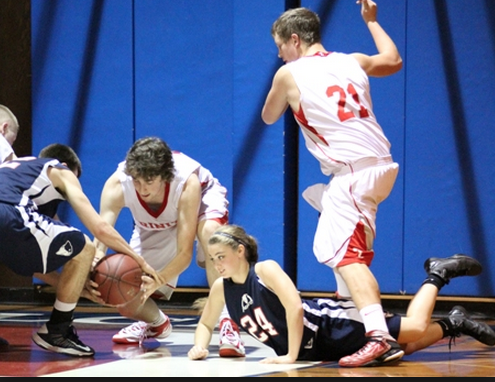
In basketball, Sara left her most indelible impression. Fast, strong, tough and capable of doing 40 push-ups as a result of her gymnastics training, she played on the highly competitive St. Saviour’s 10-and-under boys’ CYO travelling team at the age of eight. Over time, Sara became a highly visible figure in Brooklyn CYO basketball, whose participating parishes extended from Marine Park to Bay Ridge to Bensonhurst, to Red Hook and to Fort Greene. All over Brooklyn, mothers who were rooting for their own teams cheered for my daughter when she came into the game and the boys on the other teams found themselves caring less than they were being guarded by a girl and more than they were about to get stripped of the ball by that girl if they didn’t protect their dribble.
That lasted until Sara was 10. That year, she started on the boys’ team that won the Brooklyn CYO championship—beating arch-rival St. Thomas Aquinas of Flatbush in the Championship Game. The Aquinas coaches grumbled loudly after the game, claiming that her presence on the team gave St. Saviour’s an unfair advantage because the boys on other teams couldn’t play with as hard with a girl guarding them. Without informing the St Saviour’s coaches, they launched a secret — and ultimately successful — campaign to ban girls from boys’ CYO basketball.
We did not find out about the ban until a year later when St. Saviour’s 11-year-old team lined up to play Aquinas in the first game of the season. The Aquinas coaches loudly proclaimed “the girl can’t play,” at the beginning of the game, quoting the newly approved league rule. Pandemonium broke out in the gym and I had to be held back from physically assaulting the Aquinas coaches. The referee said he thought the rule was “ridiculous.” The real heroes proved to be Sara’s male teammates, who refused to take the floor unless she played. The result: the game was played under protest with Sara on the court, and I was determined to find out what the hell had happened.
My years of political activism quickly jumped into high gear. After calling the league director and finding out that a rule banning girls from boys’ CYO had been passed, I called friends of mine who wrote for Newsday and for The New York Times and told them what had happened. Within hours they assigned the story to reporters. A day later, front page articles on Sara — including pictures — appeared on page three of Newsday and on page one of the Metro Section of The New York Times. By 7 AM, every television station in New York City called the house to ask to film stories about Sara. Television segments were shot at Fordham in which she shot baskets with the Fordham’s women’s basketball coach and in the schoolyard of JHS 51, where they showed her taking shots with her teammates.
The wave of publicity achieved its desired outcome. By 5 PM, Brooklyn CYO leaders released a statement saying that the rule had been rescinded. Sara and other girls were free to play on boys’ teams if their parish didn’t field girl’s teams.
The drama did not end there. Sara’s story touched a chord with people all over the country who viewed the effort to ensure that girls enjoyed the right to participate at the highest levels in sports as a human rights issue—not merely as a question of justice and of fairness. The New York Times and Newsday published editorials supporting her right to play, a Catholic social-justice group developed Continuing Catholic Development lessons based on what she experienced. Sesame Street came to our home to film a three-minute segment about Sara and about her teammates!
For Sara, who became a nationally ranked tennis player and captain of the Yale tennis team, this proved to be a formative experience in a life of athletic and academic success. For our whole family, this odyssey affirmed the importance of fighting for the rights of all people to realize their potential in all aspects of human endeavor.
A revolution begins with many small acts. This is the story of how one family took the lessons of Women’s History Month to heart.
Grab your máscaras and join us as we celebrate the joyful Caribbean and Latin American tradition of Carnaval with music, storytelling, dance workshops, and art-making for all ages. It all takes place on Saturday, Feb. 15, from noon to 4 p.m. at El Museo del Barrio in Harlem.
Two of Teen Mom’s stars. One (Farrah, left) has already starred in porn.
I was that girl in high school who rolled her eyes any time a friend declared she and her boyfriend were so “in love,” they’ve already discussed having a baby, and if it happened by mistake, they would raise that baby and be a happy little family. If that girl started picking out names, chances are I said, “Eww. Gross. Who wants a baby?”
I’m no Grinch-like baby-hater. I think babies are fine, some of them are even cute, but I just figured that a baby would get in the way of cheerleading and yearbook, or the cool college parties of my future. Why add messy diapers or a screaming toddler into that mix?
Which is why I thought MTV‘s “16 and Pregnant” and it’s more successful spinoff, “Teen Mom” were a brilliant idea. Once they showed the hardships of parenting, teens all over the United States would commit to abstinence, right?
I watched from time to time and saw the show didn’t pull any punches. Parenting was hard, expensive, and in many cases, school (high school or college) would have to be put on hold, not to mention a social life. Often, the parents of these teen moms and dads, would judge how the young parents were (or were not) parenting, and (I’m pretty sure) almost always, the new parents would break up, and tears were a plenty.
That birth rate was going to plummet.
But as the show gained immense popularity, I panicked. (And so did pro-abstinence Fox News, of course!) Teen Mom was so buzzworthy, that the show’s stars were constantly gracing the tabloids (or the monologues of late night TV), and not always in a bad way. Sometimes they got makeovers, complete with free plastic surgery. I wondered: ‘Is this going to inspire pregnancies?’
Well, apparently not. Phew!
According to NPR’s “All Things Consdiered,” a new study attributes a portion of the decline to these shows!
Using birth rate data in the show’s media markets, and combining that with historical data on Google searches and Twitter data, they found some patterns:
“The day that an episode airs and the next day we see large spikes in the rate at which people are searching for how to get birth control and we see higher volumes of searches in places where more teens are watching MTV,” Kearney told Cornish on “All Things Considered.“
“The Twitter data was astounding. In the Twitter data we can actually see what teens are tweeting and there are literally thousands of tweets that say things like: “Watching 16 and Pregnant reminds me to take my birth control.” [And] “16 and Pregnant is the best form of birth control.” So getting that insight into what teenagers were thinking about while and right after they watched the show was really informative.”
The numbers are impressive. Kearney and her team estimate that “teen birth rates as a result of this show fell by 5.7 percentage points over this 18-month period. To put that in perspective, that is a third of the overall decline in teen birth rates over that time.”
That’s impressive. And I hope the trend continues.
MTV should come up with more reality shows that may help youth in this country. Perhaps a more regular look at drug addiction, binge drinking, sexting and social media privacy, or rape, for instance.
Who knows? Perhaps “Catfish,” MTV’s show about the “truths and lies” of long distance online dating is inspiring young people to be cautious about who they carry on with on the internet.
I have an interesting relationship with Colombian vallenato music in that my Colombian-music loving self didn’t always love it. I recall my cousin Maria asking me why I didn’t love it at and me saying “it’s old people music.” Ha! (We joke now that she was — and still is– a romantic, and I was [and still am] a cynical cold hearted kid. Go figure.)
I often heard vallenato at parties growing up because it is somewhat of a somber music, in which the ‘grownups’ sat around, reminisced about their homeland, and had shots of aguardiente. At home, my dad preferred to play salsa and cumbia as he was always more of an upbeat music fan (like me!).
Like my father, I preferred to listen to salsa and cumbia, and later champeta, but I gained an appreciation for vallenato as a young adult when I really started paying attention to the lyrics. So sentimental!
This form of music originated from farmers who, keeping a tradition of Spanish minstrels (Juglares in Spanish), mixed also with the West African-inherited tradition of griots (African version of juglar), who used to travel through the region with their cattle in search of pastures or to sell them in cattle fairs. Because they traveled from town to town and the region lacked rapid communications, these farmers served as bearers of news for families living in other towns or villages. Their only form of entertainment during these trips was singing and playing guitars or indigenous gaita flutes, known as kuisis in the Kogi language, and their form of transmitting their news was by singing their messages. (Source.)
Known as “el cacique (native chief),” Diaz was regarded as one of the best singer-songwriters of vallenato. But he didn’t come without controversy:
Diaz led a tempestuous life, serving time in jail over the death of a fan at a party in his home. He often showed up late to concerts or not at all, something his fans put down to his addiction to drugs and alcohol.
…
In 1997, at the height of his career and shortly before the launch of his album Mi Biografia (My Biography), a fan and friend of Diaz, Doris Adriana Nino, was found dead by the side of a highway in Tunja province. Forensic experts at first said that she had died of a heart attack following a drug overdose at a party hosted by Diaz, but a later forensic report suggested she had been suffocated.
After a lengthy trial, Diaz was sentenced to 12 years in jail for homicide, a sentence which was later reduced to six years.
Diaz, who had been put under house arrest, went on the run when he was due to be transferred to jail, allegedly hiding away in an area controlled by the infamous paramilitary leader known as Jorge 40. He handed himself in to the authorities in 2002 and, after having his sentence further reduced, was released in 2004. (Source.)
Much like when tropical music king Joe Arroyo died in 2011, Colombians have taken to the streets to pay homage to Diaz. And Valledupar’s mayor has declared four days of mourning.
Radio stations are playing songs from his vast discography nonstop.
There are several favorites of Diaz I love, but I’ll leave you with “Mensaje de Navidad” since it’s appropriate for the Christmas season:
Again, the lyrics are somber, but true, as the holidays aren’t always “joyous” if one is away from loved ones.
Unos dicen: Que buena las navidades Es la época más linda de los años Pero hay otros que no quieren acordarse De la fiesta de Año Nuevo y aguinaldo Pero hay otros que no quieren acordarse De la fiesta de Año Nuevo y aguinaldo
 Two great #race related events this weekend in New York City:
 For this event, panelists will ask the audience to reframe and re-envision black feminism(s) to include creativity, abundance, and collective liberation in the twenty-first century. Panelists include Fordham University professor, Aimee Meredith Cox, from the department of African and African American Studies. Cox is the author of Shapeshifters: Black Girls and the Choreography of Citizenship, to be published by Duke University Press next year.






 periMENTAL