As Bill Keller wrote in The New York Times on Oct. 27, “Glenn Greenwald broke what is probably the year’s biggest news story, Edward Snowden’s revelations of the vast surveillance apparatus constructed by the National Security Agency (NSA). He has also been an … an advocate of a more activist, more partisan kind of journalism.”
Well, on Nov. 14, Greenwald will join a powerhouse of panelists at Fordham Law School to discuss the new revealed surveillance powers of the NSA.
Panelists, including author and NSA expert, James Bamford; playwright and professor, Ariel Dorfman; and computer security and privacy specialist, Bruce Schneier; and other distinguished guests, will discuss:
What effect is the expansive American surveillance state having on us?
Are the programs Edward Snowden revealed inhibiting the way we think, speak, and create, distorting social interactions, or damaging individuals or communities?
Join luminaries from the fields of literature, technology, media, and policy for a discussion of what we know—and don’t yet know—about how surveillance is reshaping our public and private lives.
I grew up in the city of Paterson, NJ, and aside from riding my bike almost every day in the summer, playing in the house, and gym class during the school year, I didn’t get a ton of exercise. There weren’t any organized sports in the tiny Catholic School I attended and the city I lived in didn’t have any recreational leagues.
Not surprisingly, I gained (and lost, and sometimes gained again) the freshmen 10 in high school and the freshmen 15 in college.
I started working out (aerobics classes and the like) my senior year of college and have been pretty hooked ever since. There was a two-year period in my life where it was obsessive (two hours or more a day) and when I got help for that, I cut back. Eventually, I found a happy balance (I go anywhere from 3-5 days a week for cardio and strength training) that includes walking my dog for about 40-60 minutes per day. And I live in a place where a ton of walking is commonplace — New York City!
The reality is I’ve always had to work out and watch what I eat. Luckily, I enjoy the working out part the best. But there are some people who have never had to work out (like my brothers!) who, later in life, are finding they have to. And they don’t always like it. Here’s a piece about the fitness as an adult by my older brother, Richard Vergel, in Vida Vibrante.
A Latino Dad Reflects on Fitness
I hate working out. Always have. It’s a chore. It hurts. It’s not even free. Think about it: Gym memberships, brand name sneakers, well-built bicycles, boxing gloves, track suits, tennis racquets, etc. Whatever you’re into, money will be spent. My point is growing up, I wasn’t the most active kid in the world. But I was lucky, because I looked decent considering I didn’t work out; I wasn’t el gordito or el flaco. I was height-weight proportionate since puberty, so I got away with not working out.
We won’t get into why I didn’t play school sports right now (I’ll save that for another article) but I wish I did. Playing sports as a kid usually leads to a healthier lifestyle, and improved social and leadership skills. Still, I shied away from physical activity. Yet, ironically, I always had friends who were into fitness, ever since high school. They always tried to get me to lift weights with them, and I would try it, see zero results, and go back to my favorite sport – couch surfing. But that was then, this is now.
Now I’m a 42-year-old dad, who likes to eat his rice and beans and chorizo from time to time. I still look pretty good, thank you very much, but now my metabolism has slowed down and I have no choice: I’ve got to work out to stay in shape – no – to GET into shape.
Haven’t updated music news in a while, so here goes…
The Brooklyn-based psychedelic salsa band, La Mecanica Popular, have released a new video for their single, “La Paz del Freak.” Great song and I’m pleased I have a CD for my dad. The man loves his salsa. Always has. Check out the video, and read about the meaning of the song, on Sounds and Colours! And if you’re in NYC, check them out at Lit Lounge on the 21st.
La Mecanica Popular. Photo by Gina Vergel
My homeslice Christian Vera from Chicago’s SOULPHONETICS crew sent me a beautiful mix. It’s got some sultry Brazilian tunes in it and, to me, that equals love. Close your eyes, pretend you’re on a beach in Rio, and listen here. (Free download, too!)
Photo via Soulphonetics on Facebook.
In the wake of Isabela Raygoza’s great “20 Spanish-Language MCs Everyone Should Hear” article in MTVIggy this week, Christian Vera turned me onto a Puerto Rican-by-way-of-Chicago rapper, the Color Brown. I always appreciate an emcee who can rap clearly the whole song through, so lyrics are truly heard, so I’m a fan upon first listen. I plan to explore more, though. There’s a lot on his Soundcloud.
Start off with this track, “Exilio,” since it opens with the sound of the coquí, and that made me miss Puerto Rico.
Elvis Costello has released a new album with The Roots. I repeat: Elvis Costello and The Roots. Listen to this wonderful collaboration via WFUV.
Throwback Thursday. This remix by Uproot Andy shuffled onto my earbuds last night when I was walking my dog. “El Botellon” was released on Bersa Discos in 2008? Is that right? All I know is I always requested it the year I first met him, which I believe was 2011. (And he obliged. What a guy!) The track ever gets old.
Finally, I’m on a real soul kick. Charles Bradley! Lee Fields! Take me to a Daptones party! (Or the next best thing. Charles Bradley and more at Williamsburg Park on the 2oth.) Watch this 2011 performance of “Why Is It So Hard?” from a live session (backed by The Menahan Street Band) on KEXP in Seattle. Phew! Deep lyrics.
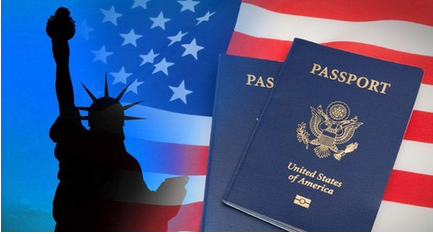
Fordham University’s Center on National Security will host a a symposium on the complex and shifting nature of citizenship rights in a post 9/11 world on Friday, Sept. 20. The event is free. Register here. Among topics for discussion:
How have the post 9/11 legal and policy battles affected the legal rights of citizens and non-citizens? How can we best understand the tensions between the state’s duty to protect its citizens and the desire to protect individual rights and liberties?
Agenda and speakers:
9:45 a.m. – 11:15 a.m. – Panel 1: Enemy Citizens: Rethinking Rights in Times of War
Baher Azmy, Center for Constitutional Rights David Cole, Georgetown University Law Center Thomas Lee, Fordham Law School Peter Margulies, Roger Williams University School of Law Michael Paulsen, University of St. Thomas School of Law Moderator: Karen Greenberg, Center on National Security atFordham Law School
11:30 a.m. – 1:00 p.m. – Panel 2: US Citizenship and the Right to Have Rights
Linda Bosniak, Rutgers-Camden School of Law Jennifer Elsea, Congressional Research Service Andrew Kent, Fordham Law School Neomi Rao, George Mason University School of Law Moderator: Martin Flaherty, Fordham Law School
1:00 p.m. – 2:15 p.m. – Lunch Speaker: Benjamin Wittes, Brookings Institution2:15 p.m. – 3:45 p.m. – Panel 3: Gaining and Losing Citizenship in the National Security Context Muneer Ahmad, Yale Law School Ramzi Kassem, City University of New York Law School Peter Spiro, Beasley School of Law, Temple University Stephen Vladeck, Washington College of Law, American University Leti Volpp, UC Berkeley Law School
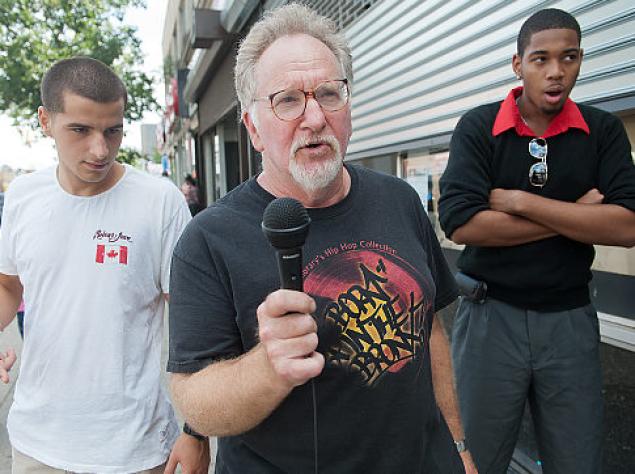
Among the many things I love about my job at Fordham University is that I get to deal with academics on a daily basis. Sometimes, I sit in on their classes. One of the most interesting professors is Mark Naison, professor of history and African American Studies.
For as long as I’ve been here, he’s taught a very popular, hard to get into (due to it filling up very quickly) class called, “From Rock & Roll to Hip Hop: Urban Youth Cultures in Post War America.” It’s a class where music is heard (the rock & roll and soul stuff is GREAT) and special guest musicians give performances and mini-lectures. It all makes me wish I was an undergrad!
You can read some media coverage of Dr. Naison’s class, as well as his alter-ego, “The Notorious Ph.D., below. (Yes, Dr. Naison is known to rap.)
Check out the syllabus for the Fall 2013 semester here (bold emphasis mine):
AFAM 3134 From Rock and Roll to Hip Hop: Urban Youth Cultures in Post War America Dr. Mark Naison
Course Description:
Since the late 19th Century African Americans have exerted a powerful influence on the development of American popular music. Forms of musical expression developed in African-American communities have been reinterpreted and marketed to create the modern music industry, shaping the development of Tin Pan Alley, the Broadway musical stage, the record industry, the modern dance band, and music radio.
Until the end of World War II, racism and lack of capital kept African-American artists and entrepreneurs on the margins of this activity, denying them access to commercial venues that would reward them for their creativity and create a national audience base outside the black community. Only a handful of Black artists -Louis Armstrong, Duke Ellington, Cab Calloway, Billie Holliday, Ella Fitzgerald, Marian Anderson, Paul Robeson- had large enough followings outside the “race market”- the section of the music industry targeted to blacks- to make them truly national figures In post World War II era, however, the terms of this cultural interchange began to shift. Civil rights victories, north and south, black migration to urban areas, and the opening of new economic opportunities in industry and government employment set the stage for a new relationship between blacks and the music industry. As radio stations in major cities began to tap into the growing African-American market, black music of all types-gospel blues, swing, rhythm and blues- began to hit the airwaves.
The newest of these genres, rhythm and blues, a urban music that fused sweet harmonies and powerful dance beats, sparked a musical and commercial revolution by attracting a huge underground audience among whites. By the early 1950’s, “black” music radio from Memphis to Los Angeles was attracting hundreds of thousands of white listeners, most of them under the age of twenty five, and sparking an unexpected growth of record sales for artists who had only aimed for the “race market.” In several cities, white disc jockeys decided to tap into this new youth audience by incorporating rhythm and blues into their formats and got such a huge response that they made it the centerpiece of their shows.
Calling it “rock and roll,” they marketed it as youth music rather than black music and looked for white artists who could play it to supplement the already established black stars. This marketing strategy was brilliantly successful. By the early sixties, rock and roll had become the musical language of a generation of American youth, crossing racial and cultural barriers that had never previously been bridged by the music industry.
Though white entrepreneurs and artists made the bulk of the profits in this billion dollar business, scores of black artists cracked into national markets that had previously been closed to them and shaped the musical tastes of millions of young whites. Chuck Berry, Little Richard, the Drifters, the Shirelles, the Coasters, Lloyd Price, Fats Domino, Sam Cooke, Ray Charles, to name a few, were central to the early success of rock and roll, and their influence would later be built on by Motown artists like the Supremes, the Four Tops and the Temptations, and soul singers like James Brown, Otis Redding and Aretha Franklin. The terms of cultural interchange in this music were shaped by the site of its creation; the post-war metropolis. Rock and roll was the product of a long economic boom that brought blacks into the center of the industrial economy and placed them in close proximity with the descendants of white and latino immigrants. On street corners and in school gymnasiums, in clubs and theaters, in radio stations and recording studious, African-American artists and entrepreneurs mingled with musicians, producers and songwriters of other nationalities.
In the earliest days of rock and roll, the sources of creativity flowed upward from city streets, but as the music became more popular, the recording industry was taken over by media conglomerates, removing its experimental, grass roots atmosphere and separating it from its African-American roots. By the late 1960’s and 1970’s rock and roll had become typecast as “white” music, identified more with its white suburban following than its African-American originators; while African-American artists moved into niches in the music market where a modified urban sensibility still prevailed- funk, disco, soul, and pop. However, African-American and Latino youths, trapped in decaying neighborhoods savaged by disinvestment and government neglect, found themselves disfranchised by these musical developments.
In post-industrial cities where vacant lots, shuttered factories, and decaying schools marked the boundaries of crushed hopes and declining opportunities, young blacks and Latinos, supported by a small number of adventurous whites, invented a new music that fused verbal improvisation, scratching and back beats and fragments of previous musical genres into a jarring, densely rhythmic, compulsively danceable mix. Played in community centers and schoolyards, house parties and small clubs, the music initially attracted little interest from recording companies or commercial radio. But its extraordinary popularity among urban youth soon caught the attention of neighborhood promoters, who began recording the music, and hip audiences in the largely white downtown “punk” scene.
By the early 80’s, hip hop or rap, had started to crack into mass markets and commercial radio, even though most established professionals didn’t regard it as real music. But the music accurately expressed the sensibility of people who had been left out post-industrial social order or who were rebelling against its mores. Hip hop, despite fierce skepticism and opposition, not only survived, but exploded becoming the most commercially successful musical form in the world by the mid-90’s, defining not only the sensibility of urban youth in the United States, but young people of various backgrounds all over the world.Once again African-American cultural creativity, forged in an urban setting, had redefined the musical tastes of a generation.
In the course that follows, we will examine how the sensibility and musical creativity of urban youth, in two very different historical periods , inspired musical revolutions which transformed the tastes of entire generations, crossing boundaries of race, gender, nation and social class. How could this happen twice in fifty years? What does this say about the racial/cultural dynamics of post-war American society? About the connection between African-American culture and American culture? About race and gender dynamics in the culture industry? About the role of women in musical forms which emphasize an insurgent, eroticized masculinity and turn women into objects of desire and/or contempt? About how rebellion can be marketed, coopted and turned into an instrument for material gain?
To get at these questions, the course will use music, film, and literature as well as historical writings on the music industry and contemporary urban life. To add depth to our portrait, we will also explore musical countercultures of international derivation particularly punk, reggae, salsa and reggaeton, and look at how folk music and jazz periodically invade and occasionally shape popular musical forms. We will also explore how these musical forms become internationalized and how they are being brought to life today in new ways in nations around the world.
We have a graduate assistant working with the class, Melissa Castillo Garsow, who will give a few lectures and presentations on the globalization of hip hop. At various points in the class, people involved in the creation of the music we are studying will come to class to perform or talk about their work. There will also be an opportunity for students in the class to perform their music, inside or outside of class. We draw no line between musical creativity and musical analysis. Both are welcome in our classroom.
I. An Overview of Popular Music in the US: Garafalo and Waksman Rockin Out, Introduction
2. Some Antecedents of Rock and Roll: Garafalo and Waksman, Rockin Out, chapters 1 and 2, Rock and Roll, Race, and the invention of the “Teenager:” Garafalo and Waksman, Rockin Out, chapters 3-5 Echols, Scars of Sweet Paradise, chapter 1
3. Soundtrack to Social Revolution, Soul Music, Civil Rights and the Rise of the Counter Culture: Guralnick, Sweet Soul Music, 1, 3, 4, 5, 7, 10, 11 Echols, Scars of Sweet Paradise, 2-7 Garafalo and Waksman, Rockin Out, chapter 6
4. Black Power, White Flight and the Resegregation of Popular Music: Guralnick, Sweet Soul Music, ch. 12 Echols, Scars of Sweet Paradise, 8-9 Garafalo and Waksman, Rockin Out, Chapter 7, Mid-Term Examination
5. The Rise of Hip Hop: Creativity and Destruction in the Post-Industrial City: George, Hip Hop America, chapters 1-2, Foreman and Neal, That’s The Joint, selections Mark Naison “The Morrisania Roots of Hip Hop Culture” (article sent on internet) Mark Naison “From Doo Wop To Hip Hop” (article sent on internet)
6.. Caribbean and Latin Influences in Hip Hop Culture: Foreman and Neal, That’s The Joint, selections, Class Presentations/Lectures by Melissa Castillo-Garsow
7. Images of Rebellion: MTV, Music Videos, and Commercialization of Rap: Garafalo and Waksman, Rockin Out, chapters 8, 10 George, Hip Hop America, chapters 3-4, Foreman and Neal, That’s The Joint, selections
8. The Crack Epidemic and the Rise of Gangsta Rap: George, Hip Hop America, chs. 5-10 Foreman and Neal, That’s The Joint, 11, 17, 26, `44, Jay Z Decoded
9. Hip Hop Wars: Gender, Sexuality and the Politics of Contemporary Rap: George, Hip Hop America, chs. 11-18 Foreman and Neal, That’s The Joint, selections
10. The Globalization of Hip Hop: Foreman and Neal, That’s The Joint, selections, Class Presentations/Lectures by Melissa Castillo Garsow
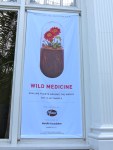
Five years living in New York City and I’d never visited the New York Botanical Garden in the Bronx. What a mistake! It’s 250 acres of gorgeous and they hold special exhibits, like the one on “Wild Medicine” (medicinal plants used all over the world) that runs until Sept. 8.
They offer discounts and specials if you use your Mastercard.
First Photo: A silver leaf langur (Trachypithecus cristatus) was born this spring in the zoo’s JungleWorld exhibit. Infants sport a striking orange-colored coat in comparison to the adults’ silvery gray color. The coat will remain orange for three-to-five months before gradually turning gray. The baby stays very close to its mother, making it difficult to determine the monkey’s gender. Native to the rainforest canopies in Brunei, Indonesia, and Malaysia, nearly 80 percent of the langur’s diet consists of leaves. Silver leaf langurs are listed as “near threatened” by International Union for Conservation of Nature (IUCN). WCS’s Bronx Zoo has the largest breeding population of silver leaf langurs in North America.
Second Photo: A brown collared lemur (Eulemur collaris) was born this spring in the Bronx Zoo’s Madagascar! exhibit. Brown collared lemurs are primarily active during the day, but may move and forage at night. They are native to the tropical forests of southeastern Madagascar, where their range is threatened by charcoal production and slash-and-burn agriculture. This devastating loss of habitat is the primary reason the species is listed as “vulnerable” by the IUCN.
Third Photo: The Bronx Zoo’s Congo Gorilla Forest is home to a young mandrill (Mandrillus sphinx) born last fall. The baby has grown quickly and is already running and playing in the exhibit with the rest of the troop. Mandrills are found inCameroon, Congo, Equatorial Guinea, and Gabon. Mandrills are listed as “vulnerable” by IUCN and are threatened by habitat loss and hunting for bushmeat.
All three births are part of the Species Survival Plan (SSP), a cooperative breeding program administered by the Association of Zoos and Aquariums to maintain genetic diversity in zoo populations.
WCS works in the countries where lemurs, langurs, and mandrills occur in the wild to save these and other primate species.
The Wildlife Conservation Society’s Bronx Zoo is open daily from 10:00 a.m. to 5:00 p.m. weekdays, 5:30 p.m. weekends from April to October;10:00 a.m. to 4:30 p.m November to March. Adult admission is $16.95, children (3-12 years old) $11.95, children under 3 are free, seniors (65+) are $14.95. Parking is $14 for cars and $16 for buses. The Bronx Zoo is conveniently located off the Bronx River Parkway at Exit 6; by train via the #2 or #5 or by bus via the #9, #12, #19, #22, MetroNorth, or BxM11 Express Bus service (from Manhattan that stops just outside the gate.) To plan your trip, visit bronxzoo.com or call 718-367-1010.
The Wildlife Conservation Society saves wildlife and wild places worldwide. We do so through science, global conservation, education and the management of the world’s largest system of urban wildlife parks, led by the flagship Bronx Zoo. Together these activities change attitudes towards nature and help people imagine wildlife and humans living in harmony. WCS is committed to this mission because it is essential to the integrity of life on Earth.
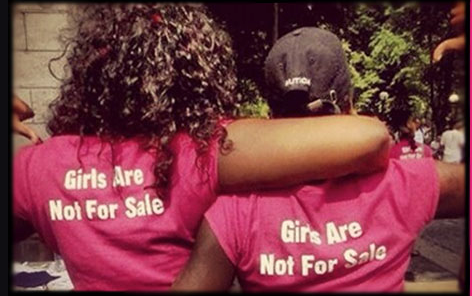
Throughout my tenure here at Fordham University, I’ve learned about many great non profit and advocacy organizations in New York City. One such organization is the Girls Educational & Mentoring Services (GEMS), which serves girls and young women who have experienced commercial sexual exploitation and domestic trafficking.
GEMS, which has a relationship with Fordham’s Graduate School of Social Service’s Institute of Women and Girls, was founded in 1998 by Rachel Lloyd, who had been sexually exploited as a teenager. GEMS has helped hundreds of young women and girls, ages 12–24, who have experienced commercial sexual exploitation and domestic trafficking to exit the commercial sex industry and to develop to their full potential.
Any notion I ever had about prostitution was completely changed one day when I covered a Fordham / GEMS event where a young girl talked about how an ex-boyfriend forced her into the lifestyle and GEMS helped her get out. It’s a form of human trafficking, though not in the traditional way people tend to think of trafficking in developing nations.
GEMS and Fordham’s Institute of Women and Girls are co-hosting an event called, “Before,” on June 28, from 6 to 8 p.m., at Fordham’s Lincoln Center campus. You can RSVP here.
“Before” is an evening of original monologues written by GEMS staff and fellows preformed at Fordham University’s Pope Auditorium. There will also be a survivor created art show and light refreshments.
The murder of Mark Carson (pictured above), who was shot and killed in Greenwich Village in an anti-gay hate crime, brought a message to New York City: although we have come far in ensuring the rights of the LGBTQ community, we have not come nearly far enough.
With the aim of promoting social justice and a culture of tolerance, Fordham’s Be The Evidence Project (BTEP) will host a presentation and follow-up dialogue on the current standing and future of LGBTQ rights.
“What a Tipping Point Looks Like: LGBTQ Rights and Future”
Tuesday, June 18
12:30 p.m.
South Lounge | Lowenstein Center | Lincoln Center Campus
113 West 60th Street | New York, NY 10023
According to Dictionary.com:
/ˈraCHit/ Noun A device consisting of a bar or wheel with a set of angled teeth in which a pawl, cog, or tooth engages, allowing motion in one direction…
Here’s how popular slang lexicon Urban Dictionary defines it:
ratchet: adj. a term for someone who is either 1. a whore 2. dirty/nasty 3. ghetto as HELL 4. being annoying 5. busted
How did the urban community come to adopt this word and why?
This weekend on WFUV‘s Fordham Conversations, Robin Shannon talks with Fordham University student Julianny Gomez and Dr. Aimee Cox, an assistant professor of African American Studies, about the popular slang term.
Julianny’s research examines how the derogatory term has been adopted as a way for young African Americans to police, embarrass and degrade one another.
Tune in to 90.7 FM on Saturday, June 8, at 7 a.m., or listen online here.
 As Bill Keller wrote in The New York Times on Oct. 27, “Glenn Greenwald broke what is probably the year’s biggest news story, Edward Snowden’s revelations of the vast surveillance apparatus constructed by the National Security Agency (NSA). He has also been an … an advocate of a more activist, more partisan kind of journalism.”






















 periMENTAL