Dr. Atul Gawande just wanted to give a patient some hope. But he ended up saying something he would regret.
In FRONTLINE’s new film Being Mortal, Gawande remembers treating Sara Monopoli, a woman who was diagnosed with Stage IV lung cancer at 34, in the ninth month of her pregnancy. After giving birth to a healthy baby girl, Monopoli was diagnosed with a second disease: thyroid cancer.
In the film, Gawande tells Sara’s husband, Rich, that he knew she would almost certainly die of lung cancer, but he still gave the family hope that an experimental treatment might help treat both cancers. Rich surmises his family’s hope must have been infectious.
“You had joined us,” he tells Gawande. “We had our sunny disposition, hoping for the best.”
“The reason I regret it is because I knew it was a complete lie,” Gawande replies. “I just was wanting something positive to say.”
The conversation captures the dilemma suffered by doctors, families and patients with a terminal illness. The patient faces a painful decision: Whether to keep fighting a disease through every last treatment, trying to live as long as possible, no matter how painfully, or to live out the final days as well as possible.
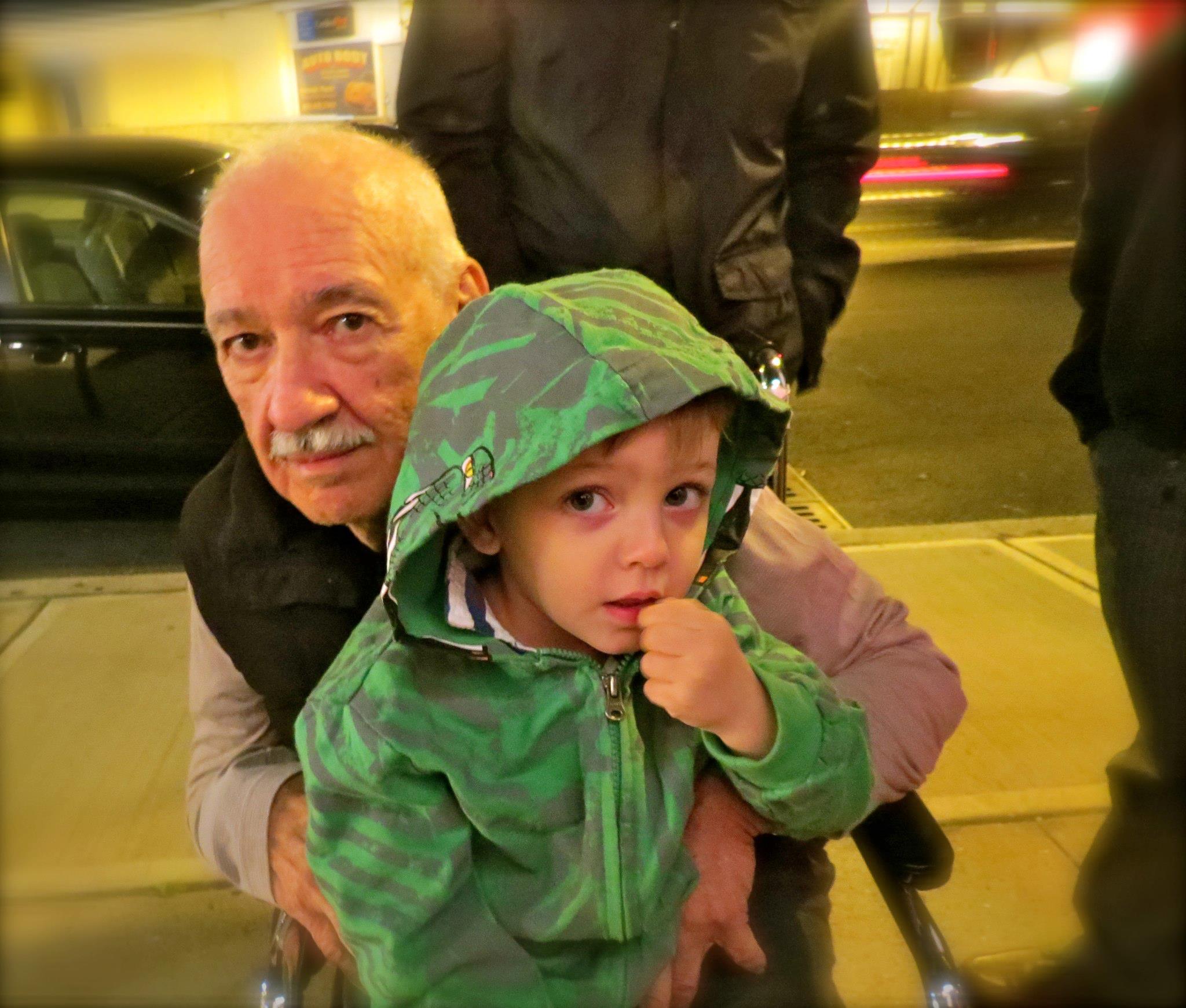
My parents and I with my nephew at his preschool graduation in June 2014.
Earlier this evening, my very tired mom and I walked through the hallways of Hackensack Medical Center so we could meet my dad, who was being transported by paramedics, to a long term rehab facility in Fair Lawn, NJ: Maple Glen Center, a Genesis Healthcare facility.
On our way to the elevator, we encountered a super cute older gentleman who looked a lot like Fred Mertz (a character from 1950s sitcom, ‘I Love Lucy.’) He asked us who our patient was. I explained. He asked what rehab center my dad was being moved to, because his mother was in the hospital, and the facility she was in previous to her hospital admission, was “not so good.” Turns out it Care One Teaneck, which is a sister facility to Care One Wellington, where my dad was a patient in for about two and a half days before his blood pressure dropped due to dehydration and he was rushed back to the hospital. (Turns out the same happened with the cute little old man’s mom.)
This is our new reality.
This is what we have to deal with from now until my dad is well enough to come home, or goes to a place that is not home. People who have gone through the nursing home/rehab facility experience advise us to be there “at all times,” a near impossibility for my immediate family; we all work. (Today I filled out paperwork for my mother to take a leave of absence from her main part-time job, but it’s important for one of us kids to be by her side to provide her some respite.)
It’s really hard to swallow, but I have to be the stronger person. I have brothers, but I can see how this is harder for them. Two sons that always saw our dad as an active, strong, and funny guy, and how he’s a shell of the person he once was. I’m daddy’s little girl. I tell it like it is. I am there and am handling more of the being there, and paperwork of healthcare, because I must.
I cannot seem to form tears about my dad’s condition. I hold it in, save for every fourth day, when I can no longer hold it and something makes me angry to set me off. Yesterday, it was an argument with my brother about giving my aunt a ride somewhere.
I aspire to be like my mother.
I’ve always been used to her being a super strong woman who doesn’t scare easy. When I was 19, I feel asleep while I was driving and got into a terrible accident, dislocating my hip, breaking my wrist, cutting my forehead pretty deeply, and bruising my knees. I remember my dad crying in the intensive care unit, setting off my own waterworks, and my mom telling him to stop, that I’d be fine. She then grabbed by hand, gripped it, and told me to stop crying; that I’d be back to normal in no time. She was right. I was walking in less than eight weeks.
I really wish I could revert back to age 19, and my mom can once again be that warrior woman who, to this day, at age 69, works a couple of part-time jobs. It’s so hard to have a dad who looks scared and confused because we leave him at night, and a mom who is teary about her partner of 45 years (this Feb. 22!) not sleep with her at night.
It’s obvious I need to be that warrior woman. But it is tough. I may have a white collar job, and a master’s degree, but I feel I’ll never be their caliber of tough.
Having an illness or being close to death is not a competition, but as my father’s Parkinson’s disease progresses to a point where he can no longer safely swallow food or drink, I can’t help but think of people who have definitely had it tougher:
Children with cancer. Young people whose lives were taken by horrible accidents, senseless violence, or grave illnesses. Mothers who have died after difficult childbirths, and so on.
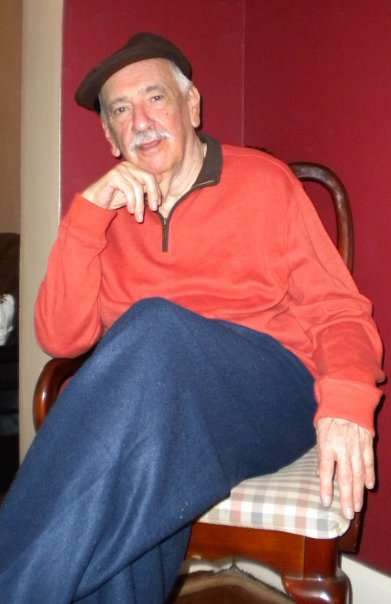
This is not to say that my father’s illness isn’t a big deal. At this very moment, it pains me to see him going through bouts of discomfort (but no pain, thank goodness). But knowing that, save for the past two weeks since he suffered a fall and hip fracture, it’s important for me to recall, and remind others, that he has lived a pretty wonderful and full 71 years, and he may continue to do so, albeit with some changes (such as a feeding tube).
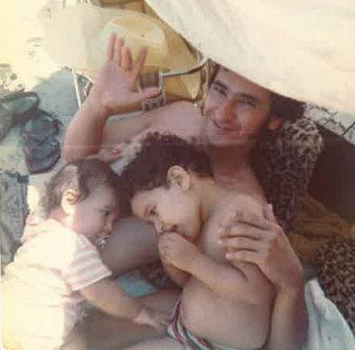
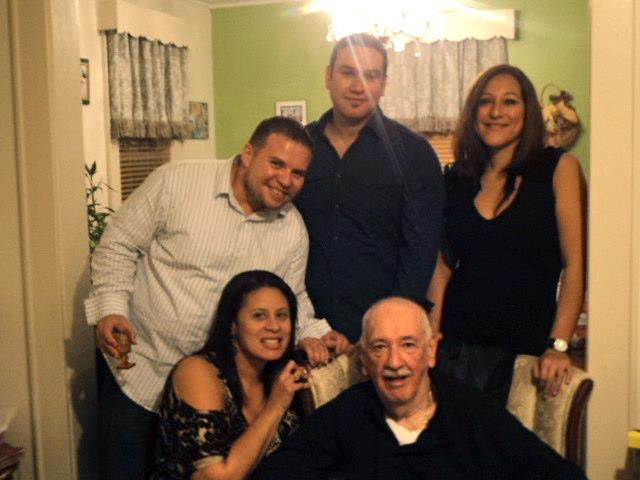
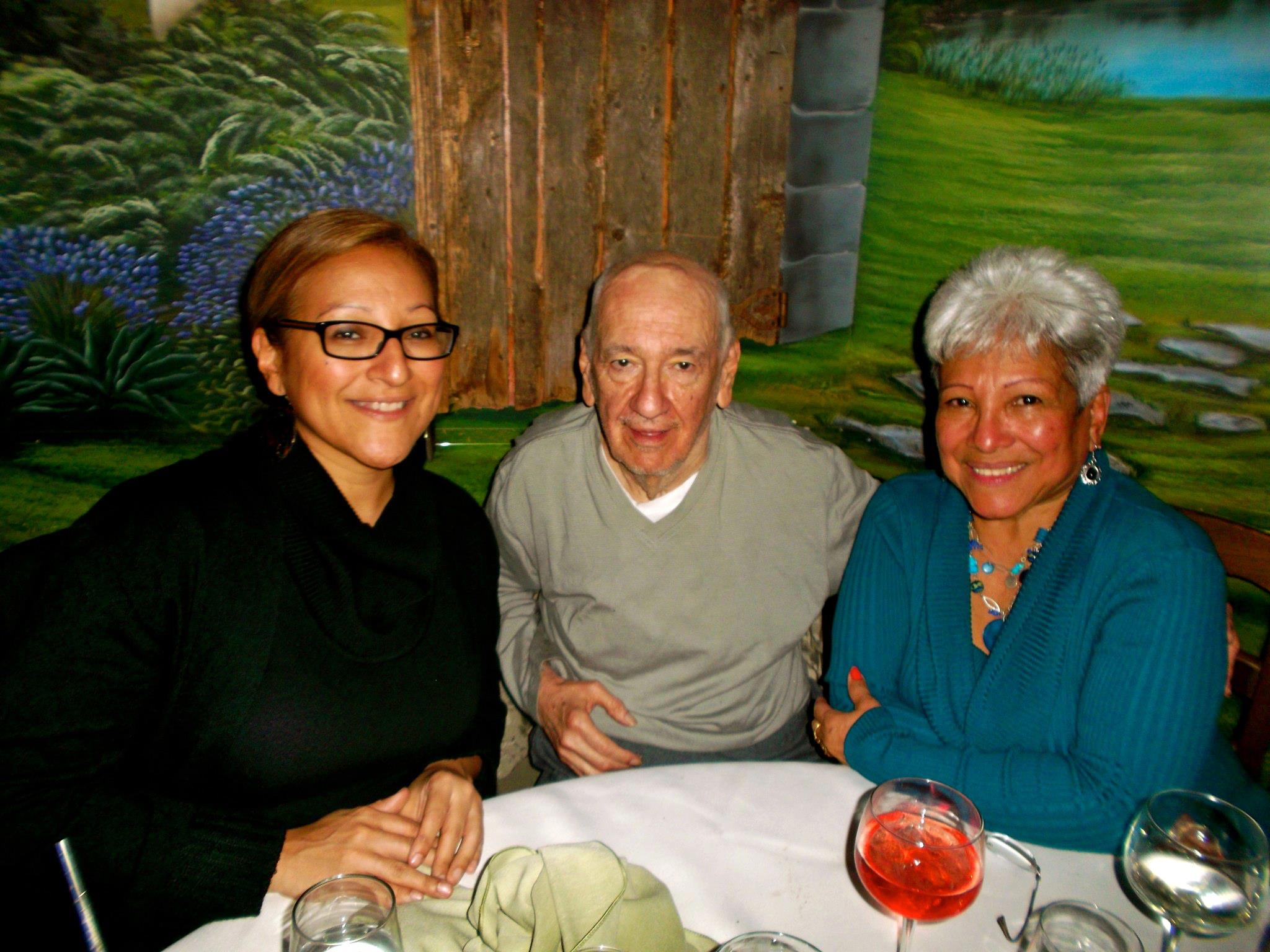
My dad with me and my brother, Rich, in Wildwood, NJ.Thanksgiving eve in 2011 (?) with my cousin, Maria, her husband, Gonzalo, and my brother, Richard.Baseball? I learned that from my dad. (After my brother, Richard, took an interest in the Yankees, my dad bought us some Yankees hats, and took us to some games. Yet he preferred the Mets a bit more, because they had more Latinos on the team. Ha!)Hanging out with my brother, Richard, and my dad, as usual!Mom and dad by the Christmas tree at their first home in Paterson, NJ. This was a big accomplishment for them. They wanted us to grow up in a house they owned.
Don’t get me wrong, this is, without a doubt, the most incredibly difficult thing I’ve ever experienced in my life. But this isn’t about me. This is about the man who raised me and how I choose to remember, celebrate, and even laugh, about the way he was.
Such as:
The time he taught me how to ride a bike, and later, how to drive a stick shift. (There was lots of yelling by him, whining by me [I can’t do this! I don’t get it!], and finally, victory.)
The times he taught me to dance salsa and shimmy my shoulders along to various Colombian songs.
The jovial attitude he had with my friends, from making Kimberly laugh on our way to school (he often drove us), the joking around with Judy and Sibila after church, to actually going to happy hour (!!!) with Ysa, Barbara, and Melinda when they all worked part-time at Home Depot.
The jokes he always told among his and my mother’s family and friends. He consistently had his audience in stitches!
The time he and my ex-husband, Dave, grabbed pineapples off of the swim-up bar in Cancun and posed for a silly picture.
The way he enlisted my little brother, David, for various fixer-up projects around the house. It made David very good at carpentry and things.
The way he and my mom proudly bought his first home for us in Paterson, NJ, and later, their second home in Clifton, NJ.
The way he made sure to take us on a vacation on more than a few summers, even though it was right in state, since it was all we could afford: a full week in Wildwood, NJ. It was heaven! My dad loved to swim and he spent hours in the ocean with us.
The way he and my mom tried so many ‘firsts’ with their first-born, Richard. From karate classes to Boy Scouts, Richard was their first-generation dream realized.
The way he always talked a mile a minute in between his full and part-time job, or on his lunch break, going over his never ending to-do list.
The way he preferred to drive home for lunch, because he always preferred my mother’s cooking to anything else.
The way he had sheer pride in my mother. He always bragged about how beautiful she was when he met her on a bus in Barranquilla, Colombia, and how beautiful she was every day.
The way he loved his two sisters, “as elegant as they are beautiful,” he’d say, and he felt the same way about all of his nieces.
The way he was very proud of his younger brothers, as they were able to attend colleges and go on to stable careers.
The way he preferred soccer to baseball (who wouldn’t?) but because he had so much pride in having children born in the United States, he’d take us to Yankee games, and wanted us to speak to him in English as much as possible, so he could learn.
The way he and my uncles would take us to the park on spring and summer Sundays for pick-up games of soccer and softball, keeping my brothers and cousins entertained for hours on end. (And, again, despite not liking baseball, he was awesome at hitting [what we thought were] the biggest home runs, ever!)
The way he bought us puppies from the pound to have as pets in order for us to have the full ‘American’ experience (even though he didn’t exactly love dogs.)
The way he picked up slang from his co-workers at the General Electric plant in Paterson. (He’d come home saying phrases like, ‘What it is?’)
The way he initiated conversations with strangers and quickly won them over with a sense of humor, or genuine interest in where they were from. It’s something I inherited.
The way he never compared me to other girls or women, respected my choices (from my decision to get separated, and later divorce, to my more than one career changes), or pressured me to have children.
The way he encouraged my love of travel. After all, it’s what he and my mother came to this country for: for us to do the things they couldn’t.
The way he loved to dance at parties. This wasn’t limited to salsa, merengue, and I’ll never forget him asking me and my friend Marisol to get on the dance floor when they played a dance pop song at a Sweet 16 (I was mortified, at first; there was no one else on the dance floor!) and instantly having us laughing with his ‘pop’ dance moves. Mortification over.
They way he was passionate when arguing. (To put it bluntly, his quick and fiery temper, which I inherited!)
The way he adored cinema, especially Westerns. (Steve McQueen was one of his favorite actors.)
The way he bragged about my writing, and later, my journalism career. (It meant a lot to me.)
The way he’d lift weights at home, and cycling with his Peugeot 10-speed was always his favorite form of exercise. Getting us used bikes was a priority, and he always encouraged us to go for bike rides.
My dad and my nephew, RJ, at a birthday dinner we had in 2012.
These are just a fraction of memories of my father and I love that writing the list brought many smiles to my face.
As a reporter for the Home News Tribune, I wrote a column about my dad (read it below), when he was about to get Deep Brain Stimulation surgery in 2007. This excerpt encapsulates why I always knew this disease, while not as terrible as some others, would become progressively difficult for him to accept, and for his loved ones to see:
I’ll always remember the day dad told me he thought something was “off” with him physically. He and I were eating breakfast at the kitchen table, and he actually looked scared — something rare for him, at least in my eyes.
This is a man whom, ever since I was little girl, I’ve looked at as a larger-than-life personality with an appetite for hard work. He is a tough guy, a smooth talker, a brave man and an undeniable natural comic.
It seemed his Parkinson’s progressed slowly at first. We have had such great laughs, and he’s enjoyed time with us, and with his grandson, RJ, who made him light up so many times. But as the years passed, he has became more of a prisoner in his own body. The way Parkinson’s affected his vocal chords is especially tough, as this is a man who loves to express himself.
Nearly 17 years after he was diagnosed, this fall that fractured his hip, this one acute trauma—a common one for the elderly in this country—was enough to alter his status. This is not going to be easy for us, but, again, my main concern is that he is not in pain, and above all, comfortable.
I’ve always heard the following advice from people who have lost parents: spend as much time with your parents as you can, because you will miss them when they are gone. It is true. I’m grateful that we have had so many good quality years with our father (and, of course, that my mother is as healthy as she is hardworking). But for those of you who live in other states or countries from you parents, this doesn’t mean you can’t do the same. Though I’ve always lived in close proximity to my parents, I feel that simply keeping them informed about your achievements, your adventures, or your travails, is important. This is the kind of thing that brings joy to my immigrant parents. And I know this from the many conversations I had with my dad early on in his Parkinson’s diagnosis. Parents want to know they’ve raised happy children. So tell your parents how much you love them, yes, but just tell them about your life. They’ll appreciate it.
As my father was wheeled away into the surgery wing at Robert Wood Johnson University Hospital earlier this week, my mother, brother and his girlfriend and I all looked at each other as if to say, “What do we do now?”
The answer was simple. All we could do was wait.
On Tuesday, my 63-year-old father — the superhero of our family — underwent nearly seven and a half hours of Deep Brian Stimulation, or DBS, surgery in an attempt to slow down the progression of Parkinson’sdisease that he’s been living with for the past nine years.
Parkinson’s is a neurodegenerative disease whose primary symptoms are tremor, rigidity, and postural instability. The tremors that once plagued my father have long passed. It’s the rigidity and postural instability that severely interfere with my parent’s quality of life — dad wakes mom nearly every two hours at night so that she can help him adjust himself in bed or take a trip to the bathroom.
It’s tiring.
Almost one year ago, I dragged my parents to a support-group meeting for patients who have had DBS at Robert Wood Johnson. While the surgery does not cure the disease (there is no cure), it can help manage some of its symptoms and, hopefully, cut down on the amount of pills (25) that dad pops every day.
My father, stubborn as always, wasn’t exactly thrilled to go to a support meeting an hour’s drive away from my parents’ home in Clifton. What he saw there, however, led us to that waiting room this week.
People he thought were relatives of Parkinson’s sufferers began speaking about their recovery after the surgery, flooring my father with their varying degrees of composure. He was sold.
I’ll always remember the day dad told me he thought something was “off” with him physically. He and I were eating breakfast at the kitchen table, and he actually looked scared — something rare for him, at least in my eyes.
This is a man whom, ever since I was little girl, I’ve looked at as a larger-than-life personality with an appetite for hard work. He is a tough guy, a smooth talker, a brave man and an undeniable natural comic.
That day, however, something was wrong. A slight but frequent tremor in his right arm, he said, scared him into avoiding the doctor. Eventually he went and found it was the beginning of Parkinson’s disease.
So began a long and hard journey that included him having to retire early and, even worse, having to give up driving. A difficult part for me was how the natural charismatic expression on his face was replaced by a gaunt look — another symptom.
On Tuesday, as my mother and I took a seat in one of Robert Wood Johnson’s waiting rooms, mom turned to me and said something that I’ve never given much thought to.
“Isn’t it something that in the 37 years we’ve in this country, we’ve never had a hospital stay, much less a surgery,” she said. “We’ve been lucky, thank God.”
And yet here we were, stuck waiting as surgeons performed a crainiotomy on my father.
While the wait was tough, chatting with relatives of others in surgery was a positive experience.
Surgeons said the operation was a success but that my father would have to work hard when he got home.
And so with our help, he’ll work hard. Anything for our superhero.
Gina Vergel can be reached at (732) 565-7228 or at gvergel@thnt.com
I’m so #TeamNun. No matter how strict they were when I was in elementary school, one thing was always clear: they cared about us. Also, they cared about their student’s families: They’d let my parents pay tuition late when times were rough, as they often were. And they taught me EXCELLENT grammar and writing, and a most important forgotten art: penmanship!
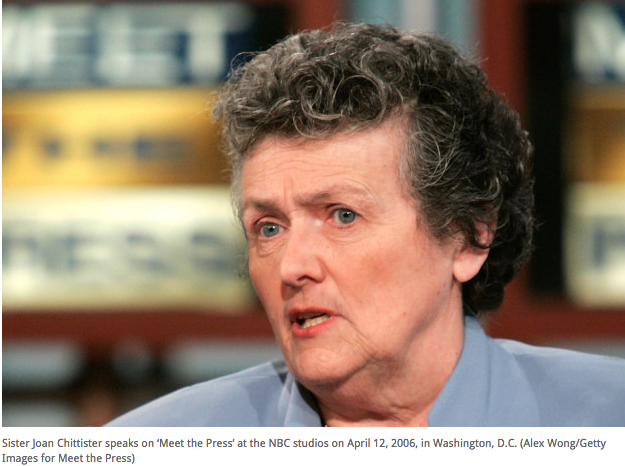
This Here and Nowinterview (on WBUR) of Sister Joan Chittister proves women religious aren’t just your kid’s disciplinarian anymore. Of course, most of us knew this already. But it’s good to see the discussion out there. Radical feminists? I think not. #TeamNun is in a class by themselves.
I’ve teased out some of my favorite parts, but you can listen to the whole AUDIO interview here.
Excerpts:
Sister Joan Chittister: I would not deny that in every dimension of the church there is a great respect for the sisters. Since Vatican II, sisters have grown up too, just like women everywhere, and they basically highly educated and very committed people. When they began to function with confidence as full adults, that threatened an old church. The image of women religious by churchmen themselves was the eternal silent servant. Now you have a body of intelligent educated adult women and you’re facing a new climate in the church with a Pope who is apparently not afraid of difficult topics.
…
I mean, they have a word for it that’s embarrassing; they call it radical feminism, which means they don’t even know what radical feminism is. What they mean is that a thinking, articulate woman with an agenda and intends to pursue it for the sake of women everywhere, as well as the families and the children we serve.
HOST: Women cannot be priests still in the Catholic Church. Why is that door still closed?
Sister Joan Chittister: This anti-female attitude—they don’t want to call it that—‘We respect you, we love you, look at how we put you on a pedestal,’ meaning, as long as you’re on a pedestal, you yourself can’t move anywhere. This is very, very ingrained in churches in general, and in the Catholic Church, especially. This pope has said feminism is about allowing every member of the human race to become a fully functioning human adult. He has talked about the fact that until we really look at the feminist issue, he says, quote, ‘We have to work harder to develop a profound theology of the woman. Only by making this step, will it be possible to better reflect on their function within the church.’
Now, I think we could just start with the profound theology of the human, and we wouldn’t necessarily be starting on the same foot we always have, as in women are different as men, women are not as fully human as men.. there’s no sense in that. This Pope, however, has opened the door to the question. If ti’s still a question for men, we’ll help them answer it, but it has to be addressed.
You have to remember, too, that as much as we don’t want to admit it, the church has also taught racism, anti-semitism, and slavery, just as well as they teach sexism yet today. If this Pope, with what I see as a powerful and graced openness to the questions in our society, really pursues this question, we will all have a new consciousness of what it is to be human, to be female as well as male, and to be a church that’s really a church.
HOST: What hope do you have of that?
Sister Joan Chittister: I’m not even sure it’s hope anymore because we’re on the wrong side of history. Every single thing that we have dealt with this way has fallen. And this will fall, too, because it is so wrong. It’s theologically untenable, it’s psychologically ridiculous, and scientifically bizarre and bankrupt.
The shootings of Michael Brown and Eric Garner, and the ensuing debate surrounding the killings and related protests, caused some of my friends, and obviously, people in general, to respond in a way I soooo dislike:
“Why don’t they protest when they get shot by one of their own?”
“Why doesn’t the media make such a big deal about black on black crime?”
These questions are problematic for several reasons that have been aptly outlined by both columnists like Ta-nehisi Coates(“The notion that violence within the black community is “background noise” is not supported by the historicalrecord—orbyGoogle. I have said this before. It’s almost as if Stop The Violence never happened, or The Interruptors never happened, orKendrick Lamar never happened. The call issued by Erica Ford at the end of thisDo The Right Thing retrospective is so common as to be ritual. It is not “black on black crime” that is background noise in America, but the pleas of black people.”) and academic scholars (“Giuliani presented no evidence that Black communities are not actually addressing violence in their own communities. It’s also useful to point out that based on the most recent crime statistics from the FBI in 2011, the White-on-White murder rate was .0014% of the population, while the Black-on-Black murder rate was .0069% (with rounding), a difference of .0055%.”) who can be found with a quick Google search.
These comments also demonstrate a complete lack of empathy on their part, which I can only attribute to ignorance, as in legitimate naiveté about the majority of folks who live in high crime areas, and what they really want. My guess is they must not know too many families affected unnecessary violence, be it on the victim or perpetrator’s side.
Lastly, they must not understand that, although it seems the media is ever present, thanks to the 24 hour news cycle and budget cuts due to the Internet and what it did to print journalism, resources within media organizations aren’t what they used to be. Gone are the days when a journalist would be assigned to cover crime in every single town.
As a newspaper reporter, I remember what it was like to camp outside of a victim’s home in hopes of catching a family member for a quote about what they were feeling. (It was not my favorite part of the job. Many times dreaded those interviews.)
Do people really think people living in high crime areas are happy about the state of their neighborhoods? Or that if someone gets killed next door, it’s no big deal? It’s so much deeper than that.
LUCKILY for us, journalist Jill Leovy has a new book in which she studies the epidemic of unsolved murders in African-American neighborhoods and the relationships between police and victims’ relatives, witnesses and suspects. I’m looking forward to this book, because it’s clear it’s not just from the perspective of victims, but it covers how the police respond to crime in tough areas.
The idea for Leovy’s book came from a blog she started (The Homicide Report) back in 2006 while working for the Los Angeles Times. In her new book, Ghettoside: A True Story of Murder in America, she examines one of the most disturbing facts about life in America: that African-American males are, as she puts it, “just 6 percent of the country’s population but nearly 40 percent of those murdered.” (source.)
In this recent interview with NPR’s Fresh Air, she discussed how she managed the carnage and the pure emotion of family members of murder victims she came across as a reporter for the Los Angeles Times:
“It’s not the carnage that’s horrible, though. It’s the grief and the sadness of it that is – that will make your hair stand on end, and that is very, very difficult to deal with. The actual fact of bodies and blood is much easier to deal with than what you find when you go to somebody’s house five years later and they’re still shaking and weep instantly when you say the name of their loved one.
In fact, “The Homicide Report” was the easiest homicide reporting I did in all my years of homicide reporting, and there was a reason for that. And I knew it going in. I think in some ways, at that time, I needed it. It’s because mostly, I was dealing with victims’ families right after the homicide. That’s a time when – in the normal course of reporting, that’s when you usually meet victims’ families – that first 48 hours, that first week, maybe, before the funeral, and, you know, that’s the easiest time because people are in shock. They are in a state of suspended disbelief. They don’t know what to think. They’re kind of frozen and wide-eyed, and it takes time with something as traumatic as homicide for the reality to sink in. And so it’s a lot harder to interview people three months later, six months later. Two years can be a really grueling point, I found – five years, very, very grueling. Homicide grief is very distinct, I think, from other kinds of bereavement, and the trajectory of it can be different.
Another great part of this Fresh Air interview with Leovy is her insight into how police handle these crimes, and how they’re viewed by these communities. Simple it is not:
“Police hear that all the time: ‘You don’t care because he’s black. You’re not going to solve it because he’s black.’ And it’s very interesting, I – in terms of Ferguson and some of the other recent controversies – I was thinking that this is so complicated because there is, very definitely, a standard black grievance against police that you hear in South LA, that has to do with the generally understood problem – too much consent searches, we say, in LA, too much stop-and-frisk, too heavy of law enforcement, too much presumption of guilt when you take stops.
What I hear, when I’m in these neighborhoods, is a combination. It’s a two-pronged grievance. There’s another half of that. And the other half is, I get stopped too much for nothing, and the police don’t go after the real killers. They don’t go after the really serious criminals in this neighborhood. They’re stopping me for what I’ve got in my pocket, but I know someone who got killed down the street. And they haven’t solved the homicide, and yet, that second half seems to never break out and make it into the national dialogue about it. To me, it has always been that double-sided grievance of too much of the wrong kind of policing, not enough of the policing we actually want in these neighborhoods.
Hear the audio interview, or read the transcript, here.
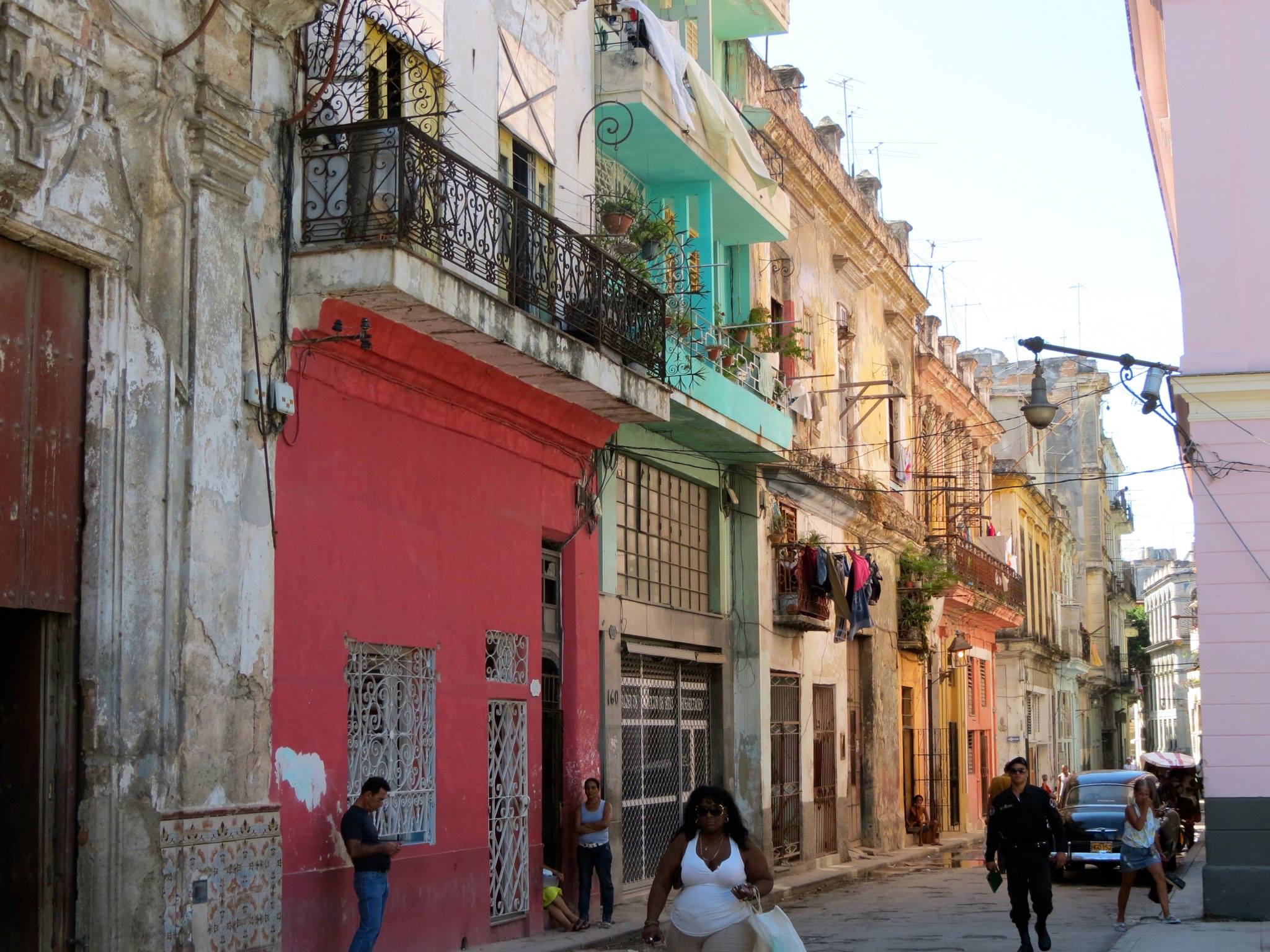
I am pretty excited for this event taking place at Fordham’s Lincoln Center campus (inside of our Law School) on Thursday, Feb. 26. As a matter of fact, the event is in preparation for a Spring Break study tour of Havana organized for students in our Latin American and Latino Studies program. The study tour will cover “Contemporary Cuban Culture in Havana.” Now, about this talk, which is open to the public:
Empowerment, Humanitarian Aid,
and the Normalization of US-Cuba Relations with Margaret Crahan, Sujatha Fernandes, and Alberto R. Tornés
Photo by Gina Vergel
In a historic broadcast on December 17, Presidents Obama and Castro simultaneously announced the normalization of diplomatic ties between Cuba and the United States, severed in January of 1961. The aim of this policy change, President Obama explained, is to“unleash the potential of 11 million Cubans” to create a more democratic and prosperous social and economic system. Panelists include renowned Cuba scholars and humanitarian aid activists who will explore the impact of the normalization of US-Cuba relations on the empowerment of the Cuban people and on our humanitarian assistance to the island:
Margaret E. Crahan is Director of the Cuba Program at the Institute for Latin American Studies at Columbia University. Watch a recent talk she gave on Cuba here.
Alberto R. Tornés, who holds a BA in International Relations from Fordham and an MA in Special and Bilingual Education from CUNY’s City College, is Director of Economic Empowerment at Raíces de Esperanza or Roots of Hope, an international non-profit, non-partisan network of young people who sponsor academic and cultural initiatives focused on youth empowerment in Cuba.
My nephew (in the center) needs to learn a second language. He certainly understands some Spanish, but at 5, he’s at the right age to really inhale more of it!
Learning a second language could do more than help a child travel internationally: It could completely change the way they look at life-according to a new study from Concordia University in Montreal.
As psychology Professor Krista Byers-Heinlein and undergraduate student/co-author Bianca Garcia explain, most young children believe human and animal characteristics are innate, and that traits such as native language and clothing preference are intrinsic, not acquired.
Rose M. Perez was 8 years old when her family left Cuba.
She remembers holding her mother’s hand as they marched with the line of travelers across the tarmac toward the plane. Suddenly her mother paused and looked upward, her expression stoic.
“I said ‘Mom, come on, the line is getting ahead of us,’” said Perez, Ph.D., an assistant professor at the Graduate School of Social Service (GSS). “I knew something was wrong, because she didn’t respond.”
Years later Perez learned that her mother had intentionally slowed down so that her relatives who gathered to watch the family depart would be able to see their place in the line.
Perez’s struggle to balance her Cuban and American cultures inspired her research on the adaptation of immigrants and refugees to U.S. society and how immigrants reconcile the worlds they must straddle.
There’s a pro-police rally in New York City at City Hall. (As is their right, *** updated Dec. 18and as commenter ‘Love It’ points out, is not sponsored by the NYPD but by police supporters.) As a public relations professional, I think it will further hinder relations, making them sound like they’re anti #BlackLivesMatter. I mean, really, what other way can it possibly look?
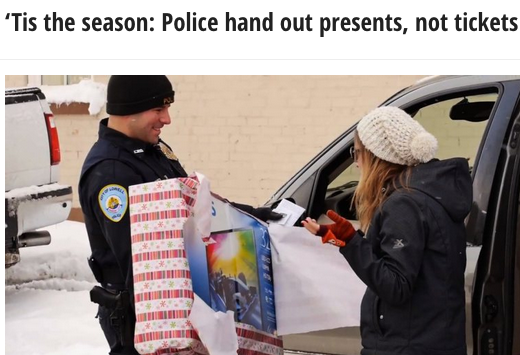
Police in Lowell, Michigan, are DOING, not talking.
So many examples of showing how you’re “WITH” the people out there, and those are just from recent days. It’s a shame the NYPD doesn’t see that. Talk about missing opportunities to win people over on your side.
I discussed this rally, and how we debate contentious topics such as guns, abortion, or the police, with a colleague and friend today. We both think the ‘you’re either with us or against us,’ attitude individual police (or police-related) friends we both have, is misguided. Especially when so many of us are willing to have nuanced discussions about this topic, that–news flash!—most of the world is now paying close attention to.
It is not every police officer. That should be a given, though, I guess I can’t be surprised it comes off that way when people take things personally. As I’ve said in the past, when Bernie Madoff was arrested, did every banker feel offended at the criticism? When a teacher is arrested for statutory rape, do others go on the offensive? When a doctor is sued for malpractice, does every physician panic that the public at large is watching? Yes, I know, these are not apples to apples comparisons, but my point is it’s bigger than YOU.
And then my friend put it perfectly: “It’s part of a larger culture. Violence is how we get things done [when it comes to ‘others’]. (Ed. words in parenthesis mine.) It’s not education, or empathy, it’s violence. It’s the same reason we can’t open schools in Pakistan, but we can send drones over there.”
 Via PBS’ Frontline / Tim Molloy:







 periMENTAL