While in NYC, Vicente Garcia was interviewed by NTN24’s Alfonso Diaz.

While in NYC, Vicente Garcia was interviewed by NTN24’s Alfonso Diaz.

Representatives from TD Bank and American Express, along with minority entrepreneurs and business-owners, will be in attendance.
Throughout the day, guest speakers will discuss topics such as social entrepreneurship, “turning classroom learning into a career,” and how local neighborhoods can accelerate local economic development.
Partis urges all youth, young adults, and area institutions and agencies, to attend.
Admission is free.
For more information, contact: michael@youngmovement.org
Follow Young Movement, Inc., on Twitter: @Young_Movement
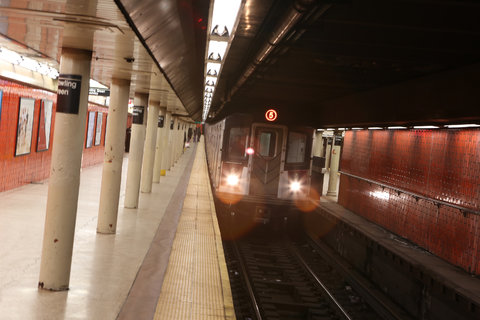
(Photo by Chester Higgins Jr./The New York Times)
via the New York Times:
Around 10 p.m. on Dec. 6, I walked into the Bowling Green subway station, returning home from my company’s holiday party at a restaurant downtown, and saw several people crouched on the platform extending their hands out toward the tracks. I looked down to see a disoriented man in the center of the tracks.
I crouched down, too, and extended my hand. And I thought: “He is way too far from the platform… Why is he stumbling about and not getting closer? How long has he been down there?”
Read the rest of this harrowing account here.
She has LOS PAPELES! 0_o

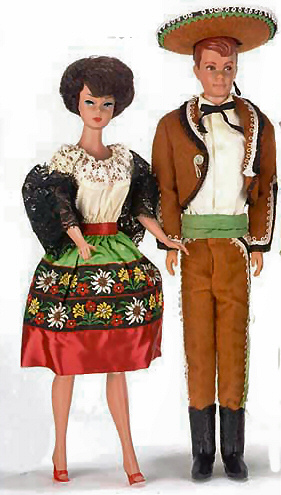
The folks over at Mattel are so smart, that not only they have come up with a Mexican Barbie, but they have given her all the possible tools to go around the U.S. the world undisturbed.
In addition to a “wonderfully bright pink dress with ribbon accents,” Mexican Barbie comes fashionably ready for a fiesta with her Chihuahua friend (we all do.) But that is not all: According to Mattel, this beauty features accessories that “add play value,” including a passport and sticker sheet.
It is not for me to inform you about the “play value” that a passport provides, so go ahead! Play with your Barbie Mexicana and don’t even think of calling her indocumentada. Oh, and she can be yours for only $24.50 on Amazon.com
IMPORTANT UPDATE: This blogger has found a Mexican Ken to go with the Mexican Barbie. Here it is:
 Journalist and Cuban blogger Yoani Sanchez spoke with NY1 exclusively about her arrival to the United States and the political situation in Cuba. Sanchez also discussed the importance of digital media and the real possibility of a change in Cuba.
Watch it here. (Interview is in Spanish.)
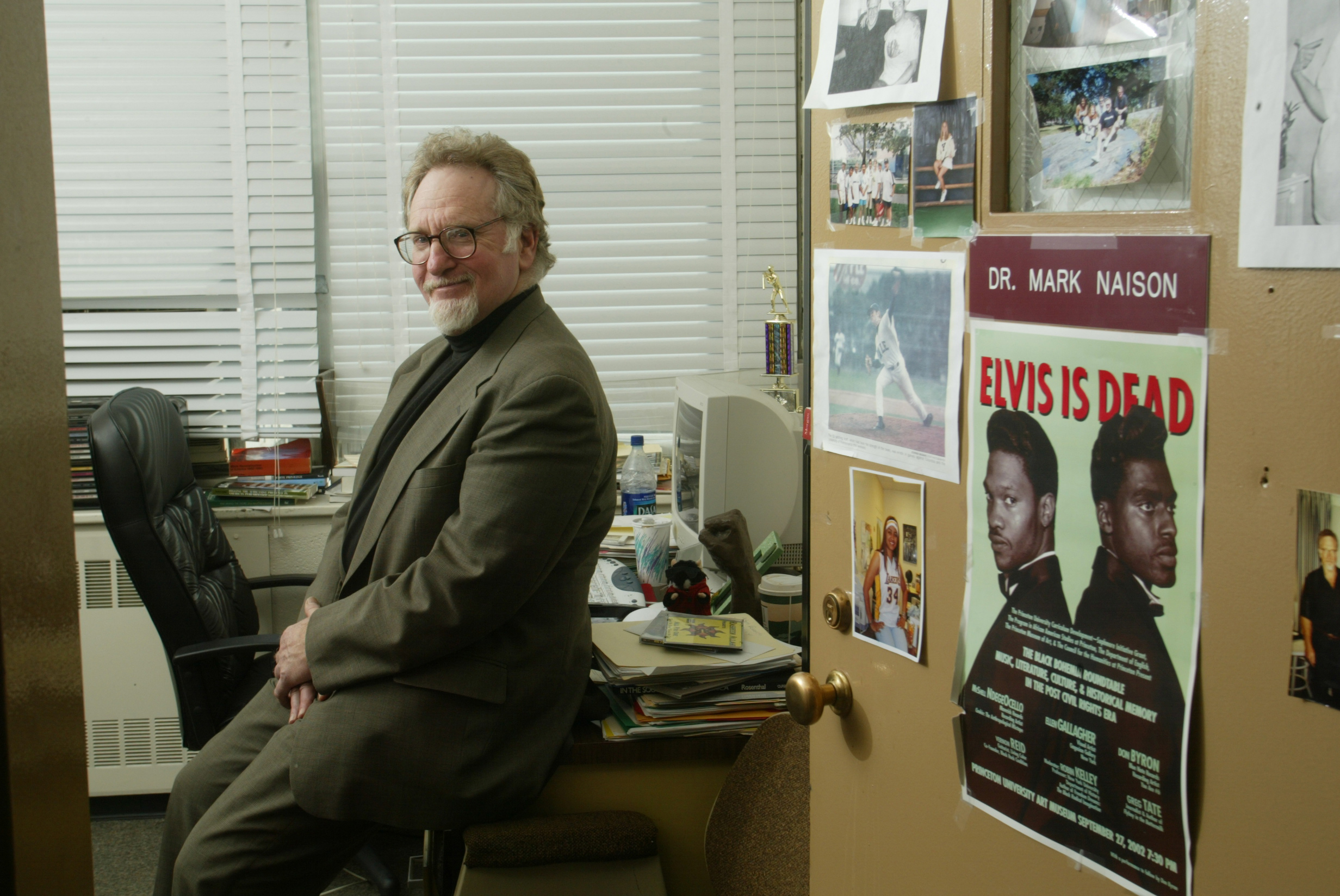 By Mark Naison
Howie’s friends rush into the gym. Their mostly Puerto Rican gang, of which Howie is a member, is having a rumble with a much feared Black gang called the “Slicksters.” The head of the night center,Vincent Tibbs, a powerfully built African American teacher who was a friend to many young people in the neighborhood, overheard what was going on and walked slowly over to the door of the gym. When Howie tried to rush out, Mr Tibbs stood in front of the door and said “I’m not letting you leave here. You have a future. You’re not going to die in the street.”
But the story is not just about Howie, it’s about the incredible after school and night centers that were a fixture of every single public school in New York City until they were closed down during the NYC fiscal crisis of the 1970’s. These centers ( I attended one religiously in Brooklyn) had basketball and Nok-hockey, arts and crafts and music programs, and held tournaments and dances.
Some of them, like the P.S. 99 Center, held talent shows which spawned some of New York City’s great doo-wop and Latin music acts. But all of them had teachers like Mr. Tibbs who provided supervision, skill instruction, mentoring, and sometimes life saving advice to two generations of young men and women who attended the city’s public schools, a good many of whom lived in tough working class neighborhoods like Morrisania.
Now let’s segue to Chicago, where young people are killing one another at an alarming rate. The Schools in that city are in upheaval; many have been closed, some are faced with closing, teachers and students are being told that the fate of the schools they are at depend on how well students score on standardized tests; some of which have been installed at the expense of arts and music and sports programs in the schools. Those in charge of education, locally and nationally, think these strategies will improve educational achievement.
But what happens in these schools after regular school hours finish? Do they offer safe zones for young people in Chicago’s working class and poor neighborhoods? Do they have arts and sports programs that will attract young people off the streets? Do they have teacher mentors like Mr. Tibbs who will take a personal interest in tough young men and women and place their own bodies between them and the prospect of death through gang violence?
If the answer is no, that these schools are largely empty once classes end, and they do little or anything to attract young people in, maybe it’s time to start rethinking current school programs. Wouldn’t it be better to have a moratorium on all policies- like school closings- which destabilize neighborhoods- and invest in turning schools into round the clock community centers the way they were in NYC when Howie Evans was growing up?
But to do this, we have to rethink the roles school play in neighborhoods like the Bronx’s Morrisania and Chicago’s Humbolt Park, and view them, not primarily as places to train and discipline a future labor force, but as places which strengthen communities and nurture young people into become community minded citizens. But to do that, we have to also treat teachers differently, respecting those who have made teaching a lifetime profession and who are committed to nurturing and mentoring young people even in the most challenging circumstances.
If we don’t do that kind of reconfiguration of our thinking, and ultimately, our policies, we are likely to mourning a lot more young people killed by their peers, and not just in Chicago.
Mark Naison is professor of African American Studies and History at Fordham University. He is the author of White Boy: A Memoir.
Stream the EP in Full at FACT Magazine
Buy it on iTunes!
FREE DOWNLOAD in Discobelle of Jubilee/Burt Fox Remix

About the EP via FACT Mag:
On her Carioca Bass EP, she has collaborated with Bay Area producer Kush Arora on a pair of baile funk tunes that use the genre’s everything-in-the-blender ethos to subwoofer melting effect. The title of ‘Seda’ (Portuguese for “rolling papers”) is a play on words, as Zuzuka meditates on the criminalization/legalization of pot over a club-rap grinder. ‘Psicodelia’ owes more to baile funk’s Miami bass tradition, with Zuzuka rapping about fireworks that are actually blasts of favela gunfire.
Born in Vitoria, Brazil, ZUZUKA PODEROSA grew up in Rio and spent her formative years in the West Indies. She later moved to Brooklyn, NY, to study jazz vocal improvisation and work at her poetry. For the past few years, she’s been building up the underground Baile Funk, Moombahton and Global Bass scene in New York.
The EP is produced by the Bay Area’s Kush Arora. Kush Arora has walked the line between culture, experimentalism, and percussive bass music for the last 15 years in San Francisco and beyond. With over 10 discs to his name and countless singles, all shades of Dub, Garage, Dancehall, and Indo-Caribbean influences merge into his unique futuristic sound.
“She sounds dangerous, intense, unhinged, and different and more experimental than the baile funk, carioca, and tropical bass vocalists I hear out there. She has an amazing stage presence, uncompromising attitude and intense energy that she pushes forth, and her willingness to experiment outside of the small box of samples and traditions from the Brazilian electronic movement. She has that knack to take people, propel them into motion to get down and forget about the world, but lyrically she’s not all fun and games, which is very important to me.” – Kush Arora
Tracks on the EP are remixed by:
Jubilee: Though now splitting her time between Miami and Brooklyn, XLR8R’s “artist to watch” Jubilee will always be Brooklyn’s bass sweetheart. Known for her rambunctious combination of upfront bass music, UK house, and tropical flavors, she has become a surefire remedy for ailing dancefloors around the globe.
Sonora: Sonora Longoria, is a producer of Latin and third world/global bass music who resides in San Antonio, Texas. The “cumbia child” Sonora has accomplished quite a few projects with global artists, one being for his “Remezcla” EP series where he takes on remixing and recording with carioca bass diva Zuzuka Poderosa.
Nego Mozambique: a Brazilian expat living in Toronto, who has been in the electronic music scene for more than ten years, performing live acts of his own compositions, mash ups and remixes, and also creating soundtracks for TV and movies.
Others include: Vancouver’s HXDB, Chicago’s Chrissy Murderbot, Miami’s Burt Fox and CEE.
Song meanings:
‘Psicodelia‘ is an upbeat track featuring Zuzuka rapping about fireworks at a party that are, in fact, gunfire and bombs in one of Brazil’s favelas.
‘Seda‘ is a play on words. Seda is Portuguese for rolling papers. In this song, Zuzuka touches on everything sexy about the drug while advocating for its legalization as there are “worse things happening to people because of its criminalization.”
The WordPress.com stats helper monkeys prepared a 2012 annual report for this blog.

Here’s an excerpt:
4,329 films were submitted to the 2012 Cannes Film Festival. This blog had 21,000 views in 2012. If each view were a film, this blog would power 5 Film Festivals
I got to have a drink at Lenox Lounge last week.

If anyone thinks there is a grain of hope left for Lenox Lounge in Harlem, forget about it! Read the latest article from The NY Daily News. Richie Notar is now publicly speaking about his plans for the vintage Harlem establishment. Notar told Community Board 10 “he does not want to change much.” However, Notar confirms he will change the name to Notar Jazz Club.
By the way, Notar and Alvin Reed crossed paths for the first time according to the article. That had to be interesting.
After reading the article, all I could think about is “what a pity that Notar does not see any value in saving the Lenox Lounge brand?” There are plenty of smart business people who have taken on well-known brands and successfully lifted those brands higher. Say Fiat? Say Izod? How about Puma? Guess Richie Notar is a play-it-safe-kind-of-a-businessman?
The good things coming…
View original post 39 more words


 periMENTAL