Every time an anti-government gun nut …

via WNYC
via WNYC

… would go on an internet rant about how he would rather be well-armed in order to protect himself against a government takeover (see top anti-government conspiracies here), I’d roll my eyes, and think to myself, “What is your weapon going to do against the military’s tanks or drones?”

Not much, I’d think. But now it’s time to revise that to, “What is your weapon going to do against the local police department’s war tanks?”

Take a look at all this military surplus sitting in the wee town of Little Falls, NJ, population: 10, 800, courtesy of WNYC‘s Sarah Gonzalez.

Police in the small suburban town of Little Ferry recently received six military trucks for its 25 police officers. 

Police departments in the state have received everything from armored trucks, rifles and grenade launchers to shirts for extreme cold weather, boots, and ladders. But the use of military equipment to quell protests in Ferguson, Mo., following the shooting death of an unarmed black teenager, has sparked a national conversation about whether local law enforcement agencies are becoming too militarized.

For example, among the most expensive items on the list of supplies used in Iraq and Afghanistan are the MRAPs – 30,000-ton armored, mine-resistant, ambush-protected vehicles.  

Police in Middletown, N.J., have one. And the Bergen County Sheriff’s Office has just ordered two.

Read or listen to the rest of the report here. And then read about the sad demise of our democracy in this fantastic piece by Fordham’s Heather Gautney in the Huffington Post:

“Social control is the opposite of social change. And it is the opposite of democratic freedom.” (Ferguson and America’s Hatred of Democracy.)

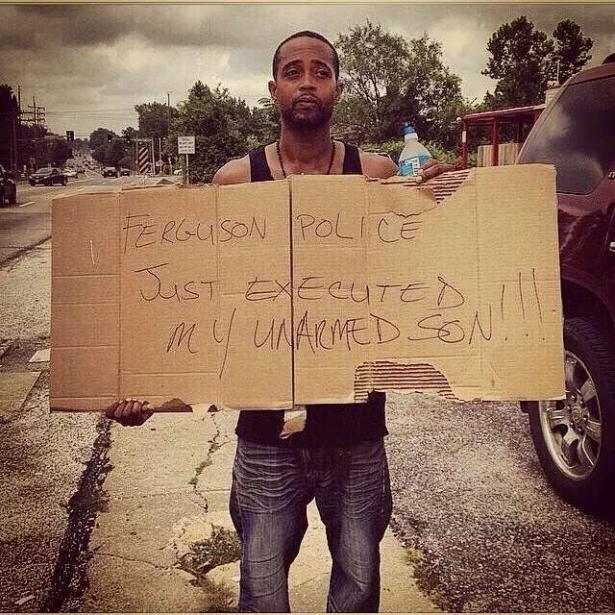
When Parenting Feels Like a Fool’s Errand: On the Death of Michael Brown.

There was another police shooting of an unarmed teenager (18) last night. This time it was St. Louis, Missouri. Details about the incident are very sketchy, but this blog post about this shooting, and so many others like it, is very moving. Read on…

slb's avatarstacia l. brown

BuoNlFmCAAAhYX8

I don’t want to talk about the boy and the sneakers peeking out from the sheet crudely draped over his corpse in the street, because I have been happy this month and it is so rare that I’m happy and that you, at age 4, don’t have to touch my knee or shoulder or face and say, “What’s wrong, Mama? You sad?”

I don’t want to think of who will go out on her hands and knees to scrub what’s left of the boy’s blood from the concrete. It will probably be a loved one, her hands idle after hours of clenching them into fists, watching what used to be her breathing boy lie lifeless, as she waited and waited and waited for the police and the coroner and the county to get their stories straight and their shit together and their privilege, sitting crooked as a ten-dollar wig, readjusted till it was firmly intact…

View original post 954 more words

#PEACE IS A LIFESTYLE: #AntiViolence Conference in #NYC

PeaceIsALifestyleFLYER-2Proud to say this anti-violence conference is happening at my place of work:

The 1st Annual PEACE IS A LIFESTYLE Conference
“How we can stop the violence in our communities”
(A One-Day CITYWIDE Conference)

Saturday, June 28, 2014

9:00am – 3:00pm

Fordham University
Lincoln Center Campus
113 West 60th Street
(at the corner of 60th St. & Columbus Ave.)
Pope Auditorium
NEW YORK CITY
A, B, C, D and 1 subway trains to 59th Street/Columbus Circle

Throughout the day we will discuss issues like gun violence, hate crimes, bullying, and violence against women and girls, their causes and effects, PLUS solutions and what action steps we can take going forward.

KEYNOTE SPEAKER: Kevin Powell, President & Co-Founder of BK Nation (of MTV’s first even season of The Real World! Remember him?)

FREE & OPEN TO ALL

For more information email dyer@fordham.edu or call 212-636-6623


Facebook event page can be found here: https://www.facebook.com/events/1463910310517252/

Another walk around Jersey City

20140531_200630
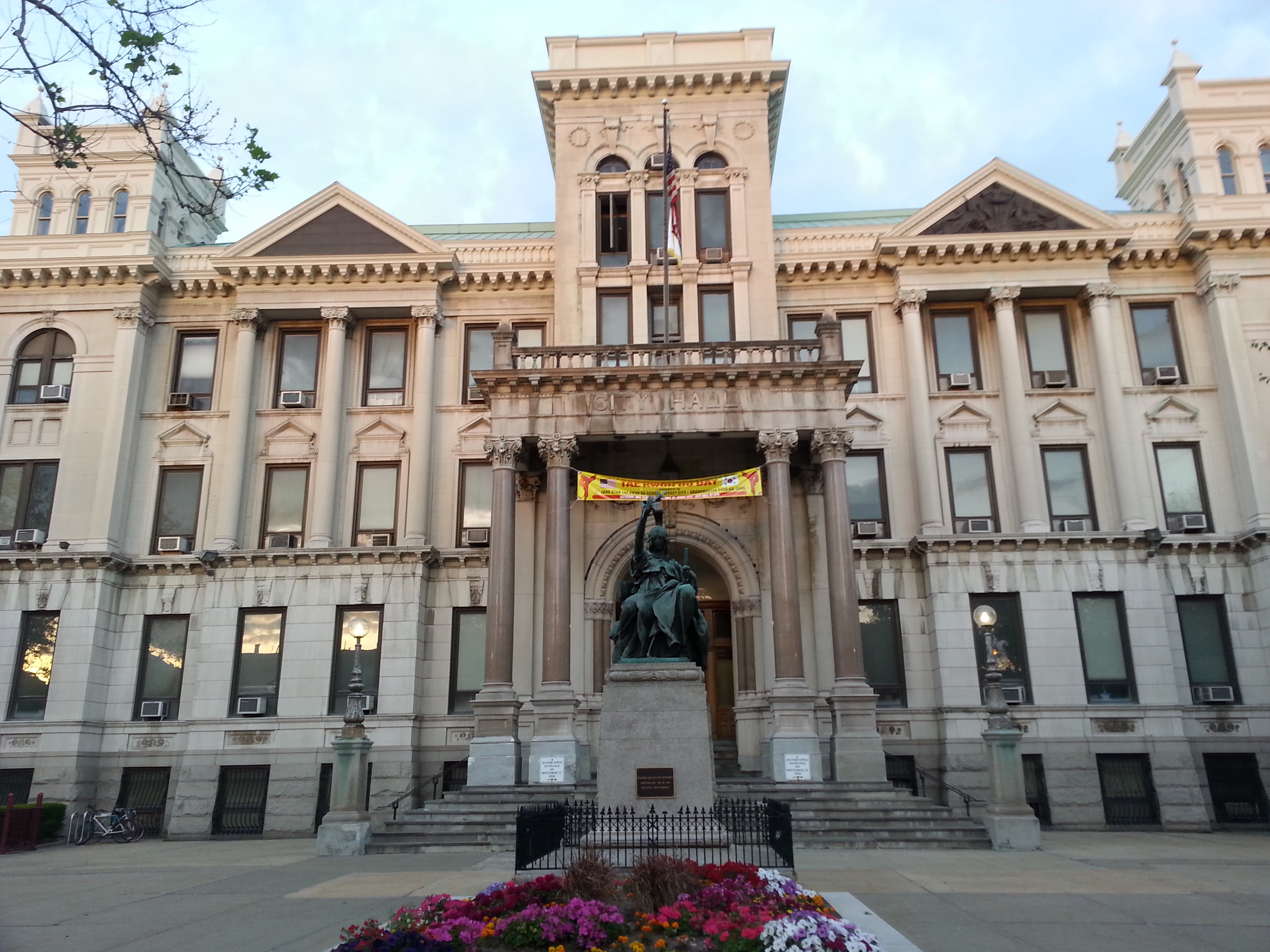
City Hall
20140531_195903
Van Vorst Park neighborhood of Jersey City.
20140531_192314
Under the marquis of Loews Theater.
20140531_195517
Close up of the Virgin Mary statue at St. Bridget’s.
20140531_195817
Van Vorst neighborhood, on Montgomery St.
20140531_200303
Interesting looking tree on Montgomery.

20140531_193556

20140531_195453
St. Bridget’s on Montgomery St. Check out this amazing photo I found of the inside of this church: http://cdn.c.photoshelter.com/img-get/I0000ahnbOkVuA3k/s/650/Saint-Bridget-Church-3040.jpg
20140531_195510
Virgin Mary outside of St. Bridget’s.
20140531_195457
St. Bridget’s doors.
20140531_191541
St. John the Baptist on Kennedy Boulevard near Journal Square. Here’s a great photo of the inside of this church here: https://c2.staticflickr.com/6/5214/5493885970_4d1af473c3_z.jpg
20140531_191715
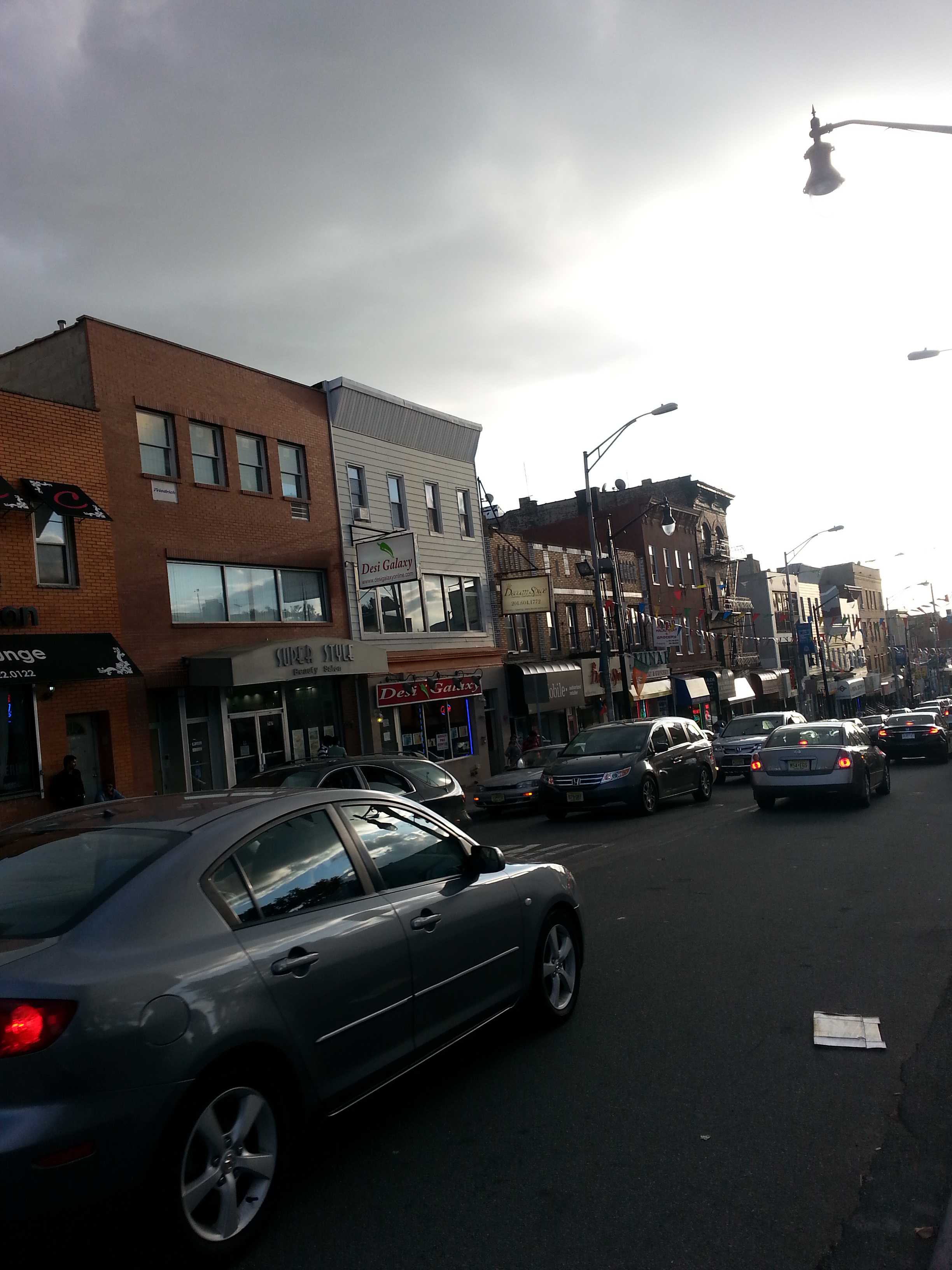
“Little India” or “India Square,” lined with TONS of Indian restaurants and shops. Newark Ave. in Jersey City. Info here.
20140531_191843
Supermarket storefront in Jersey City’s “Little India.”
20140531_192308
Classic ticket booth of the landmark Loews Theater on Kennedy Boulevard.
20140531_192325
Loews Theater Jersey City.

20140531_191849

20140531_192452
The Jersey Journal.
20140531_193156
Saint Aedan’s, St. Peter’s University Church.
20140531_202313
View of 1 World Trade Center from Exchange Place, Jersey City.

Prison statistics: Is the increase due to drug offenses or something else?

Screen Shot 2014-05-29 at 1.58.17 PM


I’m fascinated with prison. I couldn’t tell you why, but I like to watch documentaries, television shows, and movies about it, and I’m currently reading “Newjack: Guarding Sing Sing (2001, Vintage),” about a correction officer’s one year on the job at Sing Sing prison in Ossining, New York. It’s a dark read. That job doesn’t sound fun AT ALL.

At Fordham University, we have a professor who researches elderly prisoners (of which there are a lot of these days), and it’s very interesting. Here’s an excerpt from a piece she wrote for The Huffington Post:

When 69-year-old Betty Smithey was released from Arizona State Prison last week after serving 49 years for murdering a 15-month-old child, walking with a cane, she gave a face to a population that often goes unnoticed — the aging men and women in our prison system.

With some 246,000 men and women over 50 in America’s overly stretched prison system, should we as a society consider releasing the fragile, the ill, and the dying among these prisoners?

Read the rest here.

Earlier this month, the National Research Council (NRC) released a report about the unprecedented growth in U.S. prisons.

It found that from 1973 to 2009, the prison population grew from about 200,000 to approximately 2.2 million. With this spike, the U.S. now holds close to a quarter of the world’s prisoners, even though it accounts for just 5 percent of the global population.

The report found that “although incarceration rates have risen, crime rates have followed no clear path. Violent crime rose, then fell, rose again and then declined over the 30-plus years tracked in the study.

“The best single proximate explanation of the rise in incarceration is not rising crime rates, but the policy choices made by legislators to greatly increase the use of imprisonment as a response to crime,” the authors note. Since the 1970s, these policies have come to include the war on drugs, mandatory minimums for drug crimes and violent offenses, three-strikes laws and “truth-in-sentencing” mandates that require inmates to serve at least 85 percent of their sentences. [source]

But analysis by a professor at Fordham Law finds fault with the NRC’s report. He says they shouldn’t be counting drug offenses and violent offenses separately, as the increase in “incarceration rates have always been a story about violence,” not drugs.

“Between 1980 and 2009, over 50% of prison growth is due to increases in violent inmates, and only about 22% due to increases in drug offenders,” he writes, adding:

Between 1980 and 1990, state prisons grew by 387,400 inmates, and 36% of those additional inmates were incarcerated for violent crimes. (The math is below if anyone wants to see it.*) Two things stand out here:

The NRC is right that drugs mattered more during the 1980s than after, and that violent crimes played the dominant role in the 1990s and beyond.
But even in the 1980s violent crimes mattered more. Drugs were important, but (by a slight edge) violent crimes even more so. US incarceration rates have always been a story about violence.

Interesting. Read his whole post about this over at PrawfsBlawg.


This futurist hit it on the nose!

This seems to be from a German newspaper of some sort circa 1930s (it originally appeared in black and white from what I can find online, yet this Flickr version is in color). All I can say is the artist (a futurist, obviously!) guessed right; we really ARE living in a time when we can see the person we’re having a ‘phone’ conversation with on a small screen … [source] See more by the same futurist artist here. (h/t to Darren Wershler for tipping me off to this via his Twitter feed.)

Screen Shot 2014-05-28 at 11.00.38 AM