This re-working of Pink Floyd’s legendary album is dope! (Listen to a sampler here.) It’s also work-friendly, as I like to say. You know, the kind of music you can listen to at work without it taking your concentration away. Great for background.
Now is your chance to see this album performed on tour as Easy Star All-Stars will head out on tour of a special anniversary edition of this classic album. Put out by Easy Star, the leading independent reggae label, the re-issue will boast new artwork, an in-depth liner note booklet, and two bonus tracks, including a new version of the song “Breathe” featuring additional vocals by Eric Rachmany of Rebelution, Metric Man, and Ruff Scott of the Easy Star All-Stars.
The huge success of Dub Side of the Moon (2003) spawned a popular series of reggae tribute albums by the band including Radiodread (2006), Easy Star’s Lonely Hearts Dub Band (2009), and Easy Star’s Thrillah (2012). The Easy Star All-Stars have also released an original EP (Until That Day, 2008), an original album (First Light, 2011), and a remix of Dub Side called Dubber Side Of The Moon (2010). They have toured worldwide over the past decade, playing in over 30 countries on 6 continents.
This spring the band hits the road for the Dub Side Of The Moon Anniversary Tour performing the album live in its entirety alongside classic material from the band’s career including original songs and tracks from the other tribute albums. Select shows will also include new animated visuals that were debuted at live shows in November 2013.
The tour features a number of great pairings as well, including five co-headlining shows with John Brown’s Body (including the third teaming up for 4/20 weekend at Brooklyn Bowl), two shows with Ted Sirota’s Heavyweight Dub, and four shows with Rochester’s celebrated Thunder Body. Don’t miss them!
Panama via Oakland, Calif, Latin hip-hop duo,Los Rakas have released the first single, “No Tan Listo,” for their debut album with Universal Musica’s urban label, Machete Music. The record will drop on April 15. (Grab the single here.)
As someone who played a minuscule role in this band’s publicity efforts, I couldn’t be more proud:
(Watch an interview I scored for them on CNN on Español here: http://bit.ly/Nd4fpO)
I also scored this premiere for them in the now-defunct (*sad face*) AOL SPINNER.
That was a tiny glimpse to the press this duo has been getting. Just do a search online and you’ll see tons of articles, especially about their upcoming shows at the SXSW music festival in Austin, Texas. (And you can thank their publicist, Raka team member, Conrazón, for all of that good press!)
Also check out their collaboration with The Bots – “Spaceshippin’” – for the Converse Cons EP (also features my favorite NYC rap crew right now, Ratking) came out via VICE’s Noisey. Download the song here.
Everyone who knows me well knows two things about me. First, I am a passionately committed political activist. Second that I am a sports fanatic. Here is how the two defining characteristics of my life came together for me and shaped the upbringing up my daughter Sara in a feminist household.
When we got married my wife Liz Phillips and I decided that Liz would keep her name and that we would bring up our children in accordance with feminist principles. This entailed totally sharing childcare, cooking and household chores. We engaged in collective household decision making, and the creation of hyphenated last names for our children — Naison-Phillips — that reflected our commitment to gender equality.
Some men would consider this arrangement to be a burden. Commitment to gender equality carried one huge benefit. When our first child Sara was born, I enjoyed the freedom to teach her everything about sports that my father taught me—how to hit throw and to catch, how to get up when knocked down, and how to walk onto a ball field as though you owned it. I started sports training with Sara when she was two years old. By the time when she was five, I walked her into the St. Saviour’s Youth Sports League, signed her up for baseball, and volunteered to coach a team.
Fortunately, the league let her play…even though the league was 95 percent boys. There, her abilities proved to be something of a revelation. Sara hit, threw and caught as well as all but a handful of boys her age and soon became a star. She batted lead-off and played the coveted position of pitcher’s mound — coaches pitched to their own teams — where you normally placed your most reliable fielder. She won complete acceptance in the league, became a pitcher at age eight when the league made the transition to kids pitching, and even earned a spot on the much sought-after St. Saviours’s travelling team when she reached the age of 10.
In basketball, Sara left her most indelible impression. Fast, strong, tough and capable of doing 40 push-ups as a result of her gymnastics training, she played on the highly competitive St. Saviour’s 10-and-under boys’ CYO travelling team at the age of eight. Over time, Sara became a highly visible figure in Brooklyn CYO basketball, whose participating parishes extended from Marine Park to Bay Ridge to Bensonhurst, to Red Hook and to Fort Greene. All over Brooklyn, mothers who were rooting for their own teams cheered for my daughter when she came into the game and the boys on the other teams found themselves caring less than they were being guarded by a girl and more than they were about to get stripped of the ball by that girl if they didn’t protect their dribble.
That lasted until Sara was 10. That year, she started on the boys’ team that won the Brooklyn CYO championship—beating arch-rival St. Thomas Aquinas of Flatbush in the Championship Game. The Aquinas coaches grumbled loudly after the game, claiming that her presence on the team gave St. Saviour’s an unfair advantage because the boys on other teams couldn’t play with as hard with a girl guarding them. Without informing the St Saviour’s coaches, they launched a secret — and ultimately successful — campaign to ban girls from boys’ CYO basketball.
We did not find out about the ban until a year later when St. Saviour’s 11-year-old team lined up to play Aquinas in the first game of the season. The Aquinas coaches loudly proclaimed “the girl can’t play,” at the beginning of the game, quoting the newly approved league rule. Pandemonium broke out in the gym and I had to be held back from physically assaulting the Aquinas coaches. The referee said he thought the rule was “ridiculous.” The real heroes proved to be Sara’s male teammates, who refused to take the floor unless she played. The result: the game was played under protest with Sara on the court, and I was determined to find out what the hell had happened.
My years of political activism quickly jumped into high gear. After calling the league director and finding out that a rule banning girls from boys’ CYO had been passed, I called friends of mine who wrote for Newsday and for The New York Times and told them what had happened. Within hours they assigned the story to reporters. A day later, front page articles on Sara — including pictures — appeared on page three of Newsday and on page one of the Metro Section of The New York Times. By 7 AM, every television station in New York City called the house to ask to film stories about Sara. Television segments were shot at Fordham in which she shot baskets with the Fordham’s women’s basketball coach and in the schoolyard of JHS 51, where they showed her taking shots with her teammates.
The wave of publicity achieved its desired outcome. By 5 PM, Brooklyn CYO leaders released a statement saying that the rule had been rescinded. Sara and other girls were free to play on boys’ teams if their parish didn’t field girl’s teams.
The drama did not end there. Sara’s story touched a chord with people all over the country who viewed the effort to ensure that girls enjoyed the right to participate at the highest levels in sports as a human rights issue—not merely as a question of justice and of fairness. The New York Times and Newsday published editorials supporting her right to play, a Catholic social-justice group developed Continuing Catholic Development lessons based on what she experienced. Sesame Street came to our home to film a three-minute segment about Sara and about her teammates!
For Sara, who became a nationally ranked tennis player and captain of the Yale tennis team, this proved to be a formative experience in a life of athletic and academic success. For our whole family, this odyssey affirmed the importance of fighting for the rights of all people to realize their potential in all aspects of human endeavor.
A revolution begins with many small acts. This is the story of how one family took the lessons of Women’s History Month to heart.
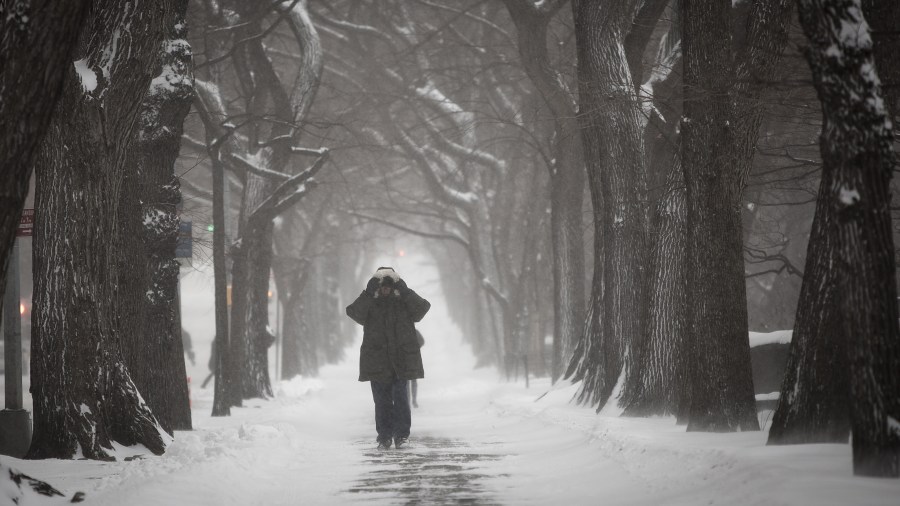
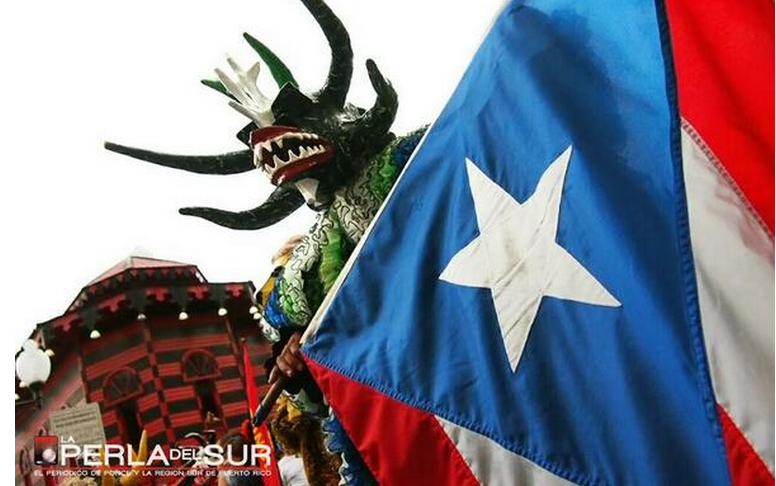
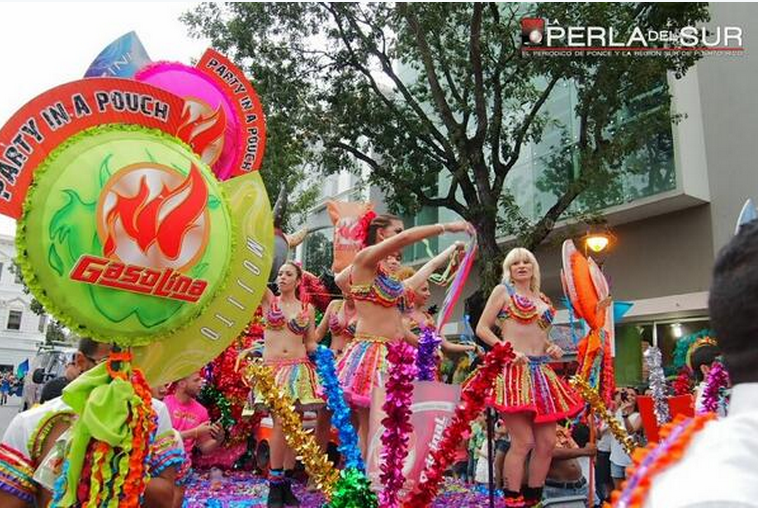
Beautiful, COLORFUL, photos of the carnival in Ponce, Puerto Rico, I found on Twitter via Puerto Rican newspaper, La Perla de Sur. As we’re about to get some more snow on this Sunday night, March 2, I welcome these so!
Some time I picked to stop blogging about Venezuela, right? Yeesh! OK, so call this the first of a series of – hopefully rare – Ilan Chester-style guest posts from the other side of retirement.
-Quico.
Maybe exposure to tear gas causes learning difficulties.
There’s a lot of ferment right now, a lot of excitement, as a brand new generation of kids relearning, en cabeza propia all kinds of things that nobody ever learns en cabeza ajena.
Like Juan, I’ve seen this movie before. And so I sort of know how it ends. So – SPOILER ALERT – here are the seven lessons that today’s students are eventually going to figure out, but not before a huge amount of heartache and, well, just plain normal ache:
The one thing chavismo can’t do without is an enemy, preferably one that its followers can feel good about hating, a convincingly menacing yet…
I recently wrote a piece for Sounds and Colours in hopes of transporting readers to the Carnival in Barranquilla, Colombia. It contains great music, so check it out here!
I’m also compiling a Storify piece all weekend long. I’ll be scouring social media for the best images, tweets, and videos, of Carnival and share them accordingly. You can start with the pre-festivities stuff below.
So… I’m of Colombian descent (first generation American), and the whole Pablo Escobar-the-drug-lord thing has always been fascinating to me. That’s fascinating, as in I find it interesting; not that I’m a fan and want to visit his grave (a tourist destination, I’m told.)
Yes, he’s really smiling in this mugshot.
Look, the guy may have played a Robin Hood-type role in the way he used his massive drug empire earnings to build schools, hospitals, and soccer parks in poor Medellin ‘hoods, but he still killed, or was responsible for the deaths of, a boat load of people. Moreover, his empire contributed to an era that was an embarrassment for the country my parents came from. Consider that it was the world’s murder capital with 25,100 violent deaths in 1991 and 27,100 in 1992. Today, its tourism is on the rise.
I realize there is more to the story about the ‘war on drugs’ policy and what role the United States played in this all. It seems like drugs, and the money that comes with them, make the world go round and aren’t going away. Still, it doesn’t make me a fan of Escobar.
A few years ago, I watched a documentary called Cocaine Cowboys, about the rise of cocaine and resulting crime epidemic that swept the American city of Miami, Florida in the 1970s and 1980s. Those interviewed in the film argued that Griselda Blanco, an infamous crime family matriarch, played a major role in the history of the drug trade in Miami and other cities across America. Per the film, it was the lawless and corrupt atmosphere, primarily from Blanco’s operations, that led to the gangsters being dubbed the “Cocaine Cowboys.”
What the real black widow looked like. Read more about Griselda Blanco here: http://bit.ly/1ce8FIz
I was blown away. A female drug lord was behind all this? (And by this, I mean the woman invented drive-by motorcycle assassinations and tried to KIDNAP JFK, JR.) Again, I wasn’t a fan in the way one “roots” for Tony Montana while watching Scarface, but I always thought her story would make a killer movie. Well, there’s now a telenovela (Spanish for soap opera.)
The pilot episode, which begins with Blanco awaiting trial in a prison cell, nearly scared me off. It seemed the acting was overdone and the writing was pretty bad. But by episode two, things got interesting, thankfully. The show transitions to Blanco’s hard knock life upbringing and suddenly, I’m no longer wondering how a woman become such a ruthless drug queen.
The acting by those who play a young Blanco and her posse in Medellin is great, and the dialogue is superb. Best part? The soap is available on Hulu Plus.
I’ve been thinking a lot about Spanish-language — or, if you prefer, Latin — hip-hop, lately. Perhaps it’s because I seeing gains by artists I can call friends, such as Los Rakas from Oakland, Calif. (Also this. The band led by Tony-winner Tray Anastasio, of Phish fame, covered Chilean rapper Ana Tijoux? Whaaaaa?)
A recent article in The New York Timesand a segment on NPR’s Alt.Latino also prompted me to reflect where the genre has been and where it’s going (as well as growing.)
The Times’ Jon Pareles interviewed René Pérez Joglar and Eduardo Cabra Martínez from Calle 13 in advance of their forthcoming album, Multi_Viral (March 1).
From its debut album in 2005, Calle 13 has spurned genres. It dabbled in the Puerto Rican hip-hop called reggaeton but refused to be bound by it. Since then the duo has constantly expanded its music, drawing on the folkloric, the electronic and the orchestral, mixing from a world of sources — discovered in the course of their ever-expanding tour circuit and lately, Mr. Cabra said, on YouTube.
Calle 13 has won 19 Latin Grammys, more than any other act, and it has rallied international audiences with songs that hold messages of solidarity, sympathy for the hard-working poor and demands for freedom and individuality, like the Andean-flavored “Latinoaméricano.” Calle 13 keeps its distance from party politics, but not from hot-button issues: Mr. Pérez strongly supports Puerto Rican independence, regularly describing the island as a colony of the United States.
“I think every musician has a responsibility when they are making music,” Mr. Pérez said. “Sometimes people are hard on you because you say things. But I prefer that, rather than to be an artist that does not say anything and that’s why people like you. It’s almost like you’re invisible. There is a lot of music going on that for me is invisible.”
Pareles also chatted with colleague Ben Ratliff about the band’s impact and political activism via their music in this Times’ “Popcast.” Listen here.
Over at Alt.Latino, hosts Jasmine Garsd and Felix Contreras invited Latin music blogger Juan Data, as well as a pioneer of Mexican hip-hop, rapper Bocafloja, to discuss how hip-hop trickled into Latin America, changing the music scene forever.
Though the number of Latin hip hop artists has increased, and the genre’s profile is somewhat raised, it’s important to support independent artists for several reasons. Mostly, because I’m sure the mainstream public can’t tell the difference between Latin hip-hop, reggaeton, bachata, and so on.
Supporting indie artists is also a way to find fresh, new music – a godsend since it’s not the same old reggaeton/urbano songs played one million times on the Spanish language radio stations.
I always tell folks to listen to Los Rakas, a duo out of Oakland, Calif., via Panama, that I’ve worked with in the past. The pair’s profile keeps rising and they have a dual album and some other exciting stuff on the horizon.
In the meantime, check out their song, “Hot,” currently playing in the video game, FIFA ’14. That’s big!
Last year, a Chicago-based DJ friend (Christian Vera of Soulphonetics) hipped me to an artist by the name of The Color Brown. Real name Ruben Borrero, Color Brown was born in Puerto Rico and raised in Chi-town.
“After coming to the U.S. from Puerto Rico, I had a newfound love for the Latino culture in general. Not only Puerto Ricans, but also Mexicans, Salvadorians, Guatemalans, Colombians, Venezuelans—just everybody that identifies themselves with this mix of cultures that have to go through the same struggles in this country, regardless of their country of origin. I also realized that white Americans often referred to us as “brown” people not as an offense, but as a way to categorize us. I guess “The Color Brown” is an attempt to re-conquer this word and this color that all Latinos share in common in one way or another. It is, in short, my tribute to the struggle of all those brown people in the United States.”
That’s what it’s all about, especially the part about loving the Latino culture as a whole.
The Color Brown has a new song, La Excepción (free download!). With a backing beat by J.Cole, the song is about working hard by any means necessary to make it, no exceptions. Listen to the track below.
*** Update, Feb. 27: After I posted this story, I was contacted by some reggae/hip hop artists from Chile! They’re called Sur Flow (Southern Flow) and their song, “Old School,” is on the raggamuffin tip! Good stuff that brings me back to college parties in the late 1990s.
Here are just a few Latin hip hop artists I recommend:
Choquibtown, Bomba Estereo, Ephniko, La Mala Rodriguez, Ana Tijoux, Chingo Bling.
MTV Iggy has a good list here. And these ladies below.
“If formulaic microgenre standards are getting to you and you like music that’s just a tad outside the norm, these global bass takes on the trap aesthetic could make your day. There’s no way your laptop is going to generate these bass notes, so be sure to plug in to something a little more powerful.”
 Oh, it’s nothing new. In fact, ‘Dub Side of the Moon‘ by Easy Star Records was released a decade ago, but it’s brand new to me. (Thanks Press Junkie PR for the heads up.)





 periMENTAL