Sometimes I come across stories on CNN en Español that I must share for those who don’t understand in Spanish. Such as this wonderful video about Isabella Springmuhl, a fashion designer who has down syndrome.
You can watch the Spanish-language interview on CNNe (it aired on Sept. 1, 2016).
Here’s another interview by Ruptly TV, conducted as she became the first designer with down syndrome to show at London Fashion Week. It is also in Spanish. In the interview, she says she wants others to know dreams can be achieved.
For as long as I can remember, my father always loved to make others smile. Armed with jokes, song lyrics with dance moves, imitations of characters, or funny greetings, he was fond of bringing a hearty laugh to friends and strangers alike. I like to think he’s still doing that. And, so, it is with a heavy heart *and* a big smile in his honor, that I announce his death:
Virgilio Vergel died on Monday, August 8, 2016, in Fair Lawn, N.J. He was 73.
Born in Ocaña, Colombia, Virgilio, or “Gillo (pronounced: Hee-yo)” as he was called, was the sixth of nine children in the Vergel family. They would move to Colombia’s port city of Barranquilla when he was three. He considered “la arenosa (the sandy city),” as it is known, his home.
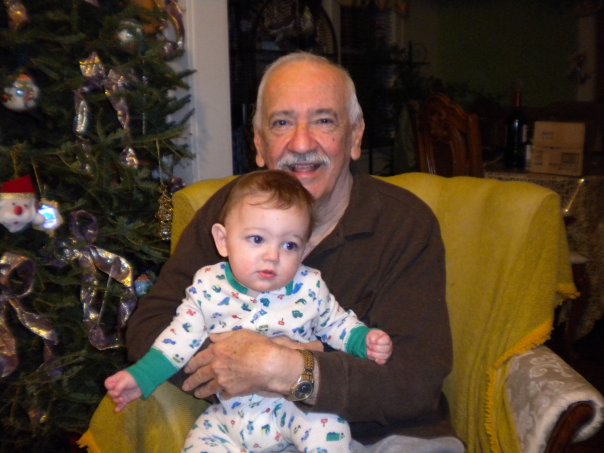
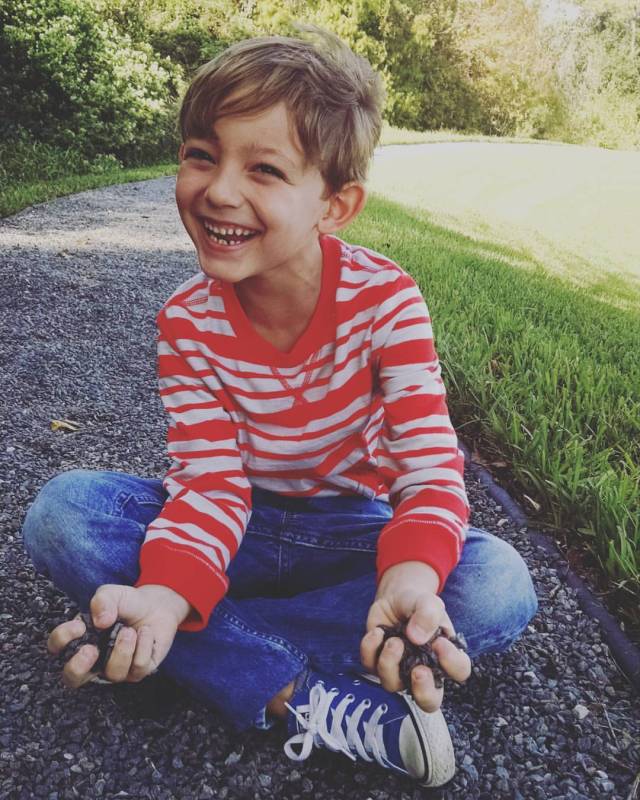
That’s Virgilio on the left. It’s uncanny how his grandson, RJ, has the same smile.
As a boy, Virgilio was an energetic child with a wide smile today can be seen in his grandson, RJ, who bears a striking resemblance. He loved to play soccer with his brothers. As a teen he was known for cracking jokes, playing soccer, and his love of dancing to typical Colombian music. As a young adult, he worked as a bank teller, but still enjoyed going dancing, sneaking into outdoor movie theaters, and riding a 10-speed bicycle.
In 1969, he met the love of his life, Maria Socorro Diaz, when she walked onto a packed city bus and he offered her his seat. They would marry a year later and move to Paterson, N.J., where they would have three children — Richard, Gina, and David.
Maria & Virgilio
The early years in Paterson, NJ.
Virgilio instilled his love of hard work, Latin and contemporary American music (he would encourage David to become a DJ), futbol/soccer, cycling, dressing sharp, and socializing with a sense of humor to all of his children. He also impressed upon them the importance of continuing onto a higher education, something he could not complete as he and his wife worked several blue collar jobs to give them a better life.
Family of five.
The American dream: Disney World
Virgilio always made his kid’s friends laugh.
If there was a character, Virgilio was going to take a photo with it.
The Vergel kids.
No matter how tired he was from a long day’s work, Virgilio would do everything possible for them to have an “American” upbringing, complete with bicycling trips to local parks, pickup softball games, or day trips to New Jersey beaches, baseball stadiums, or amusement parks. Sometimes the weekend fun would consist of projects around the house with cookouts in the backyard, or a trip to the music store, where he would hum the latest popular music to salesmen so that he could buy a 45-inch for the children to play on the record player. No matter what, it was always fun.
Back in the Machine Shop days.
At the Wyckoff School district.
Part-time jobs, like this one at Home Depot, were the norm.
At the Teaneck Police Dept.
Virgilio worked a variety of jobs, as a machinist, maintenance person, and lastly, a custodian in schools and the Teaneck Police Department, where he retired early due to his diagnosis with Parkinson’s disease in the late 1990s.
Parkinson’s is a tough neurodegenerative brain disorder that progresses slowly in most people. Most people’s symptoms take years to develop, and they live for years with the disease. Virgilio lived for nearly 20 years with Parkinson’s, and he was predeceased by his brother, Raul, who died due to complications related to the same disease in 2011.
Dancing with daughter, Gina.
With son, Richard.
With niece, Lily.
Always a smile when family came to visit.
With sons Richard and David
If we could do one thing over, we would have had him start some type of an exercise regimen earlier, as opposed to telling him to rest more (something people tend to say to those who are ill) when the disease was “new” to us. Exercise has been shown to be very beneficial to those with the disease.
Virgilio was hopeful in medical advancements in the Parkinson’s world, as he underwent deep brain stimulation in the early 2000s, and while it took away the tremors, the one side-effect he had was the worsening of his speech. An ardent communicator (much like his daughter, Gina!), this often frustrated him.
Things he missed doing the most? Riding his bicycle and traveling to visit his family in Florida, Colombia, and others scattered throughout the world. He talked about them very often. He lives fondly in their memories.
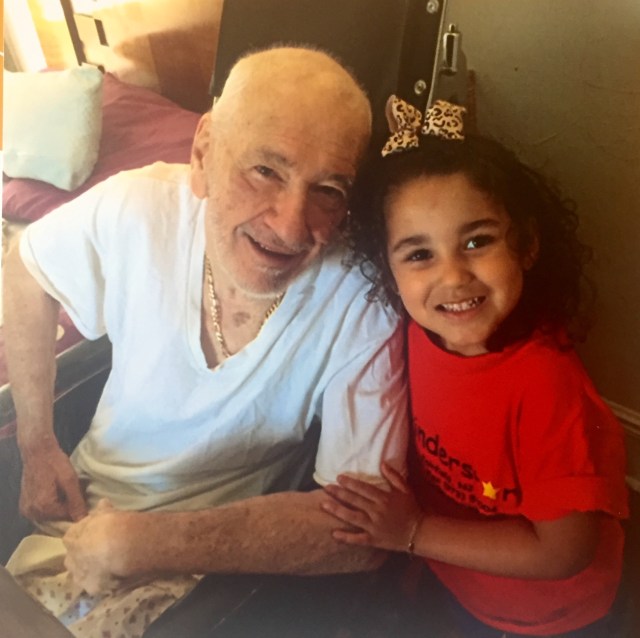
With grandson, RJ.With granddaugther, Bella.
There are many things he continued to enjoy up until he broke his hip in January 2015: watching the Colombian soccer teams, riding a recumbent bicycle, listening to music (while playing the maracas), and watching movies. Most of all, he was able to live many happy years in the home with the love of his life, Maria, and frequent visits from his grandson, RJ, and more recently, his granddaughter, Bella.
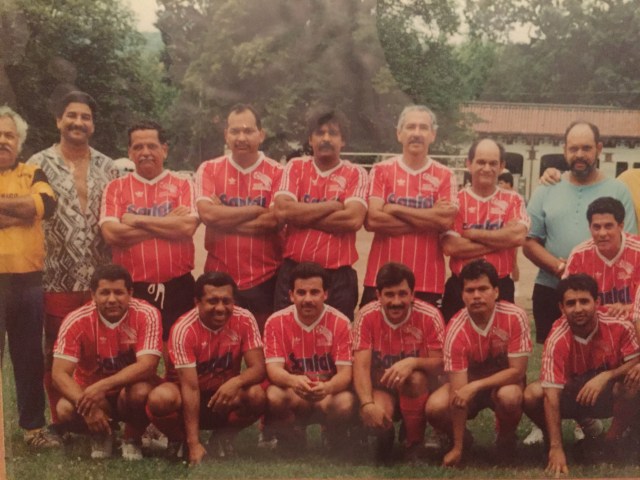
Virgilio, in the top row, with the cool, gray hair and mustache!
We ask that you remember Virgilio’s fondness for life and celebration every time you hear Colombian music or funny stories. We ask that you consider making a donation to either the Micheal J. Fox Foundation for Research, which is working to find a cure, or the National Parkinson Foundation, which strives to improve the lives of those living with Parkinson’s disease.
Virgilio is survived by his wife, Maria, his sons Richard and David, daughter Gina, as well as brothers, sisters, nieces and nephews, and other extended family, in Florida, Canada, Colombia, Argentina, and Spain.
A small service will take place at East Ridgelawn Cemetery in Clifton, N.J., at noon sharp on Saturday, August 13.
I know, that the shortest month of the year is devoted to honoring black Americans is a disgrace, but being that it is Black History Month, I wanted to share some of the awesome work by faculty from Fordham’s African American History department:
The archive, made available through the Department of African and African-American Studies and Fordham Libraries, consists of downloadable audio files and verbatim transcripts of interviews conducted by researchers from 2002 to 2013.
It wasn’t enough for Aimee Cox, Ph.D., to volunteer at a homeless shelter in Detroit, where she took notes for her research on how teenage girls there were coping with a broken system.
Cox, an assistant professor African and African American studies, ended up becoming the shelter’s director while she was still working on her doctorate at the University of Michigan.
Watch a clip of Dr. Cox on the Melissa Harris-Perry show on MSNBC here.
Christina Greer‘s research and teaching focus on American politics, black ethnic politics, urban politics, immigration, quantitative methods, Congress, city and state politics, campaigns and elections, and public opinion.
In Chris Christie’s first term as New Jersey governor, he nominated a black, gay mayor to the Supreme Court. In 2013, when Chris Christie was running for re-election governor of New Jersey, he won endorsements for his reelection from black church leaders, and NBA star, Shaquille O’Neal. He eventually won, enjoying majority Latino support in the vote.
Also in his first term, Christie nominated an Indian-born Muslim to Superior Court in Passaic County, N.J. As WNYC’s Matt Katz reports, “when conservative critics alleged that the man, Sohail Mohammed, was going to implement Muslim Shariah law, Christie unleashed his famous temper.
“‘This Shariah Law business is crap,’ he said. ‘It’s just crazy. And I’m tired of dealing with the crazies. It’s just ridiculous to be accusing this guy of things just because of his religious background.'”
This is a far cry from Chris Christie, the presidential candidate, in 2016. He’s running in almost entirely white New Hampshire and Iowa. And he’s been endorsed by Maine Gov. Paul LePage, who had told the NAACP to kiss his rear end and alleged that President Obama hates white people. So what changed.
Christmas will never be like it was when I was a little girl. This is a post about how it used to be, and how things have changed. Lots go through it, and now it’s our turn.
When I was little, we didn’t have much — I will never forget one Navidad in particular in which my dad gave my brothers and I $3.00 each in a white letter-sized envelope. I wasn’t sad about the lack of toys for gifts, but felt awfully embarrassed for my father and told him it was OK. But it was awkward. I recall vividly that he handed us those envelopes on our way out to visit with family. We stuffed our stash in our rooms and piled into the car. The holidays were here and we were going to have a good time as we knew how!
Christmas time was filled with a jolly (yeah, that word describes things perfectly) times with our small, yet close, family.
My tio Raul (my father’s older brother and without question the uncle I was closest to) and tia Yolanda were always a part of it, as were my (distant? Not really, try super close!) cousins, Maria and Susy, whose mother, Mari, was my tio Raul’s sister-in-law. My aunts on my mother’s side (Mirta, Nina, Chiqui), their children/my cousins, and my maternal grandmother (abuela Esmeria) would get visits from us, as well. Gifts weren’t aplenty, but food was cooked with love, Colombian music—courtesy of my dad’s record player—filled the living room, and good times were had.
The only way we can see my abuela now is by flying to Miami.
As we grew older, most of the family moved away to warmer climates. My father was diagnosed with Parkinson’s in the late 1990s and things haven’t been quite the same every since. My maternal grandmother, now in Miami, would go on to develop Alzheimer’s, and later, my tio Raul, also in Florida, would find out he, too, had Parkinson’s.
Somewhere in there, I was married, then dealing with the spouse’s alcoholism. Then I was separated, and divorced. Throughout it all, there were no tears on my part, only would’ve, could’ve, should’ves. It’s like I lost my ability to feel.
Cousins got married, some moved away, and, as happens, life gets in the way. There are work and parenting commitments, as the next generation of children have to be raised, and so, not surprisingly, intimate family gatherings hardly take place.
Today, Dec. 23, marks four years since my tio Raul passed away due to Parkinson’s disease related complications. I got to see him at a nursing home a few months before he passed, and, honestly, I know he’s in a better place today. I miss him terribly, but Parkinson’s can be an awful disease. I say can be, because I acknowledge there are other illnesses that are much, much worse.
My Tio Raul (left in L photo, center in R photo)
But Parkinson’s eventually imprisons one in their own body. It starts with nerves and muscles, but eventually takes your voice. I remember when I visited him, I could hardly hear him. I kept a happy face and joked around, as I always do, but it is awful to see. I didn’t want him to feel that way.
The last time I saw my uncle in 2011. With my cousin Maria (L) and my tia Yolanda (R.)
Meanwhile, back home, my father was still as stable as the Deep Brain Stimulation surgery he had in 2006 could keep him. He hadn’t had the Parkinson’s tremors in a long while, but his voice and ability to speak were eroding, and rigidity was taking away his independence via walker. He became wheelchair-bound, but he was home for every holiday.
“People think they’re supposed to be happy during the holidays. This is supposed to be a time of sharing with your family, of positive relationships, of celebration and joy,” Cataldo said. “Many people feel alienated, because they’re not in that space, and that idealized image of the holidays only makes them feel the lack of those things more acutely.”
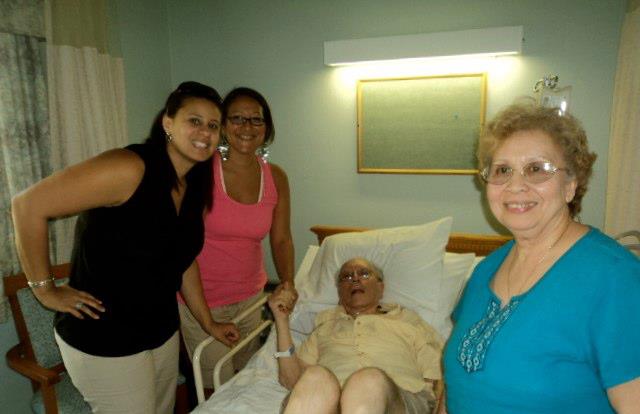
Two thousand fifteen has been a tough one for our little clan. My father fell and broke his hip on Jan. 21, 2015, and was in and out of hospitals, knocking on death’s door at least three times through March. Since then, he’s been in a nursing home, and it’s not easy. Sure, it’s a facility that can serve his needs 24/7, but this comes with much advocacy from us. You have to be there to make sure he’s not neglected. Any sign of a temperature or low blood pressure can spell trouble. A very bad bed sore he developed in February is only now showing signs of progress. (This after I had a very honest discussion with one of his nurses, who said he’s probably go to the grave with that wound. It wasn’t harsh; just real.)
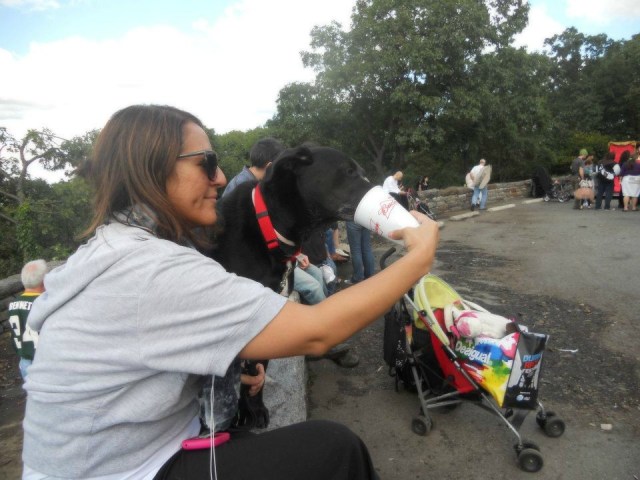
In late August, I had to put my best friend, my 14-year-old black lab mix, Skunky, down. A cancerous tumor forced me to put him down and I still can’t believe I live without a dog!
Me and Skunky in Washington Heights.
Thanksgiving was sad, but no one talked about it. In addition to the fact that my older brother, wife, and nephew moved down to Orlando, the house was quiet. My mom and I visited my dad in the late afternoon/early evening. My younger brother stopped by as late as visiting hours would allow. Out by 8 p.m.
Christmas 2014, my dad’s last one in his house! With my nephew, RJ, and my mom, Maria.
My younger brother’s girlfriend’s mom and brothers came over, which was nice, but it was very low-key. When the patriarch of the family isn’t around, and can’t even eat due to Parkinson’s related swallowing problems, it’s just sad.
Happier times, despite the Parkinson’s.
To make things worse, we have not quite dealt with our feelings. In one of the bad hospital stays, where a very bad pneumonia caused ICU doctors to have to intubate him, and even insert an I.V. of antibiotics through his carotid artery, my mom and I cried a little, but something about our family of five prevents us from outwardly displaying our fears and general grief. Again, it’s like we’ve lost our ability to not be numb.
There are frequent spats between us, about who doesn’t visit, or visit enough, and the person who is doing the most, of course, is my mother. She is trying to live her life, joining a YMCA and attending classes, and doing better at not spending all day at the nursing home, which is draining.
It’s draining because my father tries to speak to us and we can’t understand him. It’s draining because there are so many residents who don’t get visitors and look to you for any little conversation. It’s draining because there’s a certain smell, a certain way the staff there is overworked and stressed, and, most of all, because we know he’ll be there for the rest of his life.
It’s also disheartening to recently read about nursing home employees sharing pictures of themselves mocking or abusing patients on social media. It just adds to my guilt that I need to be there more. Working in New York, living across the river in Jersey City, and having to drive further north to the home in which my dad now lives.
There’s a lot of wondering what life would be like had he not gotten sick, or remembering what he was like before he was diagnosed. It’s pointless, but it comes up in conversation a lot when we get visitors.
With my brothers. I miss my sister-in-law (third from left), now in Florida.
I think a lot about possibly getting Parkinson’s myself. I dream vividly; I always have, but telling my mother about how it can signal Parkinson’s really upset her. But I’m just being realistic about the fact that it can very much be genetic. I spend a lot of the time at the gym because of this, since exercise has been shown to slow the progression of the disease, something we did not know when my dad was first diagnosed.
My nephew, RJ, lives in Florida now, and I miss him so!
I was never really big on winter holidays. I always liked the Fourth of July and summer in general. I dislike the cold, the dark coming early, and having to stress out about gifts. But we’ll do it. Christmas will be fine, but figuring out how to be with my dad when the clock strikes midnight on Jan. 1 is another hurdle. (We’re not sure if visiting hours will be strictly enforced or whether we’ll disturb his three roommates.)
If I could have one wish for 2016, it’s that we deal with this better. It doesn’t seem like my younger brother and I have time for support groups or therapy with the full-time jobs and side gigs, and having to drive to visit mom and dad. But I’ll suggest it. We’ll see.
I am EMPHATICALLY grateful that my father is still with us. He doesn’t seem to be in pain many times, but as his nurses aide sometimes says when I’m in his room with her wonderful Haitian accent, “He seems miserable.” (I think it’s more aches that come with being bed-ridden most of the time.)
Skunky & I went on a long, 2.5 hour walk the other day. Yes, I brought water with us. He’s not the quick walker he once was, but I think he enjoyed walking along the Hudson River from the other side. Some of his best years were spent walking along the Hudson from the Washington Heights/Harlem side.
My dog is ill. He is dying, and I think it might be time to let him go.
Last month, when I found out the tumor on the roof of Skunky’s mouth was malignant (with hemangiosarcoma, a cancer that most often affects dogs), I felt numb to the news, in part, because, aside from being a little less active (he is 14, after all), he seemed fine. He was still eating normally and happy as ever to get out of the house and go for a walk.
The vet, who told me he would advise his own mother against putting the dog through chemo, radiation, or cryosurgery, told me to spoil him rotten, make him comfortable, and to monitor his quality of life as I’d know when it was time to let him go.
As a kid, if a horse or dog had to be put down in a book I was reading or a movie I watched, I never understood it. Why couldn’t the doctor patch them up?
But in the vet’s office that day, I recalled a time when I took Skunky to Inwood Hill Park when we lived in northern Manhattan some years ago. It was late fall, an absolute beautiful time in that park, and during our walk, we passed by a man wheeling his German Shepherd-mix around the trail on a dolly as, presumably, his elderly dog could no longer walk. That was no life for the animal, I thought to myself. That’s selfish. That’s keeping the dog around for the owner, and I won’t ever do that, I thought.
And now, I find myself at that fork in the road. Yesterday, one side of his snout began to swell. Again, he is still eating and will go on a walk, but the swelling looks pretty bad. And he knows that I know something is up. When I look at him, or pet him gently, he starts to wag and gives me that look of shame he so often gave me as a pup if he thought he did something wrong.
I think it’s time to have him put to sleep. I know I will miss how he greets me when I get in. I will miss his extreme loyalty that ensures he never leaves my side. He’s part of the family, and that’s why my mom, brother, brother’s girlfriend, and the other pet living in the house (a shorkie!), don’t seem quite ready for him to go. (This is partly why I feel guilty about having to make this decision.)
I spoke with a colleague about this a few weeks ago, as he worked at a veterinary technician many years ago, and he said, more often than not, owners wait too long. It’s not like a pet can tell us if they’re really suffering, right? He assured me the dog wouldn’t feel a thing when being euthanized. That gave me some comfort.
But it’s still tough.
You see, this is happening at a time when my own father is nearing the end of his life. A very strong man who never had any health problems aside from his Parkinson’s disease, he’s been living in a nursing home for the past seven months. My father is not suffering, per se, but I wouldn’t say he has a great quality of life.
He is incontinent. His limbs are contracting. He is fed through a peg tube. He relies on nurse’s aides to reposition him every two hours. His ability to speak is pretty much gone. He does attempt to let us know when he is in pain. Sometimes, it’s not that, but it’s tough to understand what he is trying to tell us.
The best we can all do is make sure he’s as comfortable as possible. I thank the staff at the nursing home for doing that as best they can.
In many ways, it feels like he is already gone. I always loved talking to my father (he’s a very jovial and funny man) and I haven’t been able to do that in a long while. But, he’s not gone, and this is why 2015 has been a limbo year for me. I am constantly waiting for a shoe to drop. I cannot, I will not, enjoy myself. Being social is the last thing on my mind because it doesn’t feel right.
I control that, and I know I can make a better effort to “live my life” while my dad is at the nursing home, and while Skunky lives his last doggie days. But right now, I can’t seem to find my footing.
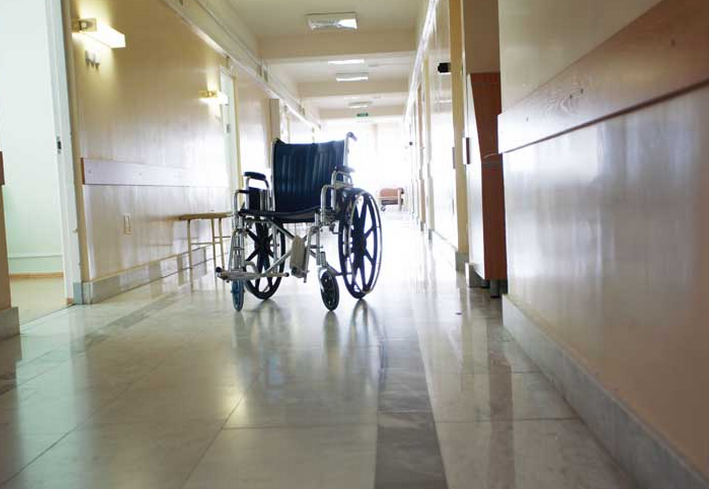
Stock photos for nursing homes? Not a thing of joy.
Once again I find myself at a point in time when something has to be decided on regarding my dad’s care, and I’m still incredulous at the reality that he has to be cared for at a nursing home. At a nursing home!
As I’ve stated on this blog before, living in a home was a thing of the movies, or the soap operas I’d watch as a tween on summer vacation. You know, uber wealthy soap opera family puts grandma away so they can start planning how to get all of her money, stocks, and high-end art. It’s certainly not something our family would ever do. But here we are.
My father gets his nutrition (and Parkinson’s medication) through a peg tube. He receives nebulizer treatments three times a day. He is wearing a catheter because, as he is incontinent, urine could make the bed sore he has on his sacrum that much worse. Oh yeah, he’s wearing a vac machine to drain the wound. It’s a lot.
But it gets worse.
As physical therapy pointed out to us last week, the regimen they have for him isn’t showing any improvement. And then came the warning: insurance is going to cut this plan of care.
So now the social worker at the nursing home (review to come later; I’m not happy with several things about the culture there) is trying to find a long term care facility that will accept my dad’s health care insurance (an Aetna plan administered via the Medicare program. It’s not the best, but it’s something).
I asked physical therapy if there’s any way we can get a wheelchair so we can take my dad outside when the weather warms up. (This weekend, we’re supposed to get above 60-degree weather!) They stalled (as usual) with an excuse about having to order it. But the thing about this experience is that it has made me a major league demanding (yet nice; no yelling!) bitch when it comes to my dad’s care at that facility. So, it’s GOING to happen. I don’t care if I have to make 100 phone calls and knock on every single administrator’s door.
I should be happy (?) that my father is OUT of the hospital and back into a subacute unit of a long-term facility, aka a nursing home. But this, his third round back, is more depressing for me. He sleeps more, interacts with us less, and it seems to get thinner by the minute. There’s no other way to say it — it feels like I’m losing him.
I’m also slightly, ok maybe definitely, losing my [was it ever normal?] mind. I’m angry. A lot. It doesn’t make me want to punch anyone; it makes me want to check out and stop speaking to everyone (except my parents.)
Life goes on and, more and more, it’s only my mother and I who visit and spend hours with my father (my mother more than all of us, as she has been forced to retire as a result of my dad’s fall and hip fracture.)
My brothers, both who have children, visit less and less. Two and three days go by and no visit. And I resent more and more. I have to be there every day. Throughout this whole ordeal, I’ve missed two days. I can’t see this going any other way for me.
I’m not going to lie; I’m pissed about their lack of devotion. I do not understand how you could not visit your father, the sole reason we were even born into this country, and became the people we are today. And checking in with my mother? Not so much.
Am I going crazy?
I actually met with a friend recently (something I hadn’t really done since my dad fell and became very ill) who also has a father in a nursing home. The situation is different. This person isn’t close to death, but immobile, and being in a nursing home is because the person’s spouse simply cannot handle the complicated care.
But this friend, one of five, told me that only one other sibling visits their father. “What can you do? You can’t get mad at it. And you can’t keep asking them to visit.” That’s true, I guess.
It’s hard to accept. I feel like I have anger, acid, or vomit, hanging at bay at the pit of my throat lately. I’m so disgusted. How can people be like this? Why are people like this? How dare they live their own lives? How dare they go out and have fun? Get a haircut even? Anything, all while my dad is stuck in a room. He can barely talk. He’ll probably never feel the outdoor air or direct sunlight again? How can you not just want to sit there with me!!! Aaaarrrrghhhh.
The anger and resentment affects so many other things. It’s like a bad domino effect. (Only I’m not reacting. As per usual, I’m bottling it all in.)
For instance, I posted a story on Facebook about a guy who walks 21-miles to and from work in the suburbs of Detroit every day because he doesn’t have a car. An old friend (Let’s go with acquaintance. If we were once friends in high school but haven’t spoken since then, don’t hang out in person, are we friends, really?) comments that the man is stupid for walking that far for a job that pays $10 per hour. -__-
I want to de-friend and block this person FOREVER. But not before insulting the person’s ignorance, of course.
A nurse’s aide at the nursing home gives me a look when I nicely ask her to do something. Nothing monumental. Just, oh, I DON’T KNOW, turning and positioning my father — something that should be done so he doesn’t develop another pneumonia and worsen his bed ulcer. She then s-l-o-w-l-y obliges. I want to throw a shoe at her.
A tourist slows down and then stops short in front of me when I’m on my power walk to work in the morning? Yeah. I lied. I maybe want to punch this person.
I need a break.
I know what I need to do is just live MY own life the way I want to (which is visiting my father as much as I can) and realize that maybe my brothers are experiencing my dad’s demise differently than I do. Maybe visiting is hard for them. Maybe.
But being angry about it, which I am not saying this blog post absolves me of, isn’t the way to go. I WILL TRY to let it go. I can’t promise I will, but at least it’s out here on the record, right?
Coptic Church Recognizes Martyrdom of 21 Coptic Christians
The Coptic Orthodox Church has announced that the murder of the 21 Egyptian Christians killed by the so-called Islamic State in Libya will be commemorated in its Church calendar.
When I am in the office, I feel distracted by wondering how my father and mother are doing, phone calls to and from doctors, insurance companies, social workers, and attorneys, and the dozens of relatives calling, texting, and Facebook messaging me from overseas to check on my dad.
When I am working from the hospital, and now, nursing home/rehab facility, I am often interrupted by speaking with my mother, trying to figure out what my father wants/needs (his difficulty speaking due to Parkinson’s was made worse by his hip trauma), and calling on nurses and nurses aides for help.
This is tough. My brain feels like scrambled eggs.
Still, nothing compared to what my parents are experiencing. I feel very faint today, and almost guilty for admitting to it, because sitting around worrying, or pacing while making phone calls, doesn’t exactly add up to rigorous exercise that would warrant being dizzy.







 Christmas will never be like it was when I was a little girl. This is a post about how it used to be, and how things have changed. Lots go through it, and now it’s our turn.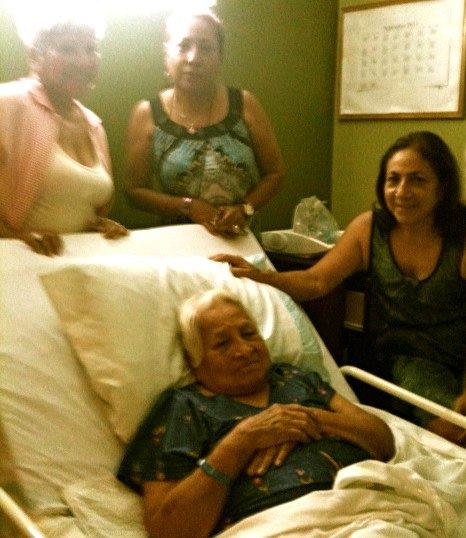







 periMENTAL