Check out the wonderful Christmas tree at the home of my friend and colleague, Jim Kempster. Each year, he and his partner Bob Loncar, outdo themselves in decorating their West Village apartment. Enjoy the photos, and Merry Christmas!


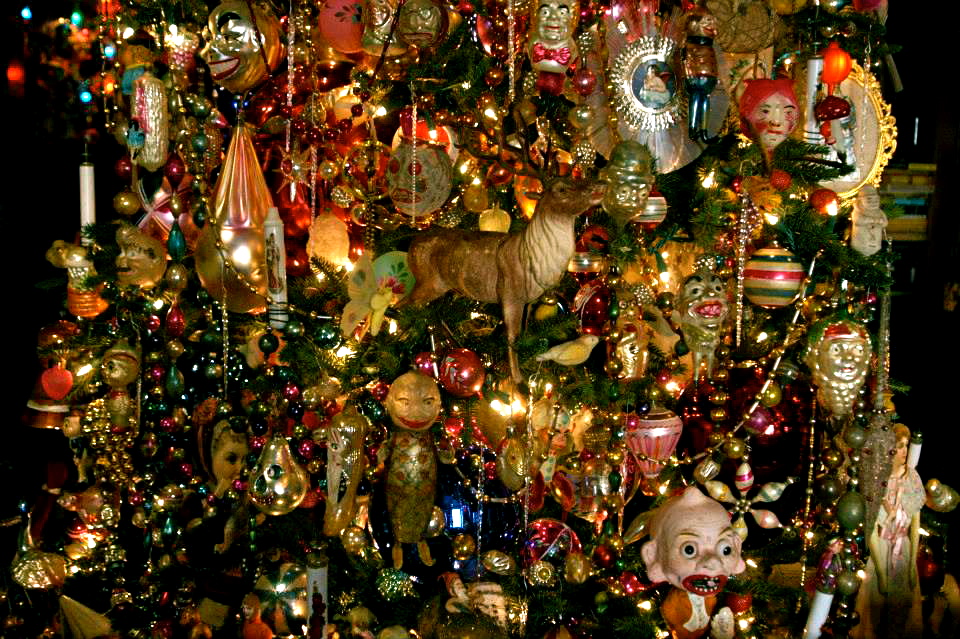


Check out the wonderful Christmas tree at the home of my friend and colleague, Jim Kempster. Each year, he and his partner Bob Loncar, outdo themselves in decorating their West Village apartment. Enjoy the photos, and Merry Christmas!

I traveled to Argentina for the first time recentl and I’ve come up with a to-do list for aspiring Argentina travelers:
DO detox beforehand, and I’m not talking about alcohol. (According to most guidebooks, and what I personally experienced, Argentina is not a get pissed drunk kind of place.) What I was referring to was your diet. You’re going to eat meat. Lots of it. (If you’re a vegetarian or vegan, you’ll have to eat lots of pasta or find the very few vegan eateries). But just give in and eat it. Every day. Maybe, even, twice a day. It’s what they specialize in. If you can find a host family, or hang out with some cool Airbnb hosts, pray that they have a parilla at their home and treat you to a typical Argentine asado cooked on their special parilla grills. It will be the most amazing slowly barbequed meat you’ll ever eat, I can guarantee it!
DO NOT just visit Buenos Aires. If you’re a wine enthusiast (or just a plain wino, like me,) you must visit Mendoza for it’s small city charm and plentifulbodegas. (Think: complimentary and lengthy tastings.) I’m fortunate enough to have family in San Juan, a province about two hours north of Mendoza. It’s a must-visit gem. You’ll find farms and vineyards tucked in rolling hills and a picturesque set of mountains surrounding the place. The El Dique (the damn) de Ullum is a must visit. The spring and summer draws scores of Argentines, who relax, chat (they’re big on chatting!), and drink their beloved mate. (Read about this special drinkhere. There are rituals to it, as I found out after trying it. I’m sorry, prima!)

Read more here.
Kansas City’s Making Movies will join Nina Diaz and Master Blaster Sound System at San Antonio’s ‘Muertosfest,’ a two-day event that brings together traditional art and culture with the best in live music entertainment for the city of San Antonio to celebrate Día de los Muertos (the Day of the Dead), this Sunday, Nov. 2. The event takes place at La Villita Historic Arts Village. They’re on stage at 9 p.m.


I consider myself a decent fan of Bill Cosby’s, but it’s in the fond-childhood-memories-kind of way because of re-runs of “The Cosby Show,” which I watched as a kid. I don’t remember his stand-up (before my time), and his ‘clean,’ storytelling type of stand up wasn’t exactly my cup for tea. Yet for his TV shows, it worked well.
Richard Pryor and Eddie Murphy, however, were my thing. Wild and potty mouthed, they made shitty days something to forget and laugh at. Still, as a comedy fan, I find him to be extremely important in the history of show business, African American history, and comedy, in the United States. And, truth be told, his recent notoriety for issuing respectability politics-laced tirades to (and about) the Black community, piques my interest. Why does he feel this way? What’s his deal?
This New Yorker piece gives great insight to a man I’ll always associated with Jell-O Pudding Pops. But this excerpt is THE BEST. I can hear Pryor’s voice and delivery(via an impeccable Murphy impression) as if I were right there:
In the 1987 concert movie “Raw,” Eddie Murphy told a story about Cosby calling him up and urging him to use less profanity in his act, for the sake of his young fans, including Cosby’s own son. Murphy recalled being so offended that he telephoned Richard Pryor, who offered some defiantly un-Cosby-like advice: “The next time the motherfucker calls, tell him I said suck my dick.”
Hahahahahaha. Now that’s funny.
It’s a long read, but worth it. Check out “The Real Cliff Huxtable” via The New Yorker.
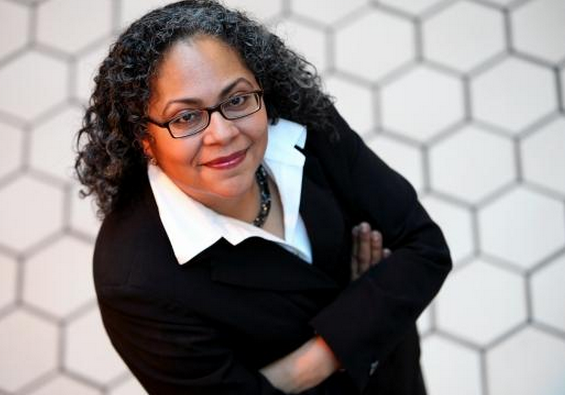
I was writing to an editor at a magazine this evening about an opinion piece one of our law professors is going to write for them, and as I was going through her credentials, I thought, “She’s one brilliant Latina!”
An alumna of Brown University and Yale Law School, Tanya Hernandez is a professor of law at Fordham School of Law. Her expertise centers on discrimination; Latin America/Latin American law; and employment.
In 2013, she was selected by a Manhattan Federal Court judge to sit on a council that would weigh in and advise on New York City’s controversial Stop & Frisk policy.
She penned this opinion piece for the New York Times about civil rights: affirmative action, voter rights, and same sex marriage rights.
And in this piece she penned for the Huffington Post (before the Supreme Court ruled on Affirmative Action), she covered one of my favorite things to bring up when debating matters of race with friends: implicit bias.
The thing is, once I bring it up, it usually shuts the (Facebook) discussion down. The person feels I’ve insulted them, when in reality, I haven’t, because I’ve had implicit racial biases as well. We all have! And as Hernandez explains, they can be overcome:
As a decision is expected within the next two weeks, one thing I hope the Court will consider is that research in the field of cognitive psychology reveals that we all harbor biases and that affirmative action policies assist in addressing those biases.
Part of the reason for enduring social hierarchies is that individuals rely on stereotypes to process information and have biases that they don’t know they have. These implicit biases, as psychologists call them, are picked up over a lifetime, absorbed from our culture, and work automatically to color our perceptions and influence our choices.
Over a decade of testing with six million participants of the collaborative research venture between Harvard University, University of Virginia, and the University of Washington, called “Project Implicit,” demonstrates pervasive ongoing bias against non-Whites and lingering suspicion of Blacks in particular. Some 75 percent of Whites, Latinos, and Asians show a bias for Whites over Blacks. In addition, Blacks also show a preference for Whites.
In the educational context, studies of school teachers indicate that teachers generally hold differential expectations of students from different ethnic origins, and that implicit prejudiced attitudes were responsible for these differential expectations as well as the ethnic achievement gap in their classrooms. This is because teachers who hold negative prejudiced attitudes appear more predisposed to evaluate their ethnic minority students as being less intelligent and having less promising prospects for their school careers.
The pervasive existence of implicit bias in society and its manifestation in the educational setting, strongly suggests that the selection of students can be similarly affected by unexamined stereotypes and implicit biases. Bluntly stated university Admission Offices are not immune from the operation of implicit bias.
But we are not slaves to our implicit associations. The social science research indicates that biases can be overridden with concerted effort. Remaining alert to the existence of the bias and recognizing that it may intrude in an unwanted fashion into judgments and actions, can help to counter the influence of the bias. Instead of repressing one’s prejudices, if one openly acknowledges one’s biases, and directly challenges or refutes them, one can overcome them.
Read the rest of that piece here, and then check out this sampling of academic articles she’s written on a bevy of important topics:
 I’ll never forget how my parents forced me to have a special dinner for my 15th birthday. It involved months of big-time arm-twisting. I’ve never been big on birthdays, or, more accurately, the attention that is gushed upon one on that day. I may be a loud, outgoing person, but my thing is to be the person to make people laugh, talk about fun times or things going in the world; not ‘anyway, back to me.’
Secondly, my parents often worked two jobs to make ends meet; I didn’t want them spending money on this big dinner. Also, I was very into wearing black that year. I didn’t want to wear a dress (which turned out to be mint green!)
Although “Sixteen Candles” is one of my favorite John Hughes’ movie, if someone forgot my birthday, trust me, I didn’t sulk; I was happy!
Years later, I still that way about birthdays. This is not to say I’m criticizing close friends who choose to celebrate with bigger to-dos. I enjoy celebrating others’ birthdays. But, I will admit that the whole, “So… what are you doing for your birthday?” pressure gives me anxiety, so I removed by actual birthdate from Facebook last year, which helped. And I love my very close friends (and family) for respecting my wishes on big workups for my “born-day.” Much like New Year’s Eve, I’m the type to agree to have a special drink, but it’s “just another day.” I’m ok with that.


See 31 other great fan outfits here via GlobalPost: http://bit.ly/1nios9r

I’m fascinated with prison. I couldn’t tell you why, but I like to watch documentaries, television shows, and movies about it, and I’m currently reading “Newjack: Guarding Sing Sing (2001, Vintage),” about a correction officer’s one year on the job at Sing Sing prison in Ossining, New York. It’s a dark read. That job doesn’t sound fun AT ALL.
At Fordham University, we have a professor who researches elderly prisoners (of which there are a lot of these days), and it’s very interesting. Here’s an excerpt from a piece she wrote for The Huffington Post:
When 69-year-old Betty Smithey was released from Arizona State Prison last week after serving 49 years for murdering a 15-month-old child, walking with a cane, she gave a face to a population that often goes unnoticed — the aging men and women in our prison system.
With some 246,000 men and women over 50 in America’s overly stretched prison system, should we as a society consider releasing the fragile, the ill, and the dying among these prisoners?
Read the rest here.
Earlier this month, the National Research Council (NRC) released a report about the unprecedented growth in U.S. prisons.
It found that from 1973 to 2009, the prison population grew from about 200,000 to approximately 2.2 million. With this spike, the U.S. now holds close to a quarter of the world’s prisoners, even though it accounts for just 5 percent of the global population.
The report found that “although incarceration rates have risen, crime rates have followed no clear path. Violent crime rose, then fell, rose again and then declined over the 30-plus years tracked in the study.
“The best single proximate explanation of the rise in incarceration is not rising crime rates, but the policy choices made by legislators to greatly increase the use of imprisonment as a response to crime,” the authors note. Since the 1970s, these policies have come to include the war on drugs, mandatory minimums for drug crimes and violent offenses, three-strikes laws and “truth-in-sentencing” mandates that require inmates to serve at least 85 percent of their sentences. [source]
But analysis by a professor at Fordham Law finds fault with the NRC’s report. He says they shouldn’t be counting drug offenses and violent offenses separately, as the increase in “incarceration rates have always been a story about violence,” not drugs.
“Between 1980 and 2009, over 50% of prison growth is due to increases in violent inmates, and only about 22% due to increases in drug offenders,” he writes, adding:
Between 1980 and 1990, state prisons grew by 387,400 inmates, and 36% of those additional inmates were incarcerated for violent crimes. (The math is below if anyone wants to see it.*) Two things stand out here:
The NRC is right that drugs mattered more during the 1980s than after, and that violent crimes played the dominant role in the 1990s and beyond.
But even in the 1980s violent crimes mattered more. Drugs were important, but (by a slight edge) violent crimes even more so. US incarceration rates have always been a story about violence.
Interesting. Read his whole post about this over at PrawfsBlawg.
This seems to be from a German newspaper of some sort circa 1930s (it originally appeared in black and white from what I can find online, yet this Flickr version is in color). All I can say is the artist (a futurist, obviously!) guessed right; we really ARE living in a time when we can see the person we’re having a ‘phone’ conversation with on a small screen … [source] See more by the same futurist artist here. (h/t to Darren Wershler for tipping me off to this via his Twitter feed.)


 periMENTAL