I grew up in the city of Paterson, NJ, and aside from riding my bike almost every day in the summer, playing in the house, and gym class during the school year, I didn’t get a ton of exercise. There weren’t any organized sports in the tiny Catholic School I attended and the city I lived in didn’t have any recreational leagues.
Not surprisingly, I gained (and lost, and sometimes gained again) the freshmen 10 in high school and the freshmen 15 in college.
I started working out (aerobics classes and the like) my senior year of college and have been pretty hooked ever since. There was a two-year period in my life where it was obsessive (two hours or more a day) and when I got help for that, I cut back. Eventually, I found a happy balance (I go anywhere from 3-5 days a week for cardio and strength training) that includes walking my dog for about 40-60 minutes per day. And I live in a place where a ton of walking is commonplace — New York City!
The reality is I’ve always had to work out and watch what I eat. Luckily, I enjoy the working out part the best. But there are some people who have never had to work out (like my brothers!) who, later in life, are finding they have to. And they don’t always like it. Here’s a piece about the fitness as an adult by my older brother, Richard Vergel, in Vida Vibrante.
A Latino Dad Reflects on Fitness
I hate working out. Always have. It’s a chore. It hurts. It’s not even free. Think about it: Gym memberships, brand name sneakers, well-built bicycles, boxing gloves, track suits, tennis racquets, etc. Whatever you’re into, money will be spent. My point is growing up, I wasn’t the most active kid in the world. But I was lucky, because I looked decent considering I didn’t work out; I wasn’t el gordito or el flaco. I was height-weight proportionate since puberty, so I got away with not working out.
We won’t get into why I didn’t play school sports right now (I’ll save that for another article) but I wish I did. Playing sports as a kid usually leads to a healthier lifestyle, and improved social and leadership skills. Still, I shied away from physical activity. Yet, ironically, I always had friends who were into fitness, ever since high school. They always tried to get me to lift weights with them, and I would try it, see zero results, and go back to my favorite sport – couch surfing. But that was then, this is now.
Now I’m a 42-year-old dad, who likes to eat his rice and beans and chorizo from time to time. I still look pretty good, thank you very much, but now my metabolism has slowed down and I have no choice: I’ve got to work out to stay in shape – no – to GET into shape.
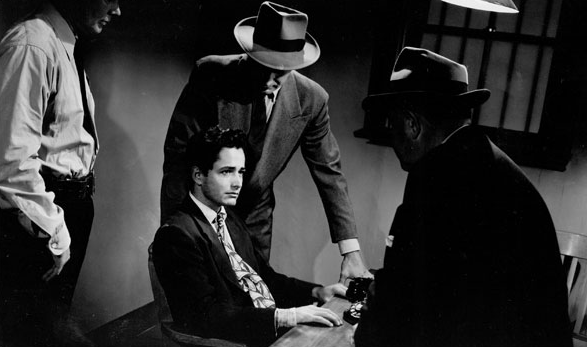
Image via NYTimes article, “The Unstudied Art of Interrogation.”
Sometimes (many times) I have these days to myself in my apartment so I can just watch mindless amounts of television and rest. Yesterday, I decided to watch (and listen to) nothing by depressing documentaries about false accusations and wrongful convictions.
First up, I watched “The Central Park Five.” (Give me a few seconds here to curse out the justice system and court of public opinion in my head. Thanks.) Talk about injustice.
The film “explores the story of the miscarriage of justice that engulfed Antron McCray, Kevin Richardson, Yusef Salaam, Raymond Santana and Korey Wise, the black and Latino teenagers from Harlem who were wrongly convicted of the horrific 1989 crime. The brutal beating and rape of a white woman in New York City’s Central Park provoked public outrage and sensational headlines during the prosecution and conviction of the five defendants. Less known is the story of the eventual exoneration of the men, who served full prison sentences.”
I remember that crime. Not vividly; I was very young. But I remember some news coverage and the front page of the New York tabloid newspapers. I remember my parents watching the news and having this opinion of New York as this super dangerous place.
Ken Burns did a masterful job on this documentary. The archival news coverage was something to see. It was an epically awful crime. Beat so bad that one of her eyes popped out of its socket. It was no surprise that the entire city wanted the rapist(s) caught.
What transpires (coerced confessions from five teens!) is disgusting. And it’s so easy to say “I would never confess to a crime I didn’t commit,” this documentary shows how easily it could happen.
Next was “The Thin Blue Line,” a film by Errol Morris, “depicting the story of Randall Dale Adams, a man convicted and sentenced to life in prison for a murder he did not commit. Adams’ case was reviewed and he was released from prison approximately a year after the film’s release.” This occurred in 1976.
This one didn’t include a false confession, but a pair of eye witnesses who were known liars. Oddly enough, after he was released, Adams sued Morris. You can read about that drama in Wikipedia.
After watching these two documentaries I thought (hoped), ‘there’s no way this could ever happen again, right? RIGHT?”
Wrong.
As a special bonus to my “depressing documentary Saturday,” I listened to a podcast of “This American Life,” where a segment featured a former police detective in Washington, D.C. who screwed up one of his first big homicide investigations by getting a 19-year-old homeless woman to admit to helping beat a man to death back in 1994 even though she was completely innocent.
Retired detective Jim Trainum basically admits that during 17 hours of questioning, he basically provided details of the crime, which she ended up using to “confess” after she simply couldn’t take the questioning anymore. She also had children she had been told she could get home to.
She was eventually charged with felony murder, failed a polygraph test, and spent months in jail. Months later, Trainum got ahold of the log at the homeless shelter where she’d been staying. He saw she was actually in the shelter during the murder and the charges were dropped.
In that same episode, “This American Life” examines the case of Jeffrey Womack, who spent most of his adult life as a suspect in one of Nashville’s most notorious crimes. And for all that time — until another man was convicted of the crime — Jeffrey refused to be questioned about it. He also spent much of that time being suspected of the crime by friends and neighbors.
These days, when we think of interrogations, it’s easy to conjure up images of suspected terrorists being questioned for hours on end in Guantanamo Bay. That’s our reality now. But do those interrogations work?
My very first news reporting job at The Ridgewood News in northern New Jersey was a good one, as I had to cover anything that came my way.
One such story was about then Ridgewood High School gym teacher, Jack Elwood, who had then (2003) been diagnosed with amyotrophic lateral sclerosis (ALS), a fatal disorder that causes degeneration of nerve cells in the brain and spinal cord. ALS is commonly referred to as Lou Gehrig’s disease.
I met him at outside on the school grounds one day, as he was leading a freshmen gym class through a ropes course, where the lesson included a great deal on trust. Here was this guy, totally dressed like a gym teacher, with a whistle around his neck, calmly telling me that the ALS would first take his hands, and that within four to five years, he’d be wheelchair bound. And then he’d die.
It was a tough interview for a new reporter. I remember having this awkward half smile as I took notes and continued to ask questions. He was a genuinely nice man and it showed. His students loved him, and it was their first year with Jack as their teacher.
Mr. Elwood passed away in 2010 and any time ALS comes up, I think of his brave outlook on a disease that affects so many.
ESPN recently aired a touching segment involving a former NFL player, Steve Gleason, who is fighting ALS, the band, Pearl Jam, who Gleason is a big fan of.
The sports network arranged for the Seattle-based band to visit with Gleason, an ex-New Orleans Saints player, who has loved Pearl Jam’s music since he was a teenager.
Youngsters in Japan who are glued to their smartphones and laptops may be sent to an Internet “fasting” camp to help them disconnect from the online world.
The Ministry of Education estimates that some 518,000 Japanese children between the ages of 12 and 18 are addicted to the Internet, according to The Daily Telegraph.
Haven’t updated music news in a while, so here goes…
The Brooklyn-based psychedelic salsa band, La Mecanica Popular, have released a new video for their single, “La Paz del Freak.” Great song and I’m pleased I have a CD for my dad. The man loves his salsa. Always has. Check out the video, and read about the meaning of the song, on Sounds and Colours! And if you’re in NYC, check them out at Lit Lounge on the 21st.
La Mecanica Popular. Photo by Gina Vergel
My homeslice Christian Vera from Chicago’s SOULPHONETICS crew sent me a beautiful mix. It’s got some sultry Brazilian tunes in it and, to me, that equals love. Close your eyes, pretend you’re on a beach in Rio, and listen here. (Free download, too!)
Photo via Soulphonetics on Facebook.
In the wake of Isabela Raygoza’s great “20 Spanish-Language MCs Everyone Should Hear” article in MTVIggy this week, Christian Vera turned me onto a Puerto Rican-by-way-of-Chicago rapper, the Color Brown. I always appreciate an emcee who can rap clearly the whole song through, so lyrics are truly heard, so I’m a fan upon first listen. I plan to explore more, though. There’s a lot on his Soundcloud.
Start off with this track, “Exilio,” since it opens with the sound of the coquí, and that made me miss Puerto Rico.
Elvis Costello has released a new album with The Roots. I repeat: Elvis Costello and The Roots. Listen to this wonderful collaboration via WFUV.
Throwback Thursday. This remix by Uproot Andy shuffled onto my earbuds last night when I was walking my dog. “El Botellon” was released on Bersa Discos in 2008? Is that right? All I know is I always requested it the year I first met him, which I believe was 2011. (And he obliged. What a guy!) The track ever gets old.
Finally, I’m on a real soul kick. Charles Bradley! Lee Fields! Take me to a Daptones party! (Or the next best thing. Charles Bradley and more at Williamsburg Park on the 2oth.) Watch this 2011 performance of “Why Is It So Hard?” from a live session (backed by The Menahan Street Band) on KEXP in Seattle. Phew! Deep lyrics.
It’s National Suicide Prevention Week and National Suicide Awareness Day was on Sept. 10, 2013. This Saturday, Sept. 14, the radio show, Fordham Conversations, will feature a discussion about males and suicide.
Fordham University Professor Daniel Coleman discusses his research, which examines gender stereotypes and the link between masculinity and mental health.
“It’s not a very widely known fact that 80 percent of suicide deaths in the United States are men,” Coleman told Inside Fordham in February. “So the cutting edge in suicide research now is to understand why there is this gender discrepancy.”
Screen shot of the sad and lonely Spanish-language option by me.
I don’t purport to know very much about running a business. Aside from deciding whether I want to take on public relations work on a by-project basis, I’ve never run my own shop.
But I can safely say that Great American Opportunities, a fundraising corporation, has dropped the ball on an additional “opportunity” for their constituents to make more money.
Back in my day, for grammar schools to raise funds, students had to sell chocolates or Christmas wrapping paper. Today, with the power of the Internet, you can imagine those opportunities have become more diverse.
My cousin’s son’s school in Florida is raising funds by using Great American Opportunities to sell magazine subscriptions. It’s much simpler now. Parents forward a link and we help raise funds by shopping.
Or so I thought.
I’m in media relations. I don’t want for many magazine or newspaper subscriptions. I have plenty and they are all digital. So I figure, I’ll shop for my parents.
My folks are Colombian immigrants and American citizens who have been living in this country for more than 40 years. Yet Spanish is still their first and preferred [reading] language. They’re senior citizens, why wouldn’t they enjoy a subscription?
Sadly, the only Spanish-language magazine Great American Opportunities offers is People en Español. No offense to the celebrity magazine industry, but my parents have no interest in who J-Lo is dating. (Well, maybe if she finally moves UP in age of the person she’s dating. Just kidding!)
Has Great American Opportunities not looked into changing demographics of this country, especially in Florida? There are a TON of Hispanics/Latinos in the United States and they are a huge buying power. The more Latino-friendly products a business offers to the Latino community, the more they will buy. (Take a hint from the many corporations that advertise and offer circulars in Spanish.)
And that, mi amigos, in my opinion, is a missed opportunity for Great American Opportunities.
In case you’re wondering, I *did* buy a subscription to help my cousin’s son’s grammar school. I bought an interesting-looking health/neuroscience magazine, but certainly would have purchased much more had there been more than one entertainment-based, Spanish-language option.
Perhaps this is something Great American Opportunities can consider in the future. After all, many of Spanish-language readers and speakers are shopping in America!
Among the many things I love about my job at Fordham University is that I get to deal with academics on a daily basis. Sometimes, I sit in on their classes. One of the most interesting professors is Mark Naison, professor of history and African American Studies.
For as long as I’ve been here, he’s taught a very popular, hard to get into (due to it filling up very quickly) class called, “From Rock & Roll to Hip Hop: Urban Youth Cultures in Post War America.” It’s a class where music is heard (the rock & roll and soul stuff is GREAT) and special guest musicians give performances and mini-lectures. It all makes me wish I was an undergrad!
You can read some media coverage of Dr. Naison’s class, as well as his alter-ego, “The Notorious Ph.D., below. (Yes, Dr. Naison is known to rap.)
Check out the syllabus for the Fall 2013 semester here (bold emphasis mine):
AFAM 3134 From Rock and Roll to Hip Hop: Urban Youth Cultures in Post War America Dr. Mark Naison
Course Description:
Since the late 19th Century African Americans have exerted a powerful influence on the development of American popular music. Forms of musical expression developed in African-American communities have been reinterpreted and marketed to create the modern music industry, shaping the development of Tin Pan Alley, the Broadway musical stage, the record industry, the modern dance band, and music radio.
Until the end of World War II, racism and lack of capital kept African-American artists and entrepreneurs on the margins of this activity, denying them access to commercial venues that would reward them for their creativity and create a national audience base outside the black community. Only a handful of Black artists -Louis Armstrong, Duke Ellington, Cab Calloway, Billie Holliday, Ella Fitzgerald, Marian Anderson, Paul Robeson- had large enough followings outside the “race market”- the section of the music industry targeted to blacks- to make them truly national figures In post World War II era, however, the terms of this cultural interchange began to shift. Civil rights victories, north and south, black migration to urban areas, and the opening of new economic opportunities in industry and government employment set the stage for a new relationship between blacks and the music industry. As radio stations in major cities began to tap into the growing African-American market, black music of all types-gospel blues, swing, rhythm and blues- began to hit the airwaves.
The newest of these genres, rhythm and blues, a urban music that fused sweet harmonies and powerful dance beats, sparked a musical and commercial revolution by attracting a huge underground audience among whites. By the early 1950’s, “black” music radio from Memphis to Los Angeles was attracting hundreds of thousands of white listeners, most of them under the age of twenty five, and sparking an unexpected growth of record sales for artists who had only aimed for the “race market.” In several cities, white disc jockeys decided to tap into this new youth audience by incorporating rhythm and blues into their formats and got such a huge response that they made it the centerpiece of their shows.
Calling it “rock and roll,” they marketed it as youth music rather than black music and looked for white artists who could play it to supplement the already established black stars. This marketing strategy was brilliantly successful. By the early sixties, rock and roll had become the musical language of a generation of American youth, crossing racial and cultural barriers that had never previously been bridged by the music industry.
Though white entrepreneurs and artists made the bulk of the profits in this billion dollar business, scores of black artists cracked into national markets that had previously been closed to them and shaped the musical tastes of millions of young whites. Chuck Berry, Little Richard, the Drifters, the Shirelles, the Coasters, Lloyd Price, Fats Domino, Sam Cooke, Ray Charles, to name a few, were central to the early success of rock and roll, and their influence would later be built on by Motown artists like the Supremes, the Four Tops and the Temptations, and soul singers like James Brown, Otis Redding and Aretha Franklin. The terms of cultural interchange in this music were shaped by the site of its creation; the post-war metropolis. Rock and roll was the product of a long economic boom that brought blacks into the center of the industrial economy and placed them in close proximity with the descendants of white and latino immigrants. On street corners and in school gymnasiums, in clubs and theaters, in radio stations and recording studious, African-American artists and entrepreneurs mingled with musicians, producers and songwriters of other nationalities.
In the earliest days of rock and roll, the sources of creativity flowed upward from city streets, but as the music became more popular, the recording industry was taken over by media conglomerates, removing its experimental, grass roots atmosphere and separating it from its African-American roots. By the late 1960’s and 1970’s rock and roll had become typecast as “white” music, identified more with its white suburban following than its African-American originators; while African-American artists moved into niches in the music market where a modified urban sensibility still prevailed- funk, disco, soul, and pop. However, African-American and Latino youths, trapped in decaying neighborhoods savaged by disinvestment and government neglect, found themselves disfranchised by these musical developments.
In post-industrial cities where vacant lots, shuttered factories, and decaying schools marked the boundaries of crushed hopes and declining opportunities, young blacks and Latinos, supported by a small number of adventurous whites, invented a new music that fused verbal improvisation, scratching and back beats and fragments of previous musical genres into a jarring, densely rhythmic, compulsively danceable mix. Played in community centers and schoolyards, house parties and small clubs, the music initially attracted little interest from recording companies or commercial radio. But its extraordinary popularity among urban youth soon caught the attention of neighborhood promoters, who began recording the music, and hip audiences in the largely white downtown “punk” scene.
By the early 80’s, hip hop or rap, had started to crack into mass markets and commercial radio, even though most established professionals didn’t regard it as real music. But the music accurately expressed the sensibility of people who had been left out post-industrial social order or who were rebelling against its mores. Hip hop, despite fierce skepticism and opposition, not only survived, but exploded becoming the most commercially successful musical form in the world by the mid-90’s, defining not only the sensibility of urban youth in the United States, but young people of various backgrounds all over the world.Once again African-American cultural creativity, forged in an urban setting, had redefined the musical tastes of a generation.
In the course that follows, we will examine how the sensibility and musical creativity of urban youth, in two very different historical periods , inspired musical revolutions which transformed the tastes of entire generations, crossing boundaries of race, gender, nation and social class. How could this happen twice in fifty years? What does this say about the racial/cultural dynamics of post-war American society? About the connection between African-American culture and American culture? About race and gender dynamics in the culture industry? About the role of women in musical forms which emphasize an insurgent, eroticized masculinity and turn women into objects of desire and/or contempt? About how rebellion can be marketed, coopted and turned into an instrument for material gain?
To get at these questions, the course will use music, film, and literature as well as historical writings on the music industry and contemporary urban life. To add depth to our portrait, we will also explore musical countercultures of international derivation particularly punk, reggae, salsa and reggaeton, and look at how folk music and jazz periodically invade and occasionally shape popular musical forms. We will also explore how these musical forms become internationalized and how they are being brought to life today in new ways in nations around the world.
We have a graduate assistant working with the class, Melissa Castillo Garsow, who will give a few lectures and presentations on the globalization of hip hop. At various points in the class, people involved in the creation of the music we are studying will come to class to perform or talk about their work. There will also be an opportunity for students in the class to perform their music, inside or outside of class. We draw no line between musical creativity and musical analysis. Both are welcome in our classroom.
I. An Overview of Popular Music in the US: Garafalo and Waksman Rockin Out, Introduction
2. Some Antecedents of Rock and Roll: Garafalo and Waksman, Rockin Out, chapters 1 and 2, Rock and Roll, Race, and the invention of the “Teenager:” Garafalo and Waksman, Rockin Out, chapters 3-5 Echols, Scars of Sweet Paradise, chapter 1
3. Soundtrack to Social Revolution, Soul Music, Civil Rights and the Rise of the Counter Culture: Guralnick, Sweet Soul Music, 1, 3, 4, 5, 7, 10, 11 Echols, Scars of Sweet Paradise, 2-7 Garafalo and Waksman, Rockin Out, chapter 6
4. Black Power, White Flight and the Resegregation of Popular Music: Guralnick, Sweet Soul Music, ch. 12 Echols, Scars of Sweet Paradise, 8-9 Garafalo and Waksman, Rockin Out, Chapter 7, Mid-Term Examination
5. The Rise of Hip Hop: Creativity and Destruction in the Post-Industrial City: George, Hip Hop America, chapters 1-2, Foreman and Neal, That’s The Joint, selections Mark Naison “The Morrisania Roots of Hip Hop Culture” (article sent on internet) Mark Naison “From Doo Wop To Hip Hop” (article sent on internet)
6.. Caribbean and Latin Influences in Hip Hop Culture: Foreman and Neal, That’s The Joint, selections, Class Presentations/Lectures by Melissa Castillo-Garsow
7. Images of Rebellion: MTV, Music Videos, and Commercialization of Rap: Garafalo and Waksman, Rockin Out, chapters 8, 10 George, Hip Hop America, chapters 3-4, Foreman and Neal, That’s The Joint, selections
8. The Crack Epidemic and the Rise of Gangsta Rap: George, Hip Hop America, chs. 5-10 Foreman and Neal, That’s The Joint, 11, 17, 26, `44, Jay Z Decoded
9. Hip Hop Wars: Gender, Sexuality and the Politics of Contemporary Rap: George, Hip Hop America, chs. 11-18 Foreman and Neal, That’s The Joint, selections
10. The Globalization of Hip Hop: Foreman and Neal, That’s The Joint, selections, Class Presentations/Lectures by Melissa Castillo Garsow
It is described as a freak accident, because as far as automobile wrecks go, for a bus to hit a lamppost that falls on a baby in a stroller, well, it’s just not supposed to happen that way. But that’s how it went, and 8-month-old Angelie Paredes is gone.
But this July 30 ‘freak accident‘ in New Jersey, which took place when a bus jumped a curb because its driver was allegedly on his cell phone, could have been prevented. The driver, who is now charged with ‘death by auto,’ did not have to use his phone while operating a vehicle. The passengers did not have to accept his behavior as a matter-of-fact habit of these discount jitney bus drivers.
Dear baby Angelie did not need to die.
Consider the statistics:
According to the United States Department of Transportation, distracted driving (which is caused by any activity that could divert a person’s attention away from the primary task of driving) claimed the lives of 3,331 lives in 2011. A whopping 387,000 people were injured in motor vehicle crashes involving a distracted driver.
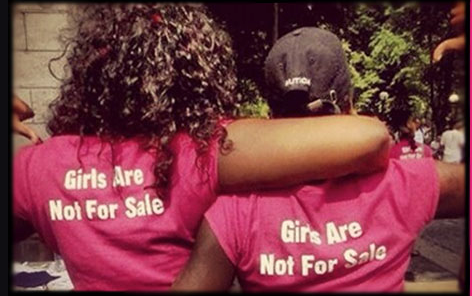
Throughout my tenure here at Fordham University, I’ve learned about many great non profit and advocacy organizations in New York City. One such organization is the Girls Educational & Mentoring Services (GEMS), which serves girls and young women who have experienced commercial sexual exploitation and domestic trafficking.
GEMS, which has a relationship with Fordham’s Graduate School of Social Service’s Institute of Women and Girls, was founded in 1998 by Rachel Lloyd, who had been sexually exploited as a teenager. GEMS has helped hundreds of young women and girls, ages 12–24, who have experienced commercial sexual exploitation and domestic trafficking to exit the commercial sex industry and to develop to their full potential.
Any notion I ever had about prostitution was completely changed one day when I covered a Fordham / GEMS event where a young girl talked about how an ex-boyfriend forced her into the lifestyle and GEMS helped her get out. It’s a form of human trafficking, though not in the traditional way people tend to think of trafficking in developing nations.
GEMS and Fordham’s Institute of Women and Girls are co-hosting an event called, “Before,” on June 28, from 6 to 8 p.m., at Fordham’s Lincoln Center campus. You can RSVP here.
“Before” is an evening of original monologues written by GEMS staff and fellows preformed at Fordham University’s Pope Auditorium. There will also be a survivor created art show and light refreshments.
 I grew up in the city of Paterson, NJ, and aside from riding my bike almost every day in the summer, playing in the house, and gym class during the school year, I didn’t get a ton of exercise. There weren’t any organized sports in the tiny Catholic School I attended and the city I lived in didn’t have any recreational leagues.





 periMENTAL