
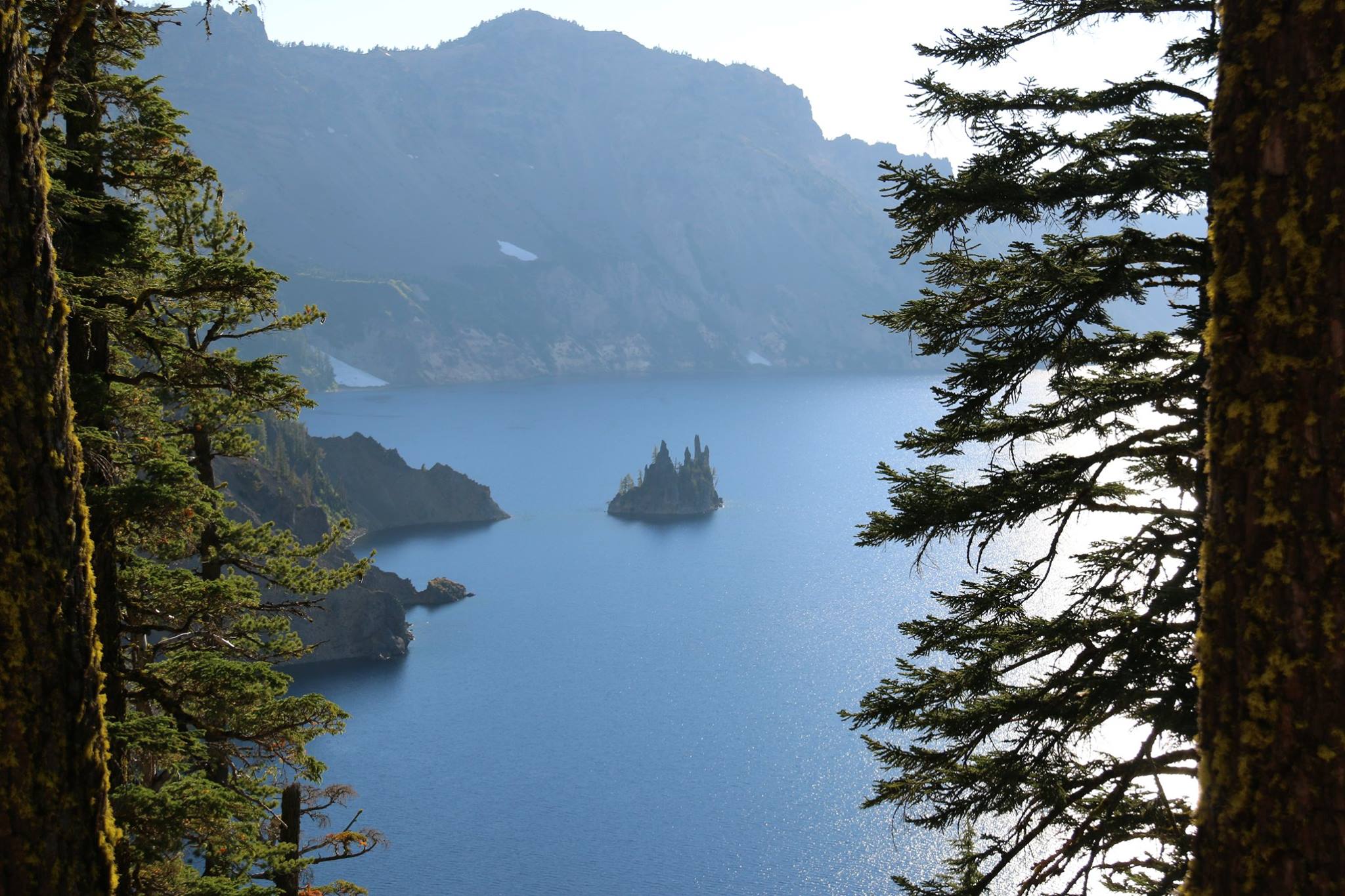
Learn more about Crater Lake National Park here.

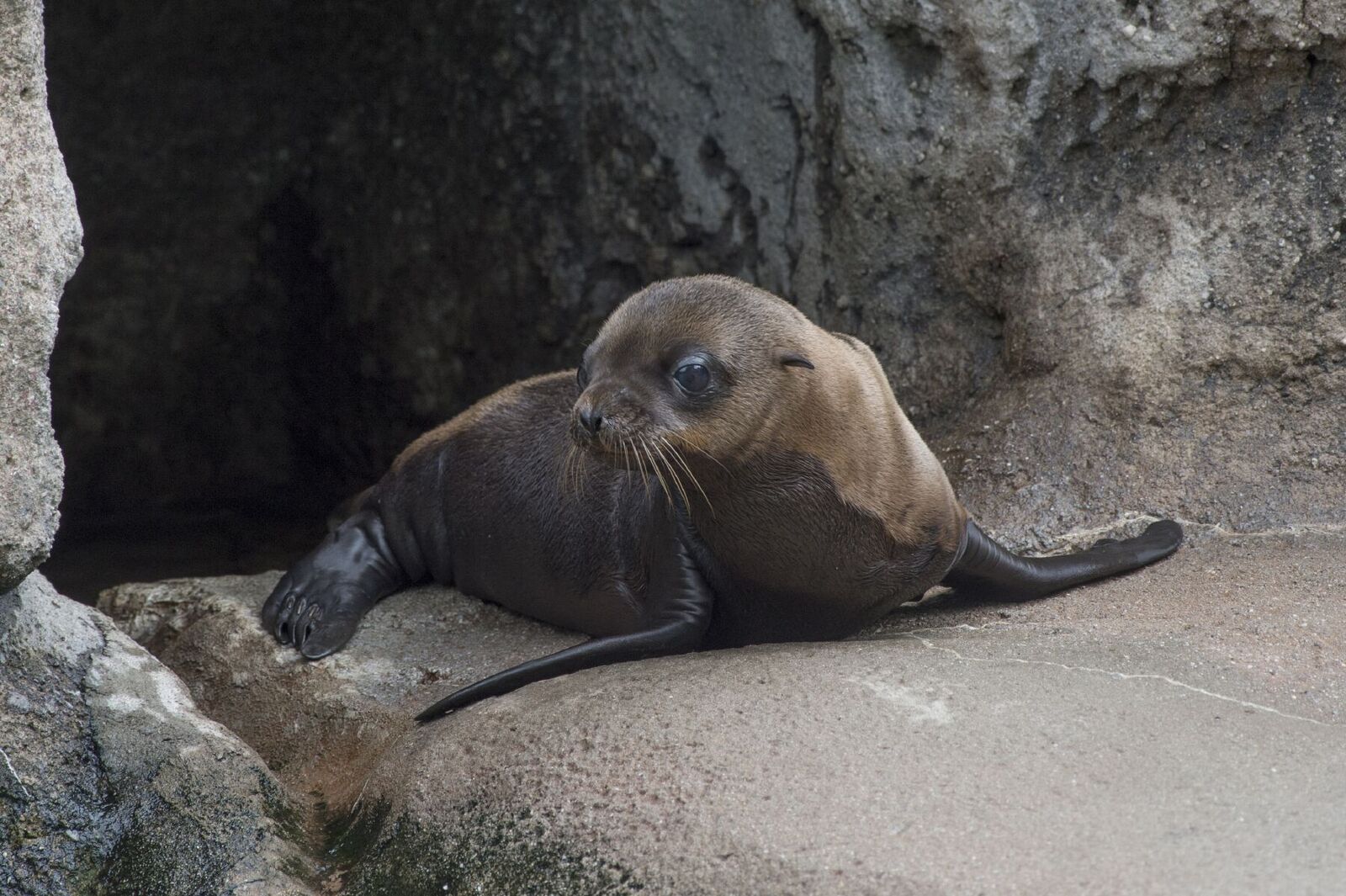
Bronx, NY – August 19, 2016 – The WCS’s (Wildlife Conservation Society) Bronx Zoo welcomes the addition of two California sea lion pups born in June.
The pup born to mother, Indy, has been identified as a male. Keepers have not yet been able to determine the gender of the pup born to Margaretta. Both have yet to receive their names.
Clyde is the sire of both pups. He is one of two adult bulls that came to WCS’s Queens Zoo in 2013 from the Oregon Department of Fish and Wildlife as part of a local wildlife management project in Bonneville, Ore. These are his first offspring since arriving in New York.
California sea lions are not endangered and live in healthy populations along the west coast of North America from Alaska to Mexico. All marine mammals, including sea lions, are protected under the Marine Mammal Protection Act of 1972.
California sea lions are exhibited at all five WCS facilities: the Bronx Zoo, New York Aquarium, Central Park Zoo, Prospect Park Zoo and Queens Zoo.

The Wildlife Conservation Society’s Bronx Zoo is open daily from 10:00 a.m. to 5:00 p.m. weekdays, 5:30 p.m. weekends from April to October; 10:00 a.m. to 4:30 p.mNovember to March. Adult admission is $19.95, children (3-12 years old) $12.95, children under 3 are free, seniors (65+) are $17.95. Parking is $16 for cars and $20 for buses. TheBronx Zoo is conveniently located off the Bronx River Parkway at Exit 6; by train via the #2 or #5 or by bus via the #9, #12, #19, #22, MetroNorth, or BxM11 Express Bus service (from Manhattan that stops just outside the gate.) To plan your trip, visit bronxzoo.com or call 718-367-1010.


People in the Bolivian city of Oruro are gearing up for carnival.
This year’s celebrations start on 30 January, but the main days will be on 5, 6 and 7 of February when thousands of people will congregate in Oruro.
The carnival dates back more than two centuries and is one of Latin America’s most colourful.
Photojournalist Fellipe Abreu and reporter Luiz Felipe Silva recorded some of its highlights in 2015.
See more via BBC.
Two of today’s most acclaimed Latin music groups, Monsieur Periné and Buyepongo, will play a free, all-ages concert on Tuesday, Jan. 19, at 8pm at World Cafe Live in Philadelphia.
The concert, which will be webcast on xpn.org, kicks off the second year of the Latin Roots Live! concert series, featuring live performances inspired by Latin Roots, the bi-weekly series heard on World Cafe®. Latin Roots explores and exposes to American audiences the vast variety of music from Spanish and Portuguese-speaking countries. World CafeⓇ, NPR’s syndicated popular music program, is produced by WXPN/Philadelphia. Latin Roots on World Cafe is made possible by the Wyncote Foundation. Latin Roots Live! is produced in partnership with AfroTaino Productions and made possible by the William Penn Foundation.

Monsieur Perinė is one of the leading bands in Colombia’s thriving new music scene, and is quickly becoming more popular worldwide since being voted “Best New Artist” in the 2015 Latin GRAMMYⓇ Awards. With its unique blend of sounds, the group has earned itself its own genre called “Suin a la Colombiana,” noting a cultural, artistic, and rhythmic fusion of traditional Latin American music, gypsy jazz, and a French adaptation of American swing music.
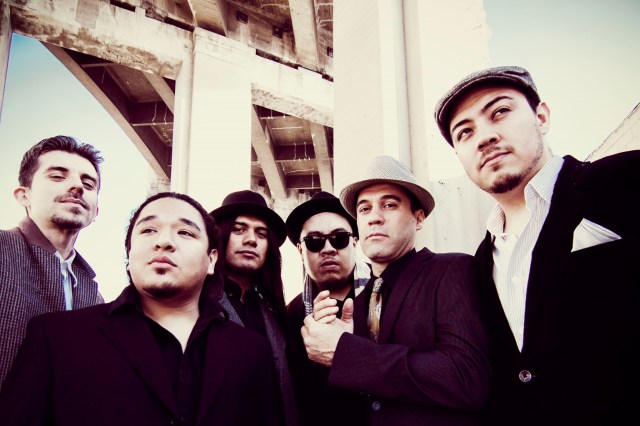
Afro-Latino Buyepongo’s sound was forged in the Compton area of Los Angeles in the 90s, reflecting the music of their culture and times. With deep roots in South and Central America, Buyepongo draw heavily from Latino musical culture, taking their cues from traditional roots music of Colombia, Haiti, Belize, Honduras and the Dominican Republic. Buyepongo creates a vibrant, polyrhythmic sound by seamlessly fusing merengue, punta, and cumbia. The group’s pulse and power is built around the drum and guacharaca, giving them an upbeat, tropical flare.
“There is no language barrier to the party with Latin Roots Live,” said David Dye, host of World Cafe. “Our first year featured packed houses for every act and attracted a cosmopolitan slice of Philadelphia music lovers. 2016 starts off with a super bill to keep things moving.” In 2015, its inaugural year, the Latin Roots Live! concert series featured GRAMMY-nominated Chilean artist Ana Tijoux, high-powered cumbia band La Misa Negra, Latin folk star Gina Chavez, Philadelphia’s own Eco Del Sur, and percussion ensemble with Venezuelan and Argentinian roots, Timbalona, to name a few.
The Latin Roots Live! concert on Tues., January 19 will take place at World Cafe Live, 3025 Walnut Street in Philadelphia. Doors will open at 7 p.m. and showtime is 8 p.m.. To RSVP for free admission, click here (http://xpn.org/latin-roots-live).
My effort to discover (or rediscover, as my ex-husband grew up there and I’d spent much time here in the early aughts) the city I live in continues.
On Dec. 4th, I attended #JCFridays, a city-wide celebration of the arts in chilltown included different exhibits and more throughout the different neighborhoods.
In true ‘I’m-gonna-get-to-know-this-city,-damnit’ fashion, I rode a Citibike from my corner of the Heights to the Grove Street area, where I saw art by Janyewest, Awol, Denai Graham, and Cheese (who, no shit, was written about in the New York Times back in ’96!), at the very spacious and chic Blow Out Society salon.


Later, I mozied (via LYFT, using one of my five free rides via a promo when I downloaded the app) to the JC Fridays event put on by the folks at “A West Side Story” over at the New Park Tavern. I checked out a photography exhibit by Scott Sternbach. Chatting with the photographer and filmmaker, I learned he’s attempting to document as much of the West Side as he can before it gets changed through gentrification. Let’s face it: that time can’t be too far away.


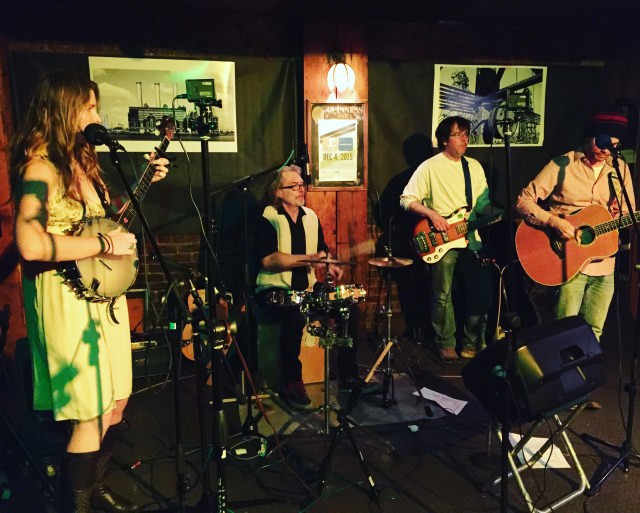
There were also two cool bands: the Penniless Loafers, a ska band, and the Twiddlin Thumbs, a folk band featuring a washboard and a banjo!

The cool think about this market is that it’s in a neighborhood outside of the uber-popular downtown area, and it aims to serve all, since it was very reasonably priced for vendors to join. I have to believe this means lower prices on items, which is better for shoppers!


The shootings of Michael Brown and Eric Garner, and the ensuing debate surrounding the killings and related protests, caused some of my friends, and obviously, people in general, to respond in a way I soooo dislike:
These questions are problematic for several reasons that have been aptly outlined by both columnists like Ta-nehisi Coates (“The notion that violence within the black community is “background noise” is not supported by the historical record—or by Google. I have said this before. It’s almost as if Stop The Violence never happened, or The Interruptors never happened, orKendrick Lamar never happened. The call issued by Erica Ford at the end of thisDo The Right Thing retrospective is so common as to be ritual. It is not “black on black crime” that is background noise in America, but the pleas of black people.”) and academic scholars (“Giuliani presented no evidence that Black communities are not actually addressing violence in their own communities. It’s also useful to point out that based on the most recent crime statistics from the FBI in 2011, the White-on-White murder rate was .0014% of the population, while the Black-on-Black murder rate was .0069% (with rounding), a difference of .0055%.”) who can be found with a quick Google search.
These comments also demonstrate a complete lack of empathy on their part, which I can only attribute to ignorance, as in legitimate naiveté about the majority of folks who live in high crime areas, and what they really want. My guess is they must not know too many families affected unnecessary violence, be it on the victim or perpetrator’s side.
Lastly, they must not understand that, although it seems the media is ever present, thanks to the 24 hour news cycle and budget cuts due to the Internet and what it did to print journalism, resources within media organizations aren’t what they used to be. Gone are the days when a journalist would be assigned to cover crime in every single town.
As a newspaper reporter, I remember what it was like to camp outside of a victim’s home in hopes of catching a family member for a quote about what they were feeling. (It was not my favorite part of the job. Many times dreaded those interviews.)
Do people really think people living in high crime areas are happy about the state of their neighborhoods? Or that if someone gets killed next door, it’s no big deal? It’s so much deeper than that.
LUCKILY for us, journalist Jill Leovy has a new book in which she studies the epidemic of unsolved murders in African-American neighborhoods and the relationships between police and victims’ relatives, witnesses and suspects. I’m looking forward to this book, because it’s clear it’s not just from the perspective of victims, but it covers how the police respond to crime in tough areas.
The idea for Leovy’s book came from a blog she started (The Homicide Report) back in 2006 while working for the Los Angeles Times. In her new book, Ghettoside: A True Story of Murder in America, she examines one of the most disturbing facts about life in America: that African-American males are, as she puts it, “just 6 percent of the country’s population but nearly 40 percent of those murdered.” (source.)
In this recent interview with NPR’s Fresh Air, she discussed how she managed the carnage and the pure emotion of family members of murder victims she came across as a reporter for the Los Angeles Times:
“It’s not the carnage that’s horrible, though. It’s the grief and the sadness of it that is – that will make your hair stand on end, and that is very, very difficult to deal with. The actual fact of bodies and blood is much easier to deal with than what you find when you go to somebody’s house five years later and they’re still shaking and weep instantly when you say the name of their loved one.
In fact, “The Homicide Report” was the easiest homicide reporting I did in all my years of homicide reporting, and there was a reason for that. And I knew it going in. I think in some ways, at that time, I needed it. It’s because mostly, I was dealing with victims’ families right after the homicide. That’s a time when – in the normal course of reporting, that’s when you usually meet victims’ families – that first 48 hours, that first week, maybe, before the funeral, and, you know, that’s the easiest time because people are in shock. They are in a state of suspended disbelief. They don’t know what to think. They’re kind of frozen and wide-eyed, and it takes time with something as traumatic as homicide for the reality to sink in. And so it’s a lot harder to interview people three months later, six months later. Two years can be a really grueling point, I found – five years, very, very grueling. Homicide grief is very distinct, I think, from other kinds of bereavement, and the trajectory of it can be different.
Another great part of this Fresh Air interview with Leovy is her insight into how police handle these crimes, and how they’re viewed by these communities. Simple it is not:
“Police hear that all the time: ‘You don’t care because he’s black. You’re not going to solve it because he’s black.’ And it’s very interesting, I – in terms of Ferguson and some of the other recent controversies – I was thinking that this is so complicated because there is, very definitely, a standard black grievance against police that you hear in South LA, that has to do with the generally understood problem – too much consent searches, we say, in LA, too much stop-and-frisk, too heavy of law enforcement, too much presumption of guilt when you take stops.
What I hear, when I’m in these neighborhoods, is a combination. It’s a two-pronged grievance. There’s another half of that. And the other half is, I get stopped too much for nothing, and the police don’t go after the real killers. They don’t go after the really serious criminals in this neighborhood. They’re stopping me for what I’ve got in my pocket, but I know someone who got killed down the street. And they haven’t solved the homicide, and yet, that second half seems to never break out and make it into the national dialogue about it. To me, it has always been that double-sided grievance of too much of the wrong kind of policing, not enough of the policing we actually want in these neighborhoods.
Hear the audio interview, or read the transcript, here.

And check out these other related stories, including one where a 17-year veteran of the LAPD says community members can stop police brutality by cooperating with police, and this one, in which the architect of ‘Broken Windows’ defends his theory.
Photo via the Associated Press.

Read about the conference via the Los Angeles Times.
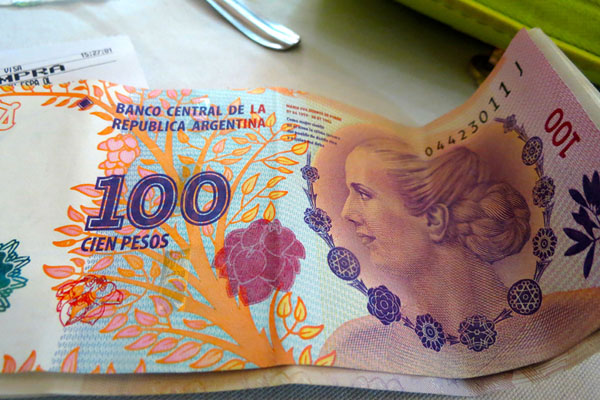
I traveled to Argentina for the first time recentl and I’ve come up with a to-do list for aspiring Argentina travelers:
DO detox beforehand, and I’m not talking about alcohol. (According to most guidebooks, and what I personally experienced, Argentina is not a get pissed drunk kind of place.) What I was referring to was your diet. You’re going to eat meat. Lots of it. (If you’re a vegetarian or vegan, you’ll have to eat lots of pasta or find the very few vegan eateries). But just give in and eat it. Every day. Maybe, even, twice a day. It’s what they specialize in. If you can find a host family, or hang out with some cool Airbnb hosts, pray that they have a parilla at their home and treat you to a typical Argentine asado cooked on their special parilla grills. It will be the most amazing slowly barbequed meat you’ll ever eat, I can guarantee it!
DO NOT just visit Buenos Aires. If you’re a wine enthusiast (or just a plain wino, like me,) you must visit Mendoza for it’s small city charm and plentifulbodegas. (Think: complimentary and lengthy tastings.) I’m fortunate enough to have family in San Juan, a province about two hours north of Mendoza. It’s a must-visit gem. You’ll find farms and vineyards tucked in rolling hills and a picturesque set of mountains surrounding the place. The El Dique (the damn) de Ullum is a must visit. The spring and summer draws scores of Argentines, who relax, chat (they’re big on chatting!), and drink their beloved mate. (Read about this special drinkhere. There are rituals to it, as I found out after trying it. I’m sorry, prima!)

Read more here.










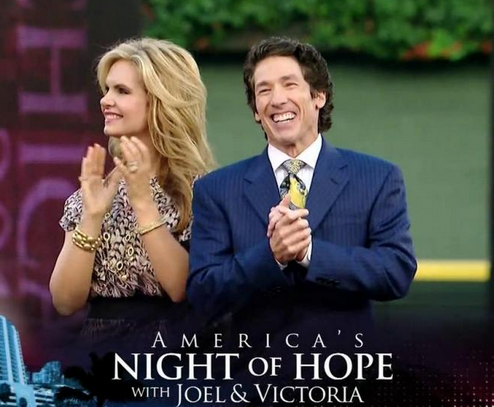
I am NOT the type to post inspirational quotes on social media by the Dalai Lama, Joel Osteen, or even Bill Gates. (Ha.) But I will share this cool news (the part about 250 underprivileged kids) coming out of the Osteen camp because this is what it’s all about, in my opinion — spreading love by helping out! That, in itself, is inspiring; no quotes needed. Thanks to the Wildlife Conservation Society’s Press Office for sharing this bit of news.
❤ –Gina
BRONX, N.Y. — On Thursday June 5, Victoria Osteen along with volunteers from The Generation Hope Project®, will take 250 underprivileged children to the Wildlife Conservation Society’s Bronx Zoo as a part of the activities surrounding this year’s “America’s Night of Hope,” at Yankee Stadium.
The third annual Generation Hope Project® will focus on mentoring—developing one-to-one relationships with young people who need strong role models. Volunteers will have an opportunity to share time with middle school children who might not normally get the chance to join in on the full zoo experience.
Generation Hope Project® will also work with organizations around the Bronx community on service projects including.
Generation Hope Project® is an outreach of Joel Osteen Ministries that engages young adults from around the country and around the world in service to communities in need. Through partnerships with local leaders, organizations, and other churches, GenHope has provided close to 3,000 hours of volunteer service, reaching thousands through its social media messages and bringing supplies and support to those in need. Learn more at www.generationhopeproject.com.
America’s Night of Hope will be held at Yankee Stadium on June 7, 2014 at 7pm. The event, which coincides with the volunteer projects, will draw more than 55,000 from across the nation for an evening of hope and celebration. This year marks the 6th annual event. The first was held at Yankee Stadium in 2009, then Dodger Stadium, US Cellular Field, Nationals Park, and Marlins Stadium in 2013. For more information, go to www.joelosteen.com.
Joel and Victoria Osteen are the pastors of Lakewood Church in Houston, Texas-America’s largest church with more than 52,000 weekly attendees and one of the nation’s most racially and socioeconomically diverse. Joel’s weekly television program reaches more than 10 million households each week in the US and is seen by millions more in over 100 nations across the globe.
 periMENTAL