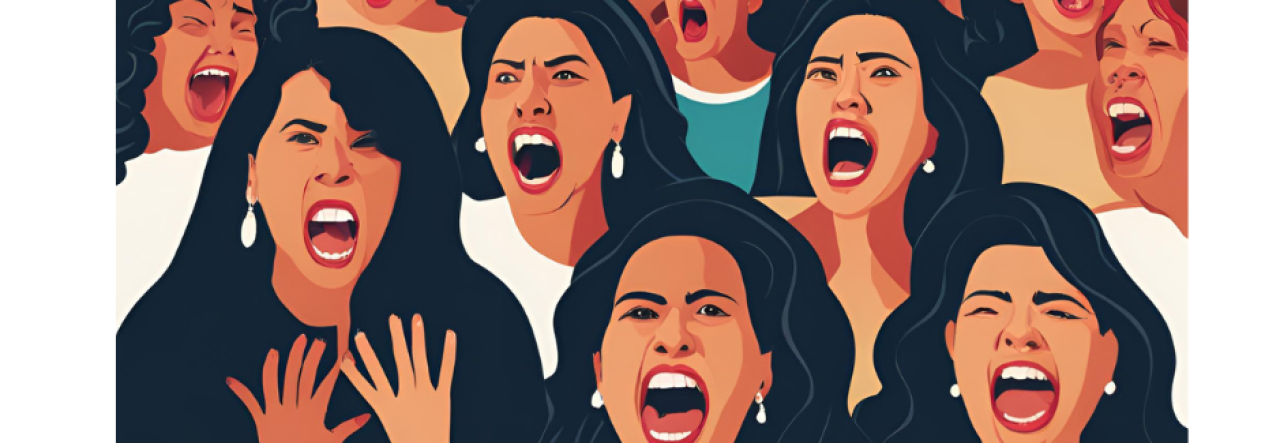
On Labor Day: Two interesting reads on unions

I’ve only been in a union once in my career. It was the Writers Guild East and I had to join as a condition of employment for a company that produced sports news highlights for a couple of New York City news stations. Aside from the night my friend Michele and I got to volunteer at the Writers Guild Awards, I never really felt *part* of the union, but that’s not surprising as it was a part-time job while I worked at a newspaper during the day.

Sometimes I think that if there were more unions around, perhaps we would not have so many laid off Americans who feel hopeless today. I mean, unions were created to protect workers rights, right? Maybe people would have had to take pay cut or a decrease in hours, but they might still have their jobs if their unions would’ve negotiated some kind of deal. Who knows? As I mentioned above, I don’t have much experience with unions at all.

On this Labor Day, I stumbled upon an obituary for Alexander Saxton, a novelist and historian who died of a self-inflicted gunshot wound on August 20 at the age of 93.

Saxton had a very interesting life. He went from “upper-income youngster to working-class adult; from Harvard student to Chicago laborer; from novelist to union organizer and Socialist; and from activist to academic who wrote many books.”

Among them, as it says in his obituary in the New York Times, was “The Rise and Fall of the White Republic, known as one of the foundations of ‘critical whiteness studies,’ an academic field that examines the assumptions underlying ‘whiteness’ as a racial designation and political organizing principle.”

But it’s his first historical book, The Indispensable Enemy: Labor and the Anti-Chinese Movement in California, that I found interesting. Considered a landmark of labor history, the book describes how “19th- and 20th- century labor unions used racism against Chinese immigrants as a tool for unifiying and organizing white union members.

“It challenged one of the foundational stories of the labor movement,” said Eric Foner, a Columbia University professor and Pulitzer prize winning historian. “Instead of the story of solidarity and democracy usually told, Saxton showed how racism was one of labor’s most important organizing tools.”

Who knew? So some unions were created to protect only a certain kind of worker in this country. Can’t be surprised, I guess. Read more about Saxton’s life and work here.

I’d like to recommend another Labor Day read. It’s by Fordham University sociologist, Christopher Rhomberg. His book, The Broken Table: The Detroit Newspaper Strike and the State of American Laboruses interviews and archival research to examine the labor and management disputes of the Detroit newspaper strike of the 1990s and the effect it has had on business-labor relations and workplace governance.

Listen to an interview of Rhomberg on the Craig Fahle Show on Detroit radio station, WDET, here. Read an article about the book in Dissent magazine here. And stay tuned for a GREAT opinion piece on labor and unions he wrote that I am working on getting placed in the media this week.


Why I Continue to Remain Hopeful Despite Evidence to the Contrary

Photo from interview on ABC.com

By Mark Naison
Professor of African American Studies and History
Fordham University
Author of White Boy: A Memoir

Today, I am oddly hopeful that some, perhaps many, people will not accept the grim future being prepared for them–a future of austerity, low paying insecure work, relentless surveillance, crushing debt and elite monopolization of the nation’s wealth and income. I say this not only because of the movements that occurred last fall, and now are reinventing themselves off the radar screen, but because of hundreds of conversations I am having with people, some in person, some through email and social media, which suggest that a society where the few control, manage and  exploit the many is not their idea of what America is  or what they want their own future to be. And this is a feeling which crosses party lines, and divisions of race gender and age. Many people look at where their lives are heading and feel profound dismay. And they may be angry enough and proud enough to do something about it.

I am not suggesting that their dissatisfaction will always be expressed peacefully, or constructively. I think we are likely to see all kinds of violent outbursts, some individual, some collective as life becomes more insecure for a growing number of people. But–and I believe this with every core of my being–we are going to see people coming together to prevent themselves from losing what little they have while the few live untouched by hardship.

For the next few months, our attention will be diverted by the drama of elections, with peoples hopes and fears being projected onto political candidates. But once the elections are over, and current trends toward immiseration and economic stagnation continue unchecked, and quite possibly, accelerate, you will begin to see people decided to take their future in their own hands, in their workplaces, in their neighborhoods, in their schools, in the streets, and in city halls, state houses and the Congress.

And this time, it will be much more broadly based than the Occupy movement and much more difficult to suppress, peaceful, militant, but with an undercurrent of rage embodied in violent outbursts that will be occurring spontaneously because of the pressure that people will find themselves under.

I plan to be there with the peaceful protesters, raising issues and demanding solutions, but I will not  not turn my back on those, who in frustration and desperation, turn to violence, or allow authorities to use their outbursts to justify a further expansion of police power and the prison industrial complex that is already the largest in the world.  

These will be hard times and challenging times, but the greatest danger is silence and compliance, not resistance. And I think more and more people are ready to accept this.

Technology: A Work Email Blackout? Par-ty! Par-ty!

Photo via The Telegraph

I get experts placed in the news and I write some news, so it’s a rarity to read a quote by me in the news.

A reporter was looking for expert commentary on one corporation’s decision to shut off work email after hours. When I responded to her with information about Fordham’s Communications professors, I mentioned I’d freak out if I couldn’t access work email after hours. She ended up wanting to quote me.

Here are the two pieces in which I’m quoted and they’re good reads that show there is certainly a bit of a smartphone/technology addiction these days. Guilty as charged. Read on …

Vote: Would You Like a Work Email Blackout?

By Cindy Perlman, CNBC

Do you check your work email on an iPhone or other smartphone after-hours?

Join the club: More than 80 percent of workers say they continue to work from home even after they leave the office, according to a recent survey from mobile-research firm Good Technology. Nearly two-thirds said they check their work email before 8 a.m., and a whopping 40 percent admitted to checking email at the dinner table!

Read more, including my quote, here. And the other piece in which I’m quoted, also by Perlman, here.

The ‘CounterCulture’ of the Latin Alternative Music Conference

Image via Latin Recap.

My first time at the Latin Alternative Music Conference was enlightening.

I’ve always liked music that falls into this category, and it’s interesting to see it evolve. Where years ago this conference would have filled with Rock en español, this year’s artists encompass a variety of genres: electronic, indie pop and so on. NYC-based writer Marlon Bishop explains more about that here.

And, as the Associated Press’ Laura Wides Munoz explains in this piece, “alternative Latin musicians, some of whom have fan bases back home, are finding new audiences in the United States thanks in part to that online scene and the growth of second generation Latino audiences.” This only points to more growth in this area.

The panel discussions were enlightening. Calle 13’s Residente and Visitante discussed politics, religion and how Latin America on a whole inspires their music. They weren’t shy about throwing digs at tropical, urban radio stations, who play “music with botox” and the same artists, over and over again.

The LAMC press room was a flurry of activity on day one, with artists from Puerto Rico, Venezuela, Panama via Oakland and more chatted with journalists from all over. It was nice to see so many Latin American focused outlets in one place, especially since many of them no longer limit their interviews to Spanish-language only, something I find to be challenging when pitching Outernational.

The radio panel, featuring my Fordham colleague Rita Houston from WFUV, was informative and I loved that during the audience Q & A, artists from the States, Costa Rica, and Colombia asked how to overcome the radio hurdle. Most of the experts agreed: find your niche, send your music to college radio and just get your music out there to the people any which way you can.

This slideshow requires JavaScript.

(Above: Residente & Visitante of Calle 13, Tego Calderon, Raka Dun and Raka Rich of Los Rakas and Miles Solay & Leo Mintek of Outernational. All pics by me.)

The four-day conference continued today with panel discussions on how to make that number one hit and a free concert by Calle 13 and Ana Tijoux for Celebrate Brooklyn! this evening at the Prospect Park bandshell.

I’ll have a couple of posts about LAMC coming out soon in Sounds and Colours so stay tuned.

I had a bad day. I had a good day.

I only slept one hour last night. Allergies, itchy throat and a dry cough kept me up. That was bad.

My monthly Metropass ran out. The machines at 169th weren’t accepting cash OR credit. That was infuriating.

I had to walk four blocks, find a business to give me change for a $20 and see a snotty attendant. I’m not going to call that bad because her job sucks. I’m sure she had a bad day.

I was 40 minutes late to work. (Not good. Yet I commute to a job that I truly enjoy and have a boss that understands I don’t just work 9 to 5, Monday through Friday: good.)

At work, my colleague told me that my tweet about the MTA’s incompetent machines made it onto Gothamist. That was pretty good.

Then a reporter with a major daily newspaper in the Philadelphia area agreed to talk to one of my Fordham professors on an interesting story. My day was looking up. We’ll see if she quotes him. That would be good.

Later, I sent a gentle email nudging an editor about a story I had been pitching him on for weeks was going to make it into Rolling Stone. It did. This was extremely good.

Then I went to the gym (good) and later dropped the belt of my sweater in the toilet (bad.)

I washed it (meh) and returned to my office, where I worked until 7 p.m. (good, trust me. It’s good to be busy.)

“Drunk as hell but no throwin up
Half way home and my pager still blowin up
Today I didn’t even have to use my A.K.
I got to say it was a good day (shit!)”