*** I work with Making Movies, and when I see the fruits of their M.U.S.I.C.A. camp (in conjunction with Kansas City’s Mattie Rhodes Center), I can’t help but be amazed at the power of music.
Regina del Carmen Sanchez wants to someday make her living writing music, playing her guitar and singing songs that have a message about the world as she sees it.
At 14, Regina’s world is pretty small.
It revolves around the little house she shares with her mom and grandparents on the west side of Kansas City’s urban core. The women of the house spend weekends frying, baking and selling empañadas to supplement the income Regina’s mom brings home as an office assistant.
….
“It’s my dream to become a musician to change people’s lives, to help them understand in an easy way what is happening in the world,” Regina said.
So when she sat down to create her first song, she wrote about being poor, being afraid to open bills, worrying that one not-in-the-budget problem could mean the lights go out.
She was 12 when she wrote “Keep Your Head Up.” It took her several months, writing at home as she lay across her bed or sat at the kitchen table. Sometimes even during breaks in class a lyric would pop into her head and “I would have to write it down right then,” Regina said.
“At the time I was thinking, ‘Let me write a song about the real struggles in my family instead of a song that’s just about me, talking about me,’ ” she said.
My house is in shambles but it beats being homeless.
It’s hot in the summer time, but in the cold the heat’s hopeless.
The bills are coming in and I’m looking so nervous,
because any day now, they could disconnect my service.
The song goes on about needing money, crying and praying, and wondering how long one could endure.
…
Love yourself and never give up. You’ll see a better life if you keep your head up.
Hand me down clothes but I’ve never been shirtless. B een misunderstood but no I’m not worthless.
Labeled a misfit ’cause I’ve always been different. Don’t want to be a number or another statistic.
Keep your head up …
“When she sings this song, you can tell she’s gone through it,” said Juan Carlos Chaurand, who plays percussion and keyboard for Making Movies, a four-member band from Kansas City with an Afro-Cuban/indie rock vibe.
Making Movies hosted the summer M.U.S.I.C.A. camp for low-income urban youths at Kansas City’s Mattie Rhodes Center, where last summer Regina was a camper. The band charges families $15 for the weeklong camp.
Chaurand said that providing inexpensive lessons and a chance to make music to children who otherwise might not have the opportunity is the band’s contribution to efforts to break the cycle of poverty.
One day Regina sang her song for the band members. They helped her write the music and took her to a studio to record it.
“It’s a great song,” Chaurand said. “To see that come out of her is pretty amazing.”
Read the whole story here. Watch a video of Sanchez performing the song with Making Movies below.
Youngsters in Japan who are glued to their smartphones and laptops may be sent to an Internet “fasting” camp to help them disconnect from the online world.
The Ministry of Education estimates that some 518,000 Japanese children between the ages of 12 and 18 are addicted to the Internet, according to The Daily Telegraph.
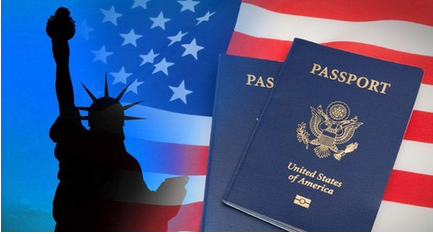
Fordham University’s Center on National Security will host a a symposium on the complex and shifting nature of citizenship rights in a post 9/11 world on Friday, Sept. 20. The event is free. Register here. Among topics for discussion:
How have the post 9/11 legal and policy battles affected the legal rights of citizens and non-citizens? How can we best understand the tensions between the state’s duty to protect its citizens and the desire to protect individual rights and liberties?
Agenda and speakers:
9:45 a.m. – 11:15 a.m. – Panel 1: Enemy Citizens: Rethinking Rights in Times of War
Baher Azmy, Center for Constitutional Rights David Cole, Georgetown University Law Center Thomas Lee, Fordham Law School Peter Margulies, Roger Williams University School of Law Michael Paulsen, University of St. Thomas School of Law Moderator: Karen Greenberg, Center on National Security atFordham Law School
11:30 a.m. – 1:00 p.m. – Panel 2: US Citizenship and the Right to Have Rights
Linda Bosniak, Rutgers-Camden School of Law Jennifer Elsea, Congressional Research Service Andrew Kent, Fordham Law School Neomi Rao, George Mason University School of Law Moderator: Martin Flaherty, Fordham Law School
1:00 p.m. – 2:15 p.m. – Lunch Speaker: Benjamin Wittes, Brookings Institution2:15 p.m. – 3:45 p.m. – Panel 3: Gaining and Losing Citizenship in the National Security Context Muneer Ahmad, Yale Law School Ramzi Kassem, City University of New York Law School Peter Spiro, Beasley School of Law, Temple University Stephen Vladeck, Washington College of Law, American University Leti Volpp, UC Berkeley Law School
It’s National Suicide Prevention Week and National Suicide Awareness Day was on Sept. 10, 2013. This Saturday, Sept. 14, the radio show, Fordham Conversations, will feature a discussion about males and suicide.
Fordham University Professor Daniel Coleman discusses his research, which examines gender stereotypes and the link between masculinity and mental health.
“It’s not a very widely known fact that 80 percent of suicide deaths in the United States are men,” Coleman told Inside Fordham in February. “So the cutting edge in suicide research now is to understand why there is this gender discrepancy.”
Screen shot of the sad and lonely Spanish-language option by me.
I don’t purport to know very much about running a business. Aside from deciding whether I want to take on public relations work on a by-project basis, I’ve never run my own shop.
But I can safely say that Great American Opportunities, a fundraising corporation, has dropped the ball on an additional “opportunity” for their constituents to make more money.
Back in my day, for grammar schools to raise funds, students had to sell chocolates or Christmas wrapping paper. Today, with the power of the Internet, you can imagine those opportunities have become more diverse.
My cousin’s son’s school in Florida is raising funds by using Great American Opportunities to sell magazine subscriptions. It’s much simpler now. Parents forward a link and we help raise funds by shopping.
Or so I thought.
I’m in media relations. I don’t want for many magazine or newspaper subscriptions. I have plenty and they are all digital. So I figure, I’ll shop for my parents.
My folks are Colombian immigrants and American citizens who have been living in this country for more than 40 years. Yet Spanish is still their first and preferred [reading] language. They’re senior citizens, why wouldn’t they enjoy a subscription?
Sadly, the only Spanish-language magazine Great American Opportunities offers is People en Español. No offense to the celebrity magazine industry, but my parents have no interest in who J-Lo is dating. (Well, maybe if she finally moves UP in age of the person she’s dating. Just kidding!)
Has Great American Opportunities not looked into changing demographics of this country, especially in Florida? There are a TON of Hispanics/Latinos in the United States and they are a huge buying power. The more Latino-friendly products a business offers to the Latino community, the more they will buy. (Take a hint from the many corporations that advertise and offer circulars in Spanish.)
And that, mi amigos, in my opinion, is a missed opportunity for Great American Opportunities.
In case you’re wondering, I *did* buy a subscription to help my cousin’s son’s grammar school. I bought an interesting-looking health/neuroscience magazine, but certainly would have purchased much more had there been more than one entertainment-based, Spanish-language option.
Perhaps this is something Great American Opportunities can consider in the future. After all, many of Spanish-language readers and speakers are shopping in America!
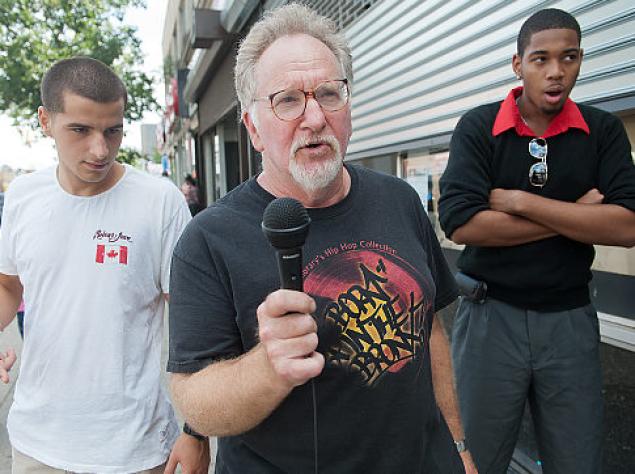
Among the many things I love about my job at Fordham University is that I get to deal with academics on a daily basis. Sometimes, I sit in on their classes. One of the most interesting professors is Mark Naison, professor of history and African American Studies.
For as long as I’ve been here, he’s taught a very popular, hard to get into (due to it filling up very quickly) class called, “From Rock & Roll to Hip Hop: Urban Youth Cultures in Post War America.” It’s a class where music is heard (the rock & roll and soul stuff is GREAT) and special guest musicians give performances and mini-lectures. It all makes me wish I was an undergrad!
You can read some media coverage of Dr. Naison’s class, as well as his alter-ego, “The Notorious Ph.D., below. (Yes, Dr. Naison is known to rap.)
Check out the syllabus for the Fall 2013 semester here (bold emphasis mine):
AFAM 3134 From Rock and Roll to Hip Hop: Urban Youth Cultures in Post War America Dr. Mark Naison
Course Description:
Since the late 19th Century African Americans have exerted a powerful influence on the development of American popular music. Forms of musical expression developed in African-American communities have been reinterpreted and marketed to create the modern music industry, shaping the development of Tin Pan Alley, the Broadway musical stage, the record industry, the modern dance band, and music radio.
Until the end of World War II, racism and lack of capital kept African-American artists and entrepreneurs on the margins of this activity, denying them access to commercial venues that would reward them for their creativity and create a national audience base outside the black community. Only a handful of Black artists -Louis Armstrong, Duke Ellington, Cab Calloway, Billie Holliday, Ella Fitzgerald, Marian Anderson, Paul Robeson- had large enough followings outside the “race market”- the section of the music industry targeted to blacks- to make them truly national figures In post World War II era, however, the terms of this cultural interchange began to shift. Civil rights victories, north and south, black migration to urban areas, and the opening of new economic opportunities in industry and government employment set the stage for a new relationship between blacks and the music industry. As radio stations in major cities began to tap into the growing African-American market, black music of all types-gospel blues, swing, rhythm and blues- began to hit the airwaves.
The newest of these genres, rhythm and blues, a urban music that fused sweet harmonies and powerful dance beats, sparked a musical and commercial revolution by attracting a huge underground audience among whites. By the early 1950’s, “black” music radio from Memphis to Los Angeles was attracting hundreds of thousands of white listeners, most of them under the age of twenty five, and sparking an unexpected growth of record sales for artists who had only aimed for the “race market.” In several cities, white disc jockeys decided to tap into this new youth audience by incorporating rhythm and blues into their formats and got such a huge response that they made it the centerpiece of their shows.
Calling it “rock and roll,” they marketed it as youth music rather than black music and looked for white artists who could play it to supplement the already established black stars. This marketing strategy was brilliantly successful. By the early sixties, rock and roll had become the musical language of a generation of American youth, crossing racial and cultural barriers that had never previously been bridged by the music industry.
Though white entrepreneurs and artists made the bulk of the profits in this billion dollar business, scores of black artists cracked into national markets that had previously been closed to them and shaped the musical tastes of millions of young whites. Chuck Berry, Little Richard, the Drifters, the Shirelles, the Coasters, Lloyd Price, Fats Domino, Sam Cooke, Ray Charles, to name a few, were central to the early success of rock and roll, and their influence would later be built on by Motown artists like the Supremes, the Four Tops and the Temptations, and soul singers like James Brown, Otis Redding and Aretha Franklin. The terms of cultural interchange in this music were shaped by the site of its creation; the post-war metropolis. Rock and roll was the product of a long economic boom that brought blacks into the center of the industrial economy and placed them in close proximity with the descendants of white and latino immigrants. On street corners and in school gymnasiums, in clubs and theaters, in radio stations and recording studious, African-American artists and entrepreneurs mingled with musicians, producers and songwriters of other nationalities.
In the earliest days of rock and roll, the sources of creativity flowed upward from city streets, but as the music became more popular, the recording industry was taken over by media conglomerates, removing its experimental, grass roots atmosphere and separating it from its African-American roots. By the late 1960’s and 1970’s rock and roll had become typecast as “white” music, identified more with its white suburban following than its African-American originators; while African-American artists moved into niches in the music market where a modified urban sensibility still prevailed- funk, disco, soul, and pop. However, African-American and Latino youths, trapped in decaying neighborhoods savaged by disinvestment and government neglect, found themselves disfranchised by these musical developments.
In post-industrial cities where vacant lots, shuttered factories, and decaying schools marked the boundaries of crushed hopes and declining opportunities, young blacks and Latinos, supported by a small number of adventurous whites, invented a new music that fused verbal improvisation, scratching and back beats and fragments of previous musical genres into a jarring, densely rhythmic, compulsively danceable mix. Played in community centers and schoolyards, house parties and small clubs, the music initially attracted little interest from recording companies or commercial radio. But its extraordinary popularity among urban youth soon caught the attention of neighborhood promoters, who began recording the music, and hip audiences in the largely white downtown “punk” scene.
By the early 80’s, hip hop or rap, had started to crack into mass markets and commercial radio, even though most established professionals didn’t regard it as real music. But the music accurately expressed the sensibility of people who had been left out post-industrial social order or who were rebelling against its mores. Hip hop, despite fierce skepticism and opposition, not only survived, but exploded becoming the most commercially successful musical form in the world by the mid-90’s, defining not only the sensibility of urban youth in the United States, but young people of various backgrounds all over the world.Once again African-American cultural creativity, forged in an urban setting, had redefined the musical tastes of a generation.
In the course that follows, we will examine how the sensibility and musical creativity of urban youth, in two very different historical periods , inspired musical revolutions which transformed the tastes of entire generations, crossing boundaries of race, gender, nation and social class. How could this happen twice in fifty years? What does this say about the racial/cultural dynamics of post-war American society? About the connection between African-American culture and American culture? About race and gender dynamics in the culture industry? About the role of women in musical forms which emphasize an insurgent, eroticized masculinity and turn women into objects of desire and/or contempt? About how rebellion can be marketed, coopted and turned into an instrument for material gain?
To get at these questions, the course will use music, film, and literature as well as historical writings on the music industry and contemporary urban life. To add depth to our portrait, we will also explore musical countercultures of international derivation particularly punk, reggae, salsa and reggaeton, and look at how folk music and jazz periodically invade and occasionally shape popular musical forms. We will also explore how these musical forms become internationalized and how they are being brought to life today in new ways in nations around the world.
We have a graduate assistant working with the class, Melissa Castillo Garsow, who will give a few lectures and presentations on the globalization of hip hop. At various points in the class, people involved in the creation of the music we are studying will come to class to perform or talk about their work. There will also be an opportunity for students in the class to perform their music, inside or outside of class. We draw no line between musical creativity and musical analysis. Both are welcome in our classroom.
I. An Overview of Popular Music in the US: Garafalo and Waksman Rockin Out, Introduction
2. Some Antecedents of Rock and Roll: Garafalo and Waksman, Rockin Out, chapters 1 and 2, Rock and Roll, Race, and the invention of the “Teenager:” Garafalo and Waksman, Rockin Out, chapters 3-5 Echols, Scars of Sweet Paradise, chapter 1
3. Soundtrack to Social Revolution, Soul Music, Civil Rights and the Rise of the Counter Culture: Guralnick, Sweet Soul Music, 1, 3, 4, 5, 7, 10, 11 Echols, Scars of Sweet Paradise, 2-7 Garafalo and Waksman, Rockin Out, chapter 6
4. Black Power, White Flight and the Resegregation of Popular Music: Guralnick, Sweet Soul Music, ch. 12 Echols, Scars of Sweet Paradise, 8-9 Garafalo and Waksman, Rockin Out, Chapter 7, Mid-Term Examination
5. The Rise of Hip Hop: Creativity and Destruction in the Post-Industrial City: George, Hip Hop America, chapters 1-2, Foreman and Neal, That’s The Joint, selections Mark Naison “The Morrisania Roots of Hip Hop Culture” (article sent on internet) Mark Naison “From Doo Wop To Hip Hop” (article sent on internet)
6.. Caribbean and Latin Influences in Hip Hop Culture: Foreman and Neal, That’s The Joint, selections, Class Presentations/Lectures by Melissa Castillo-Garsow
7. Images of Rebellion: MTV, Music Videos, and Commercialization of Rap: Garafalo and Waksman, Rockin Out, chapters 8, 10 George, Hip Hop America, chapters 3-4, Foreman and Neal, That’s The Joint, selections
8. The Crack Epidemic and the Rise of Gangsta Rap: George, Hip Hop America, chs. 5-10 Foreman and Neal, That’s The Joint, 11, 17, 26, `44, Jay Z Decoded
9. Hip Hop Wars: Gender, Sexuality and the Politics of Contemporary Rap: George, Hip Hop America, chs. 11-18 Foreman and Neal, That’s The Joint, selections
10. The Globalization of Hip Hop: Foreman and Neal, That’s The Joint, selections, Class Presentations/Lectures by Melissa Castillo Garsow
My good friends up north at the Toronto-based Dos Mundos Radio have co-curated a month of wonderful programming for Hispanic Heritage Month. Check out the details below, and while you read, listen to a new track (“Wow“) by Boogat, whom Dos Mundos describes as one of “a handful of people who are actually trying to explore and redefine Latin American music in Canada.”
Dos Mundos Arts and Media will be celebrating Hispanic Heritage Month throughout the month of April of 2013 by programming exciting, forward-thinking arts and artists in the context of “breaking stereotypes with arts and culture’. This celebration is intended to make strong efforts to continue pushing the boundaries of people`s perceptions of Latin America and to also explore the idea of being Latin American in Canada.
Events for the month include ann April 2 screening of LAND IN REVOLT: IMPURE GOLD, the first installment of the environmental project by the ever-activist Argentine filmmaker Fernando Solanas tackling the plundering of underground resources and the ensuing contamination ending with Black Gold. Portraying stark reality full of scams, miseries, and corruption, Solanas targets the mining industry and open-air cyanide or explosives extraction of minerals and metals at the northeast of Argentina, and observes the reaction of the local public.
There is also a music showcase featuring alt-Latino experimental artists Helado Negro and Uladat. Taking place on April 5, these two artists play with musical genres more closely affiliated with the artful Pop Avant programming associated with the Music Gallery.
Dos Mundos Arts and Media is a Toronto-based non-profit arts organization dedicated to showcasing, celebrating and developing emerging artists and art forms that represent contemporary Latin America.
The Hudson Valley will be in line for one of 10 P-TECH-style schools that could open as soon as September 2014 in a collaboration among New York State, local school districts, IBM and other corporate partners, an IBM executive said.
The initiative seeks to replicate the success of the Pathways in Technology Early College High School in Brooklyn, a school that melds high school, community college and career training into a six-year, tech-oriented program for grades 9-14.
Stanley Litow, an IBM executive and former deputy chancellor of the New York City Public Schools, said that P-TECH, which opened in 2011, is off to an auspicious start.
“About 50 percent of the 10th-graders are in line to have 14 college credits before they complete the 10th grade,” he said. “Students are completing college courses and doing very well in them.”
Unlike more traditional schools, where subjects are studied separately — and mostly in the abstract, through textbooks — the P-TECH model unifies learning based on hands-on projects, said Litow, IBM’s vice president for corporate citizenship & corporate affairs.
For example, students might be asked to create a business plan to take on Apple‘s iPad. In the process, they would might tap algebra, geometry, language and presentation skills. Though the schools use innovative teaching methods, the per capita cost of educating the students is not any higher than in a traditional curriculum, IBM officials said.
Both P-TECH, located in Crown Heights, and the Sarah E. Goode STEM (science, technology, engineering and math) Academy on Chicago’s South Side — a school that follows a similar model — are designed to equip students with skills in science, technology and math and aim them toward careers in areas where U.S. companies have plenty of open jobs.
“Around the United States, there are jobs that are going begging for people who have these skills,” Litow said. “The problem is clear: low graduation rates from community colleges. We’ve got to do something different.”
Only 25 percent of the country’s community college students complete a degree, Litow said. Although high school graduates earn about $15 per hour, or $31,000 a year — when they can get jobs — computer science graduates with an associate degree begin at $40,000 a year, he said.
“If this model is successful, not only does it guarantee that students get degrees, but that they get connected to jobs that exist,” he said.
P-TECH and Sarah E. Goode have been held up as models nationally. U.S. Education SecretaryArne Duncan visited P-TECH in October and President Barack Obama cited the school in his State of the Union address as a new model for education and training.
“We need to give every American student opportunities like this,” Obama said.
Steven D’Agustino, a Fordham University education professor and director of the Regional Educational Technology Center on the Bronx campus, said the state’s program is a “step away from the traditional liberal arts education” and a step toward “competency-based” education.
“I think it’s an innovative attempt,” he said.
D’Agustino cautioned that it’s too early to assess how successful the initiative will be.
Lisa Davis, director of the Westchester-Putnam School Boards Association, said it remains unclear how the program would work in a suburban setting.
“It’s a great concept, but then there’s the question of what it’s going to look like when you roll it out,” she said.
Among the questions: Who will pay for the students in the 13th and 14th grades, when students ordinarily would have graduated from high school? A call to the governor’s press office was not immediately returned.
The 10 new schools will be sited in 10 economic development regions defined by New York State. Westchester, Rockland, Putnam, Orange, Dutchess, Ulster and Sullivan counties constitute the Mid-Hudson region. New York City and Long Island are among the other 10 regions.
Under the program, school districts would apply to state officials to land one of the schools, which could be located in a free-standing building or share space with another school.
Funding would come mostly from the sponsoring school districts, with support from both the state and a corporate partner. Gov. Andrew M. Cuomo has allocated $4 million in aid for the program. Armonk-based IBM has signed up to act as corporate partner for two of the schools. The company also will help recruit other private-sector partners and provide training for mentors from the business world.
The schools will use a “blueprint” designed by IBM to replicate the P-TECH model. The blueprint tells school districts how to build a P-Tech program.
Cuomo announced the P-Tech initiative as part of his 2013-14 executive budget.
Litow said it took about 12 months to open P-TECH and Sarah Goode, making a September 2014 opening for the new schools “aggressive” but not “impossible.”
Ellen Cutler-Levy, program director of Yonkers Partners in Education, a not-for-profit organization that provides SAT preparation, college visits and other services to get students ready for college, said the program’s thrust is encouraging.
“We’d like to see more students prepared in the engineering, math and science fields,” she said. “If that’s where the jobs are in the future, we’d like to see it happen.”
PBS Newshour asked high school teenagers for their thoughts on the gun debate. Their comments are enlightening. Are lawmakers listening to this generation?
I found it interesting that the African American teens seemed to lean towards gun regulation, gun control and high security measures, such as metal detectors. Meanwhile, one young man from West Virginia, where hunting is popular, hinted that guns are a way of life and therefore, all that can be done is “raising awareness and keeping hope.” If that doesn’t say something about what ones concerns and fears are when growing up in different surroundings/neighborhoods, I don’t know what does.
Budding inventors should look out for the girl who suggests a “non-lethal defense system.” She may be onto something.
I was introduced to Kansas City rock band Making Movies during last month’s CMJ Music Marathon in NYC. They fuse Afro-Cuban rhythms with indie sensibilities to come up with bilingual songs that rock.
When they’re not working on their own music, the band is passing their knowledge onto the next generation. But it’s far more than just a guitar lesson here and there. Recently, Making Movies teamed up with the Kansas City-based nonprofit, the Mattie Rhodes Center, to put on “Musicians United by Social Influence and Cultural Awareness (M.U.S.I.C.A.)“, a camp which introduces high risk Hispanic youth from the northeast Kansas City area to the world of music.
As you’ll see in this video, they’re reaching a great group of youngsters who might not otherwise be exposed to the arts. Even better, they’re becoming young artists. The smiles on their faces as they’re playing guitar chords or belting out “La Bamba?” Priceless.
 Image via Kansas City Star




 periMENTAL