

 Image via Kansas City Star
*** I work with Making Movies, and when I see the fruits of their M.U.S.I.C.A. camp (in conjunction with Kansas City’s Mattie Rhodes Center), I can’t help but be amazed at the power of music.
Regina del Carmen Sanchez wants to someday make her living writing music, playing her guitar and singing songs that have a message about the world as she sees it.
At 14, Regina’s world is pretty small.
It revolves around the little house she shares with her mom and grandparents on the west side of Kansas City’s urban core. The women of the house spend weekends frying, baking and selling empañadas to supplement the income Regina’s mom brings home as an office assistant.
“It’s my dream to become a musician to change people’s lives, to help them understand in an easy way what is happening in the world,” Regina said.
So when she sat down to create her first song, she wrote about being poor, being afraid to open bills, worrying that one not-in-the-budget problem could mean the lights go out.
She was 12 when she wrote “Keep Your Head Up.” It took her several months, writing at home as she lay across her bed or sat at the kitchen table. Sometimes even during breaks in class a lyric would pop into her head and “I would have to write it down right then,” Regina said.
“At the time I was thinking, ‘Let me write a song about the real struggles in my family instead of a song that’s just about me, talking about me,’ ” she said.
My house is in shambles but it beats being homeless.
It’s hot in the summer time, but in the cold the heat’s hopeless.
The bills are coming in and I’m looking so nervous,
because any day now, they could disconnect my service.
The song goes on about needing money, crying and praying, and wondering how long one could endure.
…
Love yourself and never give up. You’ll see a better life if you keep your head up.
Hand me down clothes but I’ve never been shirtless. B een misunderstood but no I’m not worthless.
Labeled a misfit ’cause I’ve always been different. Don’t want to be a number or another statistic.
Keep your head up …
“When she sings this song, you can tell she’s gone through it,” said Juan Carlos Chaurand, who plays percussion and keyboard for Making Movies, a four-member band from Kansas City with an Afro-Cuban/indie rock vibe.
Making Movies hosted the summer M.U.S.I.C.A. camp for low-income urban youths at Kansas City’s Mattie Rhodes Center, where last summer Regina was a camper. The band charges families $15 for the weeklong camp.
Chaurand said that providing inexpensive lessons and a chance to make music to children who otherwise might not have the opportunity is the band’s contribution to efforts to break the cycle of poverty.
One day Regina sang her song for the band members. They helped her write the music and took her to a studio to record it.
“It’s a great song,” Chaurand said. “To see that come out of her is pretty amazing.”
Read the whole story here. Watch a video of Sanchez performing the song with Making Movies below.

You may be familiar with a controversial court ruling in the Dominican Republic that retroactively stripped citizenship from anyone born in the country to undocumented parents dating back to 1929. Not surprisingly, it mostly affects Dominicans of Haitian descent.
Public Radio International‘s “The World“ sent reporter Amy Bracken to the Dominican Republic to interview folks on the island, and much like the immigration debate here in the United States, opinions were mixed.
Take Mario Matos Cuevos, for instance. An 81-year-old retired soldier, he told The World “the Dominican president has made it clear that ‘everyone must get their papers in order,’ just like anywhere else in the world.”
When Bracken asked Cuevos if he thinks it’s unfair to make people who have lived in this country for generations go back and apply for papers all over again, he said “no,” since most of those affected have ties to Haiti.
“According to the Haitian Constitution, anyone of Haitian descent, whether legal or illegal, living in any country, is Haitian. That’s what their Constitution says,” Cuevos said.
On the other hand, high school student Yahisse Cuevas saw things a different way.
“Dominicans are very racist,” she told Bracken, “the way we abuse Haitians, always asking for their papers and mistreating them.”
It is no secret that many Latin American countries have attitudes against those with darker skin. One has to wonder how much that plays a factor in this debate.
Listen to the interesting audio here. And catch their other segments via their archives. The World is a great show to keep more in-depth tabs on news from around the world.

I have an interesting relationship with Colombian vallenato music in that my Colombian-music loving self didn’t always love it. I recall my cousin Maria asking me why I didn’t love it at and me saying “it’s old people music.” Ha! (We joke now that she was — and still is– a romantic, and I was [and still am] a cynical cold hearted kid. Go figure.)
I often heard vallenato at parties growing up because it is somewhat of a somber music, in which the ‘grownups’ sat around, reminisced about their homeland, and had shots of aguardiente. At home, my dad preferred to play salsa and cumbia as he was always more of an upbeat music fan (like me!).
Like my father, I preferred to listen to salsa and cumbia, and later champeta, but I gained an appreciation for vallenato as a young adult when I really started paying attention to the lyrics. So sentimental!
The music has its roots in Colombia’s pastures of Valledupar.
This form of music originated from farmers who, keeping a tradition of Spanish minstrels (Juglares in Spanish), mixed also with the West African-inherited tradition of griots (African version of juglar), who used to travel through the region with their cattle in search of pastures or to sell them in cattle fairs. Because they traveled from town to town and the region lacked rapid communications, these farmers served as bearers of news for families living in other towns or villages. Their only form of entertainment during these trips was singing and playing guitars or indigenous gaita flutes, known as kuisis in the Kogi language, and their form of transmitting their news was by singing their messages. (Source.)
Known as “el cacique (native chief),” Diaz was regarded as one of the best singer-songwriters of vallenato. But he didn’t come without controversy:
Diaz led a tempestuous life, serving time in jail over the death of a fan at a party in his home. He often showed up late to concerts or not at all, something his fans put down to his addiction to drugs and alcohol.
…
In 1997, at the height of his career and shortly before the launch of his album Mi Biografia (My Biography), a fan and friend of Diaz, Doris Adriana Nino, was found dead by the side of a highway in Tunja province. Forensic experts at first said that she had died of a heart attack following a drug overdose at a party hosted by Diaz, but a later forensic report suggested she had been suffocated.
After a lengthy trial, Diaz was sentenced to 12 years in jail for homicide, a sentence which was later reduced to six years.
Diaz, who had been put under house arrest, went on the run when he was due to be transferred to jail, allegedly hiding away in an area controlled by the infamous paramilitary leader known as Jorge 40. He handed himself in to the authorities in 2002 and, after having his sentence further reduced, was released in 2004. (Source.)
Much like when tropical music king Joe Arroyo died in 2011, Colombians have taken to the streets to pay homage to Diaz. And Valledupar’s mayor has declared four days of mourning.
Radio stations are playing songs from his vast discography nonstop.
There are several favorites of Diaz I love, but I’ll leave you with “Mensaje de Navidad” since it’s appropriate for the Christmas season:
Again, the lyrics are somber, but true, as the holidays aren’t always “joyous” if one is away from loved ones.
Unos dicen: Que buena las navidades
Es la época más linda de los años
Pero hay otros que no quieren acordarse
De la fiesta de Año Nuevo y aguinaldo
Pero hay otros que no quieren acordarse
De la fiesta de Año Nuevo y aguinaldo

My first trip ever to Europe came in late November, 2013. Destination? Spain. I loved it. Here are ten reasons why:
1) The Metro: Living in New York has made me a little bolder when it comes to doing things on my own. Trust me, just 10 years ago, I would’ve never had the guts to march into the Madrid Metro right after landing in the airport to get to my first hotel. But I did it, and it was quick, clean, safe, and easy to navigate (hint, hint, NYC). Barcelona’s Metro system was just as pleasant. Trains every three minutes, you can set your watch by it!
2) Rioja: Light, not too dry, definitely not sweet, and silky. This made from tempranillo grape wine is simply delicious, even when the bottle cost 3 euros at the supermarket. Rioja is made from grapes grown in the Autonomous Community of La Rioja, and in parts of Navarre and the Basque province of Álava. Read more here.
3) Cava: What woman doesn’t love a bubbly drink? Cava is a Spanish sparkling wine of Denominación de Origen (DO) status, most of which is produced in Catalonia. It may be white (blanco) or rosé (rosado). No more champagne for me on New Year’s Eve. I’m going cava!
4) Salvador Dalí Museum in Figueres: This museum in Dali’s hometown of Figueres in Catalonia is trippy! The heart of the museum was the building that housed the town’s theatre when Dalí was a child, and where one of the first public exhibitions of young Dalí’s art was shown. The old theater was bombed the Spanish Civil War and remained in a state of ruin for decades until Dalí and the mayor of Figueres decided to rebuild it as a museum dedicated to the town’s most famous son in 1960. My favorite piece was the “Mae West Cum Apartment.” Yes, it’s the real name of the artwork!

5) Montserrat: This multi-peaked mountain located near Barcelona is one of the most breathtaking things I’ve ever seen. (Keep in mind I’ve not been to countries on the Asian or African continents). The main peaks are Sant Jeroni (1,236 m), Montgrós (1,120 m) and Miranda de les Agulles (903 m). The mountain is the namesake for the Caribbean island of Montserrat. It is well known as the site of the Benedictine abbey, Santa Maria de Montserrat, which hosts the Virgin of Montserrat (the black virgin, or la moreneta) sanctuary. “Montserrat” literally means “saw (serrated, like the common handsaw) mountain” in Catalan.
While there, I rode a funicular rack railway car up to the very top of the mountain. While it looks scary from afar, the ride couldn’t be more secure. It has six independent brake systems. If I ever go back, I’ll stay overnight for part of my stay. They have quite a few hiking trails I’d like to try.

6) Spanish style: My friend Doris put it best: Spanish people wear clothes that fits them. She’s right. There’s no oversized, baggy, clothes, or ill-fitting too-tight, or bummy outfits. (No sweatpants as daily wear!) The clothes they, and even their little children, wear is wear-tailored, clean, and sophisticated. Women’s hair is worn mostly long, and scarfs and sleek jackets are a mainstay. Older men dress with style. Sophisticated jackets, hats, and even glasses frames set them apart. Think Zara, perhaps the best-known Spanish retailer around the world.
7) Gaudí: Before I got to Spain, everyone told me I was going to love his work. So who was he? Antoni Gaudí i Cornet (25 June 1852 – 10 June 1926) was an architect from Reus, who was the figurehead of Catalan Modernism. Gaudí’s works reflect his highly individual and distinctive style and are largely concentrated in Barcelona, notably his magnum opus, the Sagrada Família.
The church of la Sagrada Familia is a big tourist draw and rightfully so. I’m a big fan of old churches and stained glass windows. The way the windows create an erethreal rainbow inside the church, from sacristy to nave, is a must-see. Pictures don’t do it justice, and I don’t say that often.

8) Manchego cheese and olives: Spanish cuisine in general is great, as it feels like you’re eating “bad” (not really bad, but high in fat, though some would say it’s good fat) food all the time. They eat rich manchego cheese, sinfully delicious stuffed olives, loads of olive oil, hams, eggs, potatos (called patatas), and wine, of course! Yum. Take me back!
Suggestion: DosTrece restaurant in Barcelona is owned by an American expat. It’s got a hip, coffeehouse vibe during the day and a chic, yet casual-cool, ambience at night. (There’s also a bunch of cool images of Frida Kahlo as part of the restaurant’s decor.) The staff come from different parts of the globe and they are not only friendly, but fun, and suggest the best nightlife spots for those looking to go dancing.

9) bicing in Barcelona: New York City just got a bike share program this year. It’s highly used, but not without its kinks. Also, there’s a big Citibank logo on every bike, which appears like a heavy, clunky thing to ride. In Barcelona, the bikes in the bicing bikeshare program look light, yet sturdy. They are used plentifully, day and night, as this 2009 piece in the Huffington Post explains, it has transformed the city.
But that’s not all. Spaniards in Madrid and Barcelona use scooters, motorcycles, and the tiny cars I love, such as the Toyota Yaris, the Fiat, and the Smartcar. Driving also seemed much less aggressive than New York City and many of the Latin American countries I’ve visited.

10) The language: My parents hail from Barranquilla, Colombia, so I speak Spanish. But I don’t use that vosotros/vosotras “tense that your Spanish teacher told you to ignore,” as one of my travel partners put it. Well, Spaniards do. It’s Castilian Spanish, and it’s beautiful. Also, they say vale a lot. I’ll let Wikipedia explain more, but let’s just say It was hard not to fall in love with everyone who spoke it. They all sounded like Javier Bardem. Swoon.

See more of my colleague Tom Stoelker’s work here.
Haven’t updated music news in a while, so here goes…
The Brooklyn-based psychedelic salsa band, La Mecanica Popular, have released a new video for their single, “La Paz del Freak.” Great song and I’m pleased I have a CD for my dad. The man loves his salsa. Always has. Check out the video, and read about the meaning of the song, on Sounds and Colours! And if you’re in NYC, check them out at Lit Lounge on the 21st.

My homeslice Christian Vera from Chicago’s SOULPHONETICS crew sent me a beautiful mix. It’s got some sultry Brazilian tunes in it and, to me, that equals love. Close your eyes, pretend you’re on a beach in Rio, and listen here. (Free download, too!)

In the wake of Isabela Raygoza’s great “20 Spanish-Language MCs Everyone Should Hear” article in MTVIggy this week, Christian Vera turned me onto a Puerto Rican-by-way-of-Chicago rapper, the Color Brown. I always appreciate an emcee who can rap clearly the whole song through, so lyrics are truly heard, so I’m a fan upon first listen. I plan to explore more, though. There’s a lot on his Soundcloud.
Start off with this track, “Exilio,” since it opens with the sound of the coquí, and that made me miss Puerto Rico.
Elvis Costello has released a new album with The Roots. I repeat: Elvis Costello and The Roots. Listen to this wonderful collaboration via WFUV.

Finally, I’m on a real soul kick. Charles Bradley! Lee Fields! Take me to a Daptones party! (Or the next best thing. Charles Bradley and more at Williamsburg Park on the 2oth.) Watch this 2011 performance of “Why Is It So Hard?” from a live session (backed by The Menahan Street Band) on KEXP in Seattle. Phew! Deep lyrics.

I don’t purport to know very much about running a business. Aside from deciding whether I want to take on public relations work on a by-project basis, I’ve never run my own shop.
But I can safely say that Great American Opportunities, a fundraising corporation, has dropped the ball on an additional “opportunity” for their constituents to make more money.
Back in my day, for grammar schools to raise funds, students had to sell chocolates or Christmas wrapping paper. Today, with the power of the Internet, you can imagine those opportunities have become more diverse.
My cousin’s son’s school in Florida is raising funds by using Great American Opportunities to sell magazine subscriptions. It’s much simpler now. Parents forward a link and we help raise funds by shopping.
Or so I thought.
I’m in media relations. I don’t want for many magazine or newspaper subscriptions. I have plenty and they are all digital. So I figure, I’ll shop for my parents.
My folks are Colombian immigrants and American citizens who have been living in this country for more than 40 years. Yet Spanish is still their first and preferred [reading] language. They’re senior citizens, why wouldn’t they enjoy a subscription?
Sadly, the only Spanish-language magazine Great American Opportunities offers is People en Español. No offense to the celebrity magazine industry, but my parents have no interest in who J-Lo is dating. (Well, maybe if she finally moves UP in age of the person she’s dating. Just kidding!)
Has Great American Opportunities not looked into changing demographics of this country, especially in Florida? There are a TON of Hispanics/Latinos in the United States and they are a huge buying power. The more Latino-friendly products a business offers to the Latino community, the more they will buy. (Take a hint from the many corporations that advertise and offer circulars in Spanish.)
And that, mi amigos, in my opinion, is a missed opportunity for Great American Opportunities.
In case you’re wondering, I *did* buy a subscription to help my cousin’s son’s grammar school. I bought an interesting-looking health/neuroscience magazine, but certainly would have purchased much more had there been more than one entertainment-based, Spanish-language option.
Perhaps this is something Great American Opportunities can consider in the future. After all, many of Spanish-language readers and speakers are shopping in America!
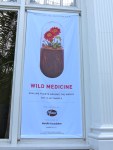
 Five years living in New York City and I’d never visited the New York Botanical Garden in the Bronx. What a mistake! It’s 250 acres of gorgeous and they hold special exhibits, like the one on “Wild Medicine” (medicinal plants used all over the world) that runs until Sept. 8.
They offer discounts and specials if you use your Mastercard.


















It’s no secret I’m the world’s biggest beach fan. It’s where I prefer to vacation as I find myself hating the cold weather more and more each year.
I’ve visited and fallen in love with beaches on Colombia’s Atlantic Coast, Mexico’s Caribbean Riviera, the Bahamas, Puerto Rico, and the Dominican Republic. In the States, some of my favorites are in Miami, Myrtle Beach, and — though I no longer get into the water (too cold!) — the Jersey shore.
This year, I finally got to vacation in Costa Rica. I went to Guanacaste in the country’s Papagayo Gulf region for a friend’s birthday — an all girls grip. It was beyond amazing, and the first vacation where I didn’t just “lay out” to tan. I was too busy on excursions!
First, I need to explain “pura vida.”
Pura vida is a characteristic Costa Rican phrase. Per Wikipedia, it literally means pure life, however, the real meaning is closer to “plenty of life”, “full of life”, “this is living!”, “going great”, or “real living.” The phrase can be used in many ways; for example, it can be used both as a greeting or a farewell, as an answer expressing that things are going well, or as a way of giving thanks.
True! We heard it time and again.
Here are some things I loved about Costa Rica. Pura Vida!
Temperature: the best thing about going to the Guanacaste region in early August is it isn’t unbearably hot. It’s warm, and in our case, it was sunny (they haven’t been getting much rain, something uncharacteristic for the region’s rainy season), but we never sweated bullets.
Rain: As explained above, the summertime in the U.S. is Costa Rica’s “rainy season,” more so in the capital of San Jose than in Guanacaste, although we heard Guanacaste had a pretty dry July in 2013.
Proximity to the New York area: You can’t beat a roughly four hour trip. Two hours to Miami and then another couple to the airport in Liberia. I was sold.
Our resort: We stayed at the Hilton Papagayo. It was wonderful. We loved the food, the pool and its swim up bar, and the warm and attentive employees. We wished there was more of a nightlife on the resort, but we made due by going to nearby club and bar strip on Coco Beach (go to Lizard and Z-Lounge on Friday and Saturday nights!).
Excursions: Here is where a review in Trip Advisor was a lifesaver. We knew we wanted to go on excursions, but didn’t book ahead of time because we wanted to ask around when we got there. The resort offered some options (average $160 for a full day of excursions) but some great Trip Advisor reviews for a local named Herson inspired us to shoot him an email. It was the best thing we ever did. Herson Segura runs his own concierge tour guide company, Spanglish Tours. He’s fully bilingual and prefers to do private tours. (In other words, you won’t be stuck ziplining with strangers.)
Segura took us: clubbing (he provided roundtrip transport and even hung out for a bit, though he responsibly didn’t drink, of course); ziplining at the Congo Canopy Trail; to the waterfalls at La Fortuna, the volcano at Arenal; to eat typical Costa Rican breakfast and lunch; an eco-center where we saw frogs, a sloth, butterflies, and more; and a Hot River.
He can take you to all of the above plus: horseback riding, tubing, hot springs, and lots, lots, more. Contact him via email to get details. Visit his Facebook page here.
Animals / Ecotourism: For the most part, Costa Rica seemed like the most eco-friendly place I’ve ever visited. Recycling and composting bins are a mainstay, animal refuges are aplenty (howler monkeys and sloths!), and the greenery is stunning for a reason. The ticos (nickname for Costa Ricans) take care of their country.
To book this trip, we bought the airfare first (most of us used Kayak) and then the hotel. We got decent prices (about $800 for both for about five days.) I hear there are Groupon and Living Social deals floating around out there.
I’d suggest exploring a trip to this gem of a country. Pura Vida!





 periMENTAL