On B.S. news links

Here’s one thing I don’t miss about Facebook:

Bullshit news that will get shared over and over again...
Bullshit news that will get shared over and over again…

Via Media Watch:

Recycling the rubbish

There is a growing trend in the news – dubious online stories with stock images, no real detail, and an outlandish yarn that will pull in the punters.

And finally tonight to foreign news

Nigerian restaurant shut down for serving HUMAN FLESH – and had bags in kitchen containing heads that were still bleeding

— Daily Mail, 16th May, 2015

Yes, you can always trust the Daily Mail to have the stories you really want to read … which is why it’s one of the most popular news sites in the world.

And when the Mail finds a scoop, its rivals at News.com.au are rarely far behind .

When police raided the restaurant they discovered human heads that were still bleeding with the blood draining into plastic bags.

— News.com.au, 17th May, 2015

You would not believe the things that happen in Africa.

And if you looked at this story—which was gobbled up by the media across Australia, Britain, America, Africa and Asia, there was plenty of reason to doubt if it was true.

For a start all the stories had the same quotes from the same unnamed witnesses, like the priest who said:

“I did not know I had been served with human meat, and that it was that expensive.”

— News.com.au, 17th May, 2015

Read more here.

On providing comfort

Lutheran comfort dogs. Photo via Religion News Service.

I spent much of the day in my father’s room at the nursing home today. I got word that a doctor ordered a sonogram  last night so I wanted to be there since the evening staff last night had, not surprisingly, zero idea why the test was ordered. Thankfully, the results (checking for internal bleeding) were negative.

Last week, in a flurry of work and neighborhood social activities (conferences, commencement, and a blogger meet-up), I missed four consecutive days of seeing my dad. I felt terrible about it (and enlisted my brothers to go the extra mile and visit more) but I’m not going to lie, I felt as if I could get a little bit more done in this thing we call regular life. I did a huge grocery shop, for instance. I washed my own clothes as opposed to sending it to the wash and dry. I concentrated a little more than usual on work. You know, the way I used to be. But at the back of my mind, I wondered if my dad noticed I wasn’t there, and hoped my mother was OK keeping up with it all, especially since, in recent weeks, she returned to her part-time job.

So I’ve gone three times since Sunday of this week and noticed my dad is uncomfortable. Again, the Parkinson’s, the fall and hip fracture, and surgeries, have eroded his ability to form words. Everything sounds like a light moan. So light, that I never worry about the nursing home staff getting annoyed with him; they can barely hear him!

But on Monday night, my brother, mother, and myself, could not figure out what he needed. The choices are limited: adjustment of his position on the bed? Ice/water in the mouth (because he has trouble swallowing, he cannot eat or drink)? Diaper change? Pain?

Many times, he does not (or will not?) respond ‘yes’ or ‘no.’ Sometimes, after a full half hour of throwing different options out there, he’ll say yes (or no) to something I asked the first time. It’s frustrating.

And it also has me wondering if our visits hurt him. Stay with me here: Whenever I get there, if he is NOT sleeping, he’s calm. Quiet. And then he sees me and start trying to speak. Trust me, I’ve thought about whether he’s trying to tell us he’s being mistreated, but my mom was there so much before she returned to work, and through observing how they treat other patients, that cannot be it.

(*This is not to say I haven’t seen the staff get a bit snippy, or flat out ignore some other patients. In fact, it is the vocal and sometimes, most able, ones who find themselves ignored. :/)

So, I’m left wondering if dementia has really set in. After my dad fell, the hospital staff, unable to understand him, classified him with mild dementia. “Confused” is the word I’d see in his chart. Obviously, I hastily disagreed: He knew where he was every second. It was they who were confused about what he was trying to say. Or, when feeling ill with pneumonia, he wouldn’t respond to them. This is also confusing!

But, now, I won’t deny that he may have some mild symptoms. After all, it is expected in patients who have had Parkinson’s for many years. He is coming up on 19 years with this tough disease.

We are not going to stop visiting him, of course. I just wish there was a way to allay him of whatever is causing discomfort. Most of all, I think, if I were a millionaire, I’d purchase some technology where I could just strap some wires to his temples and a machine would tell me what he is saying.

I’ve said this before — my dad is where I get my personality and I sure do miss talking to him about sports, music, and jokes. :/

Today in things that shouldn’t be…

Screen shot 2015-05-06 at 9.50.54 PMJust the other day, a friend of mine posted a mini-rant on Facebook about men who, under the guise of saying “Good morning,” are really just trying to get you to engage in a conversation, and how, when she doesn’t return the greeting, or God forbid, smile, she, at times, gets a nasty response. The backlash on that particular morning? “At least you could smile, bitch.”

Yes, it goes without saying, not all men are this way. (Isn’t that common sense?) But this kind of thing happens far too much. And it sometimes feels (to me, anyway) that the backlash is much worse than the fake greeting/catcall/harassment, whatever the situation was.

Predictably, my friend was deluged with comments, many of which were of the #NotAllMen type, but a few were pretty mysogynistic:

“Well, you’re hot (she is), but women who aren’t should be thankful.”
“I really am saying good morning. What’ the harm in that?”
“Maybe if women didn’t walk around all stone-faced and just said ‘Good morning’ back,” and so on.

One guy even tried to say he greets strangers on the street equally. Yeah, ok!

Debate ensued.

But the following is an example of something that just SHOULDN’T BE:

Police are still searching for a man suspected of slashing a woman in a downtown Manhattan subway station over the weekend.

According to the NYPD, the incident occurred at 5:40 p.m. this past Saturday, May 2nd, at the Brooklyn Bridge/City Hall stop: “[The] suspect attempted to engage the victim, a 34-year-old female, in conversation. When the victim ignored the suspect, the suspect spat at the victim, who then began to laugh at the suspect. The suspect then took out a sharp instrument, slashed the victim in the arm and then fled the station.” (Read more on Gothamist.)

Imagine that: A violent response to being ignored by a woman who dared to ignore a man trying to engage her. This kind of shit shouldn’t happen. Maybe if more (#NotAll) men empathized, just put themselves in our ‘heels,’ and realized, sometimes, we just want to get where we’re going — quietly — we wouldn’t have to fluster your sensitive little feelings into a debate on Facebook. 🙂

Here are some other links that appropriately fit this headline:

A Nebraska woman who claims to be an ambassador for God and his son Jesus Christ is suing all gay people on Earth. (Daily News) — waste of court time, if you ask me!

In Chicago, it isn’t the cops who tortured who will dole out $100 million to victims. That’ll be the taxpayers. (Fusion) That’s a lot of taxpayer money. Now will people see why there is a problem with police brutality?

Cop bites man’s testicles on Cinco de Mayo. (Death and Taxes) What is there to say, really?

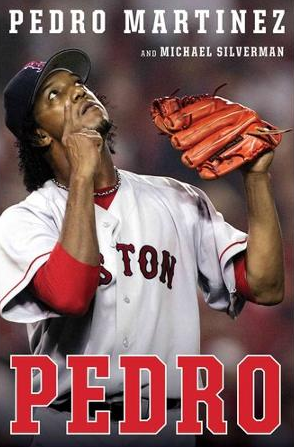
Pedro Martinez doesn’t hold grudges but …

Screen shot 2015-05-05 at 9.08.14 PMLord knows I’m no fan of Pedro Martinez or the Boston Red Sox, but I must say this NPR interview with the Dominican-born pitching great on All Things Considered has me seeing him in a different light.

Why? Although he says he doesn’t hold grudges, he says he’ll never tip his hat at Fenway Park again because they booed him once. WOMP. 😉

Martinez was on to promote his new memoir Pedro (Houghton Mifflin Harcourt, May 2015).

But seriously, he surprised me. He admits he’s a fan of Roger Clemens, and he also goes on to explain that haunting “Yankees ‘are my daddy'” comment. He chalks it up to a bad translation of a Dominican saying meaning someone has your number.

People from Barranquilla, Colombia, (where my parents are from) also have that saying, and it’s why the battle hymn for our local football team, Júnior de Barranquilla, is “Junior tu papá!” So it definitely translates, Pedro.

Anyway, listen to the interview below. He actually makes the team I disliked so much sound … fun? (Yep. I surprised myself.) And read an excerpt of it here via Sports Illustrated.

http://www.npr.org/player/embed/404483222/404483226

Missing days

I’m trying to be more on a schedule where I get my life somewhat back into a normal routine, by going every other day to see my dad at the nursing home, but it’s not working out so well. I get racked with guilt when I skip a day, and usually spend the next two or three days rushing there after work.

Screen shot 2015-05-05 at 8.50.19 PM

My dad is actually doing well. I mean, he’s not jumping out of bed and walking around, but he’s been without pneumonia or infections, and his sacral wound (bed sore) is coming around, albiet slowly.

My brother moved mountains (that’s just me saying it takes MOUNTAINS to get action at the nursing home) to get my father’s old primary care physician to check him out, instead the invisible doctor who has a contract with the nursing home. I’m glad he did. He found my dad to be anemic and said if he can’t get stronger, he’s not going to improve.

So that’s where we’re at. He ordered some changes and I continue to see my dad more awake these days. It’s crazy to think that, in February, and some of March, we really thought we were going to lose him. He was rarely awake and, at one point, had to be intubated.

Thanking our lucky stars, and also my mother’s friends from church, who keep visiting and praying for him at his bedside on a weekly basis.

New hip-hop by Ratking, Nani Castle

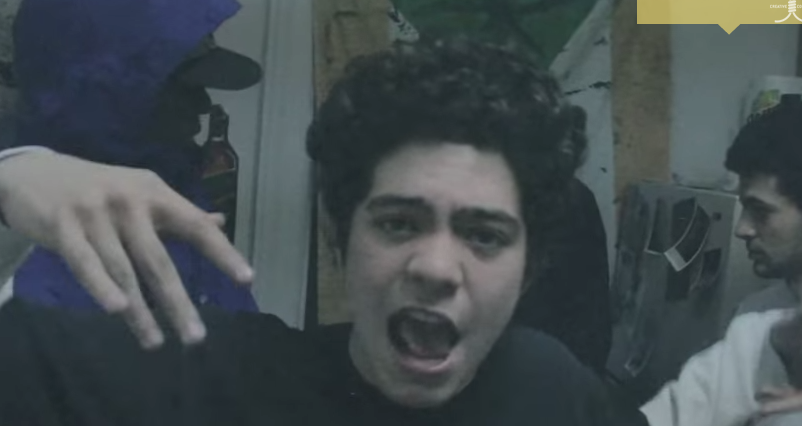
Screen Shot 2015-03-12 at 12.34.29 PM
Still from Wikispeaks via YouTube.

I’ve been a super fan of New York City’s Ratking since stumbling upon a random blog post (Complex? Vice? Can’t remember.) that led me to XL Recordings, and the single, “646-704-2610,” last year. I was pretty enthralled with this video for “Wikispeaks” (featuring the spunky emcee, Wiki, who often refers to himself as a mutt– he’s half Puerto-Rican) because it just shows a bunch of kids walking through New York City while he spits fire:

“Damn I feel like Jay-Z in ’96
Man I feel like ODB in ’93
Am I even an ’04 Ye?”

Shortly thereafter, they released So It Goes (via Hot Charity) in 2014. There was just something REAL New York hip-hop kids about it. (Btw, if you haven’t heard “Remova Ya,” get on it, as it is the quintessential song about the NYPDs now defunct Stop-and-Frisk policy.)

“To the boys in blue
Never really liked you, rubbed me rude”

Well, they dropped some new tunes (!!!) via bit torrent this week. Grab 700 Fill here.

I like how So It Goes is described in the bundle: “an exhilarating and reckless lyrical portrait of a maybe-vanishing city; part Vonnegut, part Dipset, part Suicide.” Yeah, that’s putting it perfectly. Unlock the 700 Fill bundle to get 9 new tracks, instrumentals, and a short video from Ari Marcopoulos.

Speaking of young New Yorkers who rap, and are half Latino, Staten Island’s Nani Castle just dropped The Amethyst Tape. Thanks to Nati (conrazón) for putting me onto her.

Nani Castle
Nani Castle

Get to know more about the half Chilena, whose dad came to the States as an exile in the 70s, here via Remezcla. Warning: her stuff isn’t gentle and girly. It’s pretty POW!

“Welcome to my castle, Come into dungeon
Come inside, I wanna show you something.”

What is a normal life, anyway?

Screen shot 2015-02-21 at 2.31.54 AMTonight I tweeted, “Will things ever be normal again?” A friend responded, “Define normal.”

I told him it had to do with my father being in the hospital (Yeah, he’s back after his blood pressure dipped and he developed a fever) and that, for the past month, my only two destinations have been work and nursing home and/or hospital.

But he’s right making me consider a definition. What is a normal life, anyway?

I can’t say my life was super ideal pre-my dad’s pretty debilitating fall and hip trauma, but I wasn’t mired in constant worry about them unless I’m completely immersed in my work. Today, even when I’m at work, they’re all I think about.

My father has had Parkinson’s for a little more than 18 years, and my mother is his primary caretaker, despite working part-time. I always went to their house to visit, but in 2014, as his Parkinson’s progressed a bit deeper, I went home nearly weekend to give her some relief.

But this is different. Going from work to hospital till nearly midnight, and back home (with mom; she’s asked me to stay with her until my father comes home), and back to work again, is EXHAUSTING. On top of that, not staying at my own apartment means a half hour ride to my place to pick up clothes once or twice a week. Then there is the mental party, constant worrying, even though he’s in a facility crawling with nurses. It’s tough.

So, no I can’t define normal. But I do know it’s not this.

Factor in my father’s inability to speak clearly (something that started about eight years ago, and has gotten worse since) and mild dementia, and I’m left mentally and physically drained.

I’ve written this in the past: None of this is about me. It’s incredibly tough on the entire family. But this is my dad. I feel like I have to be there for as many hours as possible every day. I’m also there to offer comfort to my mom, who I can tell, is scared about this all.

As abnormal as this may seem, I’m glad I’m here with her, and in frequent touch with my brothers. If I could go back time, I’d prevent my father from falling, but this closeness that we’re feeling as a result of this sad trauma is priceless.

Still, I wonder: will I ever have fun again? Will I ever just aimlessly walk around after work and dip into a store, or into a place for a glass of wine? It doesn’t seem that way at all.

Latino Resiste Presents Salsa Choke

FREE MUSIC DOWNLOAD! Great stuff from CALI, Colombia!

latinoresiste's avatarLATINO RESISTE

CHOKE promo 1
Salsa Choke (Pronounced Choh- kech) is the newest approach from a whole new generation of Urban Artists to the always expanding Latin Diaspora.

Blending aesthetics from Crunk, Hip Hop, Reggaeton,and latin sounds, with Colombian Afro Pacific music,
the result is a unique approach to Salsa.

Most of the cases sampling Rap anthems and adding their own latin flavour, the result might be as wicked as this one:

The whole compilation selected by Marlong can be grabbed right here for
FREE DOWNLOAD

Being one of the most underground genres in South America, Salsa Choke style of dancing was
seen by millions when Colombia’s soccer team celebrated every time they scored.
background

Triggering right there an exhaustive expansion for that unique sound.

In order to give the compilation its real credibility, we went straight to the source.

Cali, Colombia.

And asked the most prominent promoters of the genre to curate and select the…

View original post 139 more words

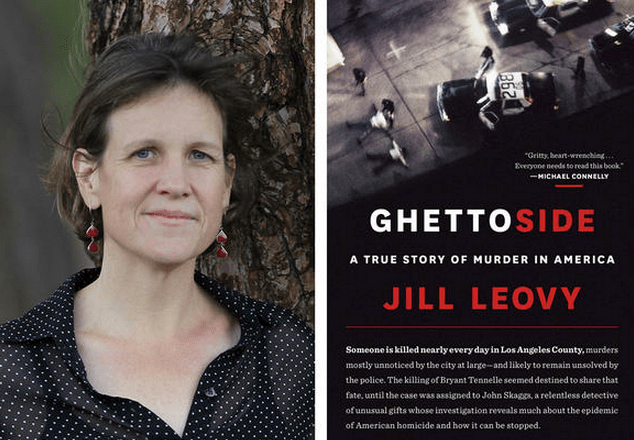
On ‘Ghettoside,’ black-on-black crime, and ‘Broken Windows Theory.’


Screen shot 2015-01-27 at 11.32.13 PM

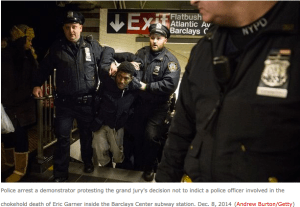
The shootings of Michael Brown and Eric Garner, and the ensuing debate surrounding the killings and related protests, caused some of my friends, and obviously, people in general, to respond in a way I soooo dislike

  • “Why don’t they protest when they get shot by one of their own?”
  • “Why doesn’t the media make such a big deal about black on black crime?”

These questions are problematic for several reasons that have been aptly outlined by both columnists like Ta-nehisi Coates (“The notion that violence within the black community is “background noise” is not supported by the historical recordor by Google. I have said this before. It’s almost as if Stop The Violence never happened, or The Interruptors never happened, orKendrick Lamar never happened. The call issued by Erica Ford at the end of thisDo The Right Thing retrospective is so common as to be ritual. It is not “black on black crime” that is background noise in America, but the pleas of black people.”) and academic scholars (“Giuliani presented no evidence that Black communities are not actually addressing violence in their own communities.  It’s also useful to point out that based on the most recent crime statistics from the FBI in 2011, the White-on-White murder rate was .0014% of the population, while the Black-on-Black murder rate was .0069% (with rounding), a difference of .0055%.”) who can be found with a quick Google search.

These comments also demonstrate a complete lack of empathy on their part, which I can only attribute to ignorance, as in legitimate naiveté about the majority of folks who live in high crime areas, and what they really want. My guess is they must not know too many families affected unnecessary violence, be it on the victim or perpetrator’s side.

Lastly, they must not understand that, although it seems the media is ever present, thanks to the 24 hour news cycle and budget cuts due to the Internet and what it did to print journalism, resources within media organizations aren’t what they used to be. Gone are the days when a journalist would be assigned to cover crime in every single town.

As a newspaper reporter, I remember what it was like to camp outside of a victim’s home in hopes of catching a family member for a quote about what they were feeling. (It was not my favorite part of the job. Many times dreaded those interviews.)

Do people really think people living in high crime areas are happy about the state of their neighborhoods? Or that if someone gets killed next door, it’s no big deal? It’s so much deeper than that.

LUCKILY for us, journalist Jill Leovy has a new book in which she studies the epidemic of unsolved murders in African-American neighborhoods and the relationships between police and victims’ relatives, witnesses and suspects. I’m looking forward to this book, because it’s clear it’s not just from the perspective of victims, but it covers how the police respond to crime in tough areas.

The idea for Leovy’s book came from a blog she started (The Homicide Report) back in 2006 while working for the Los Angeles Times. In her new book, Ghettoside: A True Story of Murder in America, she examines one of the most disturbing facts about life in America: that African-American males are, as she puts it, “just 6 percent of the country’s population but nearly 40 percent of those murdered.” (source.)

In this recent interview with NPR’s Fresh Air, she discussed how she managed the carnage and the pure emotion of family members of murder victims she came across as a reporter for the Los Angeles Times:

“It’s not the carnage that’s horrible, though. It’s the grief and the sadness of it that is – that will make your hair stand on end, and that is very, very difficult to deal with. The actual fact of bodies and blood is much easier to deal with than what you find when you go to somebody’s house five years later and they’re still shaking and weep instantly when you say the name of their loved one.

In fact, “The Homicide Report” was the easiest homicide reporting I did in all my years of homicide reporting, and there was a reason for that. And I knew it going in. I think in some ways, at that time, I needed it. It’s because mostly, I was dealing with victims’ families right after the homicide. That’s a time when – in the normal course of reporting, that’s when you usually meet victims’ families – that first 48 hours, that first week, maybe, before the funeral, and, you know, that’s the easiest time because people are in shock. They are in a state of suspended disbelief. They don’t know what to think. They’re kind of frozen and wide-eyed, and it takes time with something as traumatic as homicide for the reality to sink in. And so it’s a lot harder to interview people three months later, six months later. Two years can be a really grueling point, I found – five years, very, very grueling. Homicide grief is very distinct, I think, from other kinds of bereavement, and the trajectory of it can be different.

Another great part of this Fresh Air interview with Leovy is her insight into how police handle these crimes, and how they’re viewed by these communities. Simple it is not:

“Police hear that all the time: ‘You don’t care because he’s black. You’re not going to solve it because he’s black.’ And it’s very interesting, I – in terms of Ferguson and some of the other recent controversies – I was thinking that this is so complicated because there is, very definitely, a standard black grievance against police that you hear in South LA, that has to do with the generally understood problem – too much consent searches, we say, in LA, too much stop-and-frisk, too heavy of law enforcement, too much presumption of guilt when you take stops.

What I hear, when I’m in these neighborhoods, is a combination. It’s a two-pronged grievance. There’s another half of that. And the other half is, I get stopped too much for nothing, and the police don’t go after the real killers. They don’t go after the really serious criminals in this neighborhood. They’re stopping me for what I’ve got in my pocket, but I know someone who got killed down the street. And they haven’t solved the homicide, and yet, that second half seems to never break out and make it into the national dialogue about it. To me, it has always been that double-sided grievance of too much of the wrong kind of policing, not enough of the policing we actually want in these neighborhoods.

Hear the audio interview, or read the transcript, here.
Screen shot 2015-01-28 at 12.04.11 AM

And check out these other related stories, including one where a 17-year veteran of the LAPD says community members can stop police brutality by cooperating with police, and this one, in which the architect of ‘Broken Windows’ defends his theory.