Downloads of this album benefits three Kansas City-area charities.
A special version of “Tormenta,” by Making Movies, (available on a ’12 Days of Christmas’ album benefiting three Kansas City-area charities via the Midwest Music Foundation & Boulevard Brewing Company: http://bit.ly/1ju1hf0) is one of KCUR 89.3 FM‘s ‘Best Songs from Kansas City-area Bands in 2013.’ The song is about missing home at the holidays and was written specifically for the immigration cause.
Hear KCUR‘s other picks here –> http://bit.ly/JQx7Tn (Scroll to 38:25 to hear the special version of “Tormenta.” It is very folkloric version.)
The band is now bound for Texas. Follow the rest of their tour here, and check out this video from the last time they played the Lone Star state. (Video by the Houston-based Sinister Kid Studios.)
Castillo-Garsow with her mentor and co-author, Mark Naison.
If you’ve ever walked around an urban neighborhood in a major city, you may have noticed them being sold on tables set up on the streets. They are slim novels, and usually depict people in the cover art. They are urban fiction books.
Also found in bodegas, urban fiction (also known as street lit) is one of literature’s fast-growing genres.
Read my interview with Castillo-Garsow, in which she gives her thoughts on the origin of the book, but also about health and fitness (the story appeared on the Latino-centric health and wellness website, Vida Vibrante), here.
But, below, she talks to me about the characters of Pure Bronx, Khalil and Rasheeda, a young couple from the South Bronx, trying to make it out of the ghetto and have a taste of the prosperity middle class Americans take for granted.
—–
Gina Vergel: Dr. Naison mentioned (in an interview with the student newspaper, The Ram) that the story has a social justice aspect. Why did you two include such an aspect in this story?
Melissa Castillo-Garsow: Social justice for me is something that has always been a major part of my life. I originally did not like English or writing classes- the stories and main characters (mostly white male) never resonated with me and neither did classical language like that of Shakespeare. I was a good student, but I struggled a lot and didn’t enjoy reading very much. I first began to write because I proposed a column for the high school newspaper about human rights. I was a member of Amnesty International (one of two or three at my school) and was deeply concerned that people my age did know about what was happening in the world. Since then, everything I do has must have some sort of social justice aspect – I wouldn’t consider it worthy of my time, otherwise. Art for Arts sake is just not how I function. Art, writing, even academia (in the model of someone like Gloria Anzaldua) should invoke thought and emotion.
What many of the Street Lit books lacked, Dr. Naison and I found, was that aspect of social commentary. They often ended very tragically through the trope of the inevitable result of ghetto life, or overly glamorized monetary aspects of “the Life.” We wanted to provide an alternative narrative – that involvement in illegal or unsavory activities does not define you. Other possibilities are available and fulfilling, especially if you commit to social justice and your community.
GV: What can you tell me about Rasheeda’s character?
MC-G: Rasheeda is definitely a strong female character. Raised in poverty, she is committed to bettering herself through high education, even when every aspect of her life provides her with other models or tells her its not possible. She overcomes many traumatic experiences without the guidance of a father or mother while assuming responsibility for her younger brother. I loved living with Rasheeda for the years we worked on this. She is so determined, strong and confident. But she is also sassy and fun. She is the one the keeps Khalil in check.
GV: Since the story is set in the Bronx, an area teeming with Latinos these days, how much do they come into play in the story?
MC-G: Latinos are an important part of the story because they are a vital part of the Bronx. Like many African Americans, two of Rasheeda’s closest friends are Puerto Rican and there are also Mexican and Honduran characters. Khalil also understands Spanish from having grown up in projects with Puerto Ricans and other Latinos as well. At the same time we don’t glamorize relations in the Bronx – some of the African American – Latino relationships are friendship, others are antagonistic. But you will definitely find español in Pure Bronx!!
GV: You’re a doctoral student. What will your dissertation be on? What do you hope to do with your Ph.D? Teach? Any plans to continue with Street Lit?
MC-G: My dissertation is going to be on Afro-Latinos in 1920s and 1930s New York City. Afro-descended Latinos in this country are a completely understudied and diverse group in this country, especially in this time period. And yet, it was such a vibrant, artistic and important time in African American history. I want to uncover how Latinos (who because of their appearance and segregation were in very close quarters with African Americans) were relating or not relating to black culture and politics.
I do hope to teach, specifically Latino Literature and History, and perhaps some creative writing.
I also have a deep interest in popular culture – particularly Latino/a and Latin American Hip Hop. Currently, for example, I am working on a project about Mexican Hip Hop in New York. (Ed. That sounds interesting to us!)
Maybe more street lit? I’m not sure. We do have a sequel to Pure Bronx in mind. I guess it just depends on if there’s interest!
Read more about Melissa Castillo-Garsow on her website.
Sometimes a hit dance song can become an ally for a cause.
“Wake Me Up” is a song that all of my indoor cycling class instructors at the gym can’t get enough of. Eventually, the song became an earworm and I had to look it up on YouTube. Not surprisingly, it’s a monster club hit by the Swedish electronic dance music giant, Avicii.
The video for it follows a model-like girl who seems to live a not-so-easy life somewhere in rural America, but ends up happy because she rides a horse to an Avicii concert. (It’s as pretty as a fashion magazine spread.)
But the lyrics are deeper than that. And though Avicii made the song a global hit with his EDM production skills, I had to know about the man behind the voice. That’s where the story gets more interesting, as far as I’m concerned.
The vocalist (who is listed as a co-writer the Avicii track) is Aloe Blacc, a singer, songwriter, rapper, and musician from Southern California best known for his single, “I Need A Dollar,” from the short-lived HBO comedy-drama series, “How to Make it in America.”
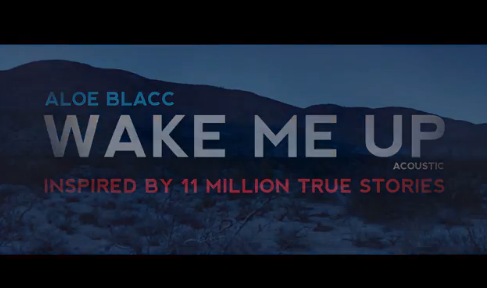
Turns out Blacc, real name Egbert Nathaniel Dawkins III, was born to Panamanian parents and that may explain why he recorded a video for the alternate version (acoustic country and folk) of “Wake Me Up.”
Directed by Alex Rivera from the National Day Laborer Organizing Network (NDLON), an advocacy organization that advocates for day laborers and is staunchly against President Obama’s deportation policies, the video features undocumented immigrants, including DREAMer Hareth Andrade-Ayala, who arrived in America when her father Mario came to the United States in 2004 seeking a brighter future for his family. Mario is now facing deportation.
The song’s poignant lyrics are perfect for what Adrade-Ayala, and millions of other youth affected by the threat of deportation, must be feeling.
They tell me I’m too young to understand They say I’m caught up in a dream Well life will pass me by if I don’t open up my eyes Well that’s fine by me
So wake me up when it’s all over When I’m wiser and I’m older All this time I was finding myself And I didn’t know I was lost
Watch the video below and read more about the director’s thought process behind the video via Buzzfeed.
I grew up in the city of Paterson, NJ, and aside from riding my bike almost every day in the summer, playing in the house, and gym class during the school year, I didn’t get a ton of exercise. There weren’t any organized sports in the tiny Catholic School I attended and the city I lived in didn’t have any recreational leagues.
Not surprisingly, I gained (and lost, and sometimes gained again) the freshmen 10 in high school and the freshmen 15 in college.
I started working out (aerobics classes and the like) my senior year of college and have been pretty hooked ever since. There was a two-year period in my life where it was obsessive (two hours or more a day) and when I got help for that, I cut back. Eventually, I found a happy balance (I go anywhere from 3-5 days a week for cardio and strength training) that includes walking my dog for about 40-60 minutes per day. And I live in a place where a ton of walking is commonplace — New York City!
The reality is I’ve always had to work out and watch what I eat. Luckily, I enjoy the working out part the best. But there are some people who have never had to work out (like my brothers!) who, later in life, are finding they have to. And they don’t always like it. Here’s a piece about the fitness as an adult by my older brother, Richard Vergel, in Vida Vibrante.
A Latino Dad Reflects on Fitness
I hate working out. Always have. It’s a chore. It hurts. It’s not even free. Think about it: Gym memberships, brand name sneakers, well-built bicycles, boxing gloves, track suits, tennis racquets, etc. Whatever you’re into, money will be spent. My point is growing up, I wasn’t the most active kid in the world. But I was lucky, because I looked decent considering I didn’t work out; I wasn’t el gordito or el flaco. I was height-weight proportionate since puberty, so I got away with not working out.
We won’t get into why I didn’t play school sports right now (I’ll save that for another article) but I wish I did. Playing sports as a kid usually leads to a healthier lifestyle, and improved social and leadership skills. Still, I shied away from physical activity. Yet, ironically, I always had friends who were into fitness, ever since high school. They always tried to get me to lift weights with them, and I would try it, see zero results, and go back to my favorite sport – couch surfing. But that was then, this is now.
Now I’m a 42-year-old dad, who likes to eat his rice and beans and chorizo from time to time. I still look pretty good, thank you very much, but now my metabolism has slowed down and I have no choice: I’ve got to work out to stay in shape – no – to GET into shape.
Screen shot of the sad and lonely Spanish-language option by me.
I don’t purport to know very much about running a business. Aside from deciding whether I want to take on public relations work on a by-project basis, I’ve never run my own shop.
But I can safely say that Great American Opportunities, a fundraising corporation, has dropped the ball on an additional “opportunity” for their constituents to make more money.
Back in my day, for grammar schools to raise funds, students had to sell chocolates or Christmas wrapping paper. Today, with the power of the Internet, you can imagine those opportunities have become more diverse.
My cousin’s son’s school in Florida is raising funds by using Great American Opportunities to sell magazine subscriptions. It’s much simpler now. Parents forward a link and we help raise funds by shopping.
Or so I thought.
I’m in media relations. I don’t want for many magazine or newspaper subscriptions. I have plenty and they are all digital. So I figure, I’ll shop for my parents.
My folks are Colombian immigrants and American citizens who have been living in this country for more than 40 years. Yet Spanish is still their first and preferred [reading] language. They’re senior citizens, why wouldn’t they enjoy a subscription?
Sadly, the only Spanish-language magazine Great American Opportunities offers is People en Español. No offense to the celebrity magazine industry, but my parents have no interest in who J-Lo is dating. (Well, maybe if she finally moves UP in age of the person she’s dating. Just kidding!)
Has Great American Opportunities not looked into changing demographics of this country, especially in Florida? There are a TON of Hispanics/Latinos in the United States and they are a huge buying power. The more Latino-friendly products a business offers to the Latino community, the more they will buy. (Take a hint from the many corporations that advertise and offer circulars in Spanish.)
And that, mi amigos, in my opinion, is a missed opportunity for Great American Opportunities.
In case you’re wondering, I *did* buy a subscription to help my cousin’s son’s grammar school. I bought an interesting-looking health/neuroscience magazine, but certainly would have purchased much more had there been more than one entertainment-based, Spanish-language option.
Perhaps this is something Great American Opportunities can consider in the future. After all, many of Spanish-language readers and speakers are shopping in America!
It is described as a freak accident, because as far as automobile wrecks go, for a bus to hit a lamppost that falls on a baby in a stroller, well, it’s just not supposed to happen that way. But that’s how it went, and 8-month-old Angelie Paredes is gone.
But this July 30 ‘freak accident‘ in New Jersey, which took place when a bus jumped a curb because its driver was allegedly on his cell phone, could have been prevented. The driver, who is now charged with ‘death by auto,’ did not have to use his phone while operating a vehicle. The passengers did not have to accept his behavior as a matter-of-fact habit of these discount jitney bus drivers.
Dear baby Angelie did not need to die.
Consider the statistics:
According to the United States Department of Transportation, distracted driving (which is caused by any activity that could divert a person’s attention away from the primary task of driving) claimed the lives of 3,331 lives in 2011. A whopping 387,000 people were injured in motor vehicle crashes involving a distracted driver.
Our good friends at the must-read website, Latino Rebels, have launched a foundation.
Per the Latino Rebels Foundation website, it’s vision is “to live in a country where Latinos are admired as patriotic, hard-working and productive American citizens.”
And its mission is to “positively impact the perceptions of Latinos, to defend the community against negative stereotypes and Latino bigotry, and to substantially increase Latino representation in the media and entertainment sectors by building a pipeline of highly talented and socially conscious Latinos.”
That’s something I can get behind for sure. Help the cause by volunteering or contributing here. ** UPDATE: See comment below for information about the scholarships Latino Rebels has in mind for undergraduate and graduate students!
In honor of the tens of thousands of people who continue to arrive in the nation’s capital for a rally on immigrant rights today, watch the video for “Tormenta,” a song dedicated to immigrant families by Kansas City bilingual rockers, Making Movies.
The song and music video, released in 2010, shows touching images of immigrant life in Kansas City, a metropolitan area whose immigrant population doubled in the 1990s and continues to grow.
The song’s lyrics display the struggle immigrants face as they migrate to the United States for better opportunity, yet the same time, long for loved ones at home (see lyrics below.)
Making Movies continues the “A La Deriva” tour this week with stops in Dallas, Austin, San Antonio, and Houston. Dates here.
Lyrics:
Tormenta by Making Movies
Yo quiero ver mi familia esta Navidad, Y quiero hablar con mi abuelo, oír la verdad. Porque el frio me atormenta, El frio me atormenta, El frio me atormenta, El frio me atormenta.
Yo quiero ver mi país esta Navidad, Y quiero bailar en mi pueblo otra vez más, Porque el frio me atormenta, El frio me atormenta, El frio me atormenta, El frio me atormenta.
Coro: ¡No quiero estar perdido! ¡No quiero estar perdido! ¡No quiero estar perdido! ¡No quiero estar perdido!
Yo quiero comer de tu boca la mera verdad. Porque el frio me atormenta, El frio me atormenta, El frio me atormenta, El frio me atormenta.
Coro: ¡No quiero estar perdido! ¡No quiero estar perdido! ¡No quiero estar perdido! ¡No quiero estar perdido!
Yo quiero saber que va pasar contigo, ¡Déjame saber si voy a estar perdido! ¡Yo quiero crecer, cambiar este sonido! El frio me atormenta, El frio me atormenta.
Wander Cedeño is first generation Dominican American and Washington Heights-native whose family came to the United States 30 years ago. Now he’s bound for a position with the U.S. Bureau of Labor Statistics in Washington, D.C., where he will be an economist covering energy and chemicals.
The 25-year-old Fordham University double alumnus spent most of the past year as a New York City Urban Fellow in the city’s Department of Parks and Recreation, where, among other things, he helped assess and catalog the damage caused by Hurricane Sandy in Manhattan parks.
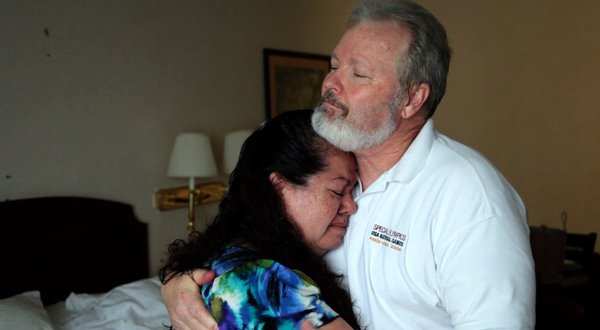
(Photo by Sam Newman) George Ross, a former IT project manager in Livermore, Calif., and his wife, Linda, as seen in the documentary “Set for Life,” by Susan Sipprelle and Sam Newman.
One of the lasting effects of the Great Recession has been the economic spiral downward of the American middle class, and no group has been harder hit than the boomer generation, men and women in the prime of their working lives.
From 2007 to 2009, workers 55 to 64 year old who lost jobs had been making an average of $850 a week; those lucky enough to be re-employed by January 2010 were earning $647 a week, a 23.9 percent drop in income.
Younger boomers, ages 45 to 54, had been averaging $916 a week; the jobs they were able to find after the recession paid $755, a 17.6 percent decline.
That is the story Susan Sipprelle tells in her new documentary, “Set for Life,” about the generation that was so sure that they were — until their lives came undone during the Great Recession.









 periMENTAL